What It Will Take To Turn the ‘Blue Wave’ Into a Watershed Moment for Transportation Reform
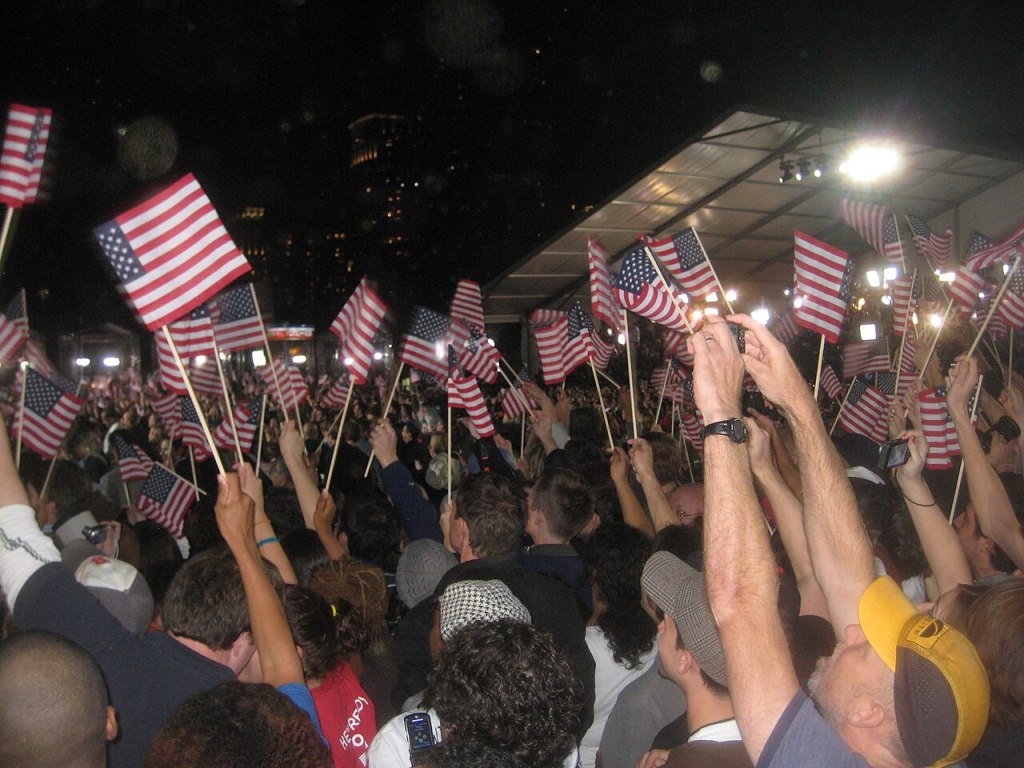
A “blue wave” crashed onto US shores on Tuesday — but what does it mean for America’s broken transportation system, considering how many Democrats and Republicans have blind spots when it comes to ending mass car dependency?
If you focus on bottom of the midterms ballot, at least, America is becoming a bona fide nation of transpiration reformers on Tuesday, with voters making historic rail investments in Colorado, saving transit agencies in the Bay Area, and instituting a raft of street safety measures in New York City, to name just a few of advocates’ big wins on Tuesday.
That isn’t terribly surprising, considering that transit, biking and walking pretty much always win — at least when Americans get the chance to vote on them directly.
Despite a constant drumbeat of lies about how much we all “love our cars,” countless Americans recognize that they are trapped, endangered and bankrupted by a transportation system that forces many of them to drive virtually everywhere, all the time. Multiple surveys show most of them desperately want more options.
Whether our new federal leaders will deliver on that demand, though, is far from a foregone conclusion — even in the midst of a blue wave. But that wave may still represent our best chance in years to lock in and finally turn the tide.
Of course, that’s not to dump cold water on anyone celebrating yesterday’s Democratic wins. Republican losses in the House and the Senate are a clear rebuke to a White House that used every trick in the book (including some outright illegal ones) to roll back billions of dollars and countless policies aimed at making U.S. streets less deadly, polluted and dominated by a single unsustainable mode.
And President Trump and Secretary of Transportation Sean Duffy couldn’t have done it without Congress. Led by the GOP, elected officials in the House and Senate alike gleefully rescinded badly-needed funds to heal neighborhoods torn apart by highways, and found innovative ways to gouge shocking sums for transit and rail when they were forced to extend a Biden-era infrastructure law — all while a war in Iran sent gas prices through the roof.
Many of the politicians who supported that war and passed those bad policies in the midst of intertwined safety, affordability and climate emergencies lost their jobs on Tuesday.
At the time of this writing, at least five Republican members of the House Transportation and Infrastructure committee have conceded their seats to Democrats, and fifth district is leaning blue.
Don’t all assumed those new “radical lefties” will come out of the gates ready to fight for buses or cyclists or pedestrians, however.
Despite the fact that many of their platforms were heavy on rhetoric about the rising cost of living and the rising rate of deadly climate disasters, you’d be hard-pressed to find a progressive politician who’s ever breathed the words “car dependency” on the campaign trail, despite how foundational mass auto use is to both issues.
That was certainly true of the major Senate and House races this season, in which transportation itself was almost never mentioned on campaign websites, never mind its single most glaring problem: all the damn cars.
And not much tends to change when progressives actually get into office, either.
As Transportation for America’s Beth Osborne pointed out last month, left-leaning politicians have a long history of collaborating with right-leaning politicians to pass bad transportation bills, even when they control both chambers of Congress — like they did when the Infrastructure Investment and Jobs Act passed. In that bill, like in reauthorizations for decades before it, 80 percent of funding into highways and 20 percent into transit — with almost zero accountability if states fail to accomplish their stated goals for that money, which they rarely do.
“Democrats don’t take their progressive stances into transportation,” Osborne wrote. “For example, when Democrats talk about addressing climate change, they mean that they want the auto companies to produce more efficient cars, not that they want to produce a more efficient transportation system.”
The real question, though, is why federal progressives so often sacrifice their core values when it comes time to negotiate a major transportation bill — which, by the way, they will almost certainly need to do soon, or else keep extending the IIJA every few months.
One simple answer may just be that transportation policy is usually out of sight and out of mind. As analyst Steve Davis has noted, because the federal government only reauthorizes its core mobility programs once every five to six years, “there’s little reason [for lawmakers] to interrogate the overarching purpose of this program, to look back at how it has performed, or what everyone is getting for the money.”
That’s true even for veteran pols who have served multiple terms, and their legislative staffers who juggle countless competing priorities.
Even those who can navigate the labyrinthine maze of the reauthorization process may not realize that pouring billions of taxpayer dollars into curing congestion by expanding highways doesn’t even work — even though most of their constituents do.
Put another way: advocates need to mount a full-court press right now to educate their lawmakers not just on why transportation reform matters in its own right, but how many of their other legislative priorities simply can’t be achieved without confronting car dependency. And that’s not just true of obvious stuff like reducing emissions, but improving public health, promoting racial justice, addressing income inequality, and so many other progressive and even moderate goals.
Of course, education alone won’t be enough to make progressives put their money where their mouths are on transportation reform. That’s because it’s become politically easy — and sometimes, even salient — for politicians to throw it under the proverbial bus.
The hard truth of the matter is, “infrastructure” has long been treated as a neutral and bipartisan good in Washington — even if that specific “infrastructure” is a downtown highway that slaughters people, empties their wallets and hastens the warming of the planet and the destruction of the human species.
Much like the disproportionately Black neighborhoods within a stone’s throw of those highways, transportation is too often treated like a sacrifice zone which liberals can offer as an olive branch to conservatives in the minority, to show voters their willingness to compromise. Those conservatives, though, rarely do the same when the tables are turned, so our transportation network gets more car-dominated no matter who’s in power.
Meanwhile, many members of both parties are in thrall to the highway lobby, which one study found spends over $100 million a year to ensure that federal money for asphalt keeps flowing. That can take the form not just of direct support to political campaigns, but also direct lobbying efforts, industry-funded research and more.
But the “blue wave” proved that the American people can beat big money. And now, we have to keep the momentum going as our new lawmakers are sworn in.
That means organizing to show Sen.-elect Abdul El-Sayed (D-MI) that even “Medicare for all” won’t mean much if U.S. residents without cars can’t physically get to the doctor.
It means helping Sen.-elect James Talarico (D-TX) understand how his “new American Dream” economic agenda will be relentlessly undermined if poor Americans can’t even walk to the corner store safely on a street without a sidewalk, and are forced to buy vehicles they can’t afford.
It will mean holding Gov.-elect Keisha Lance Bottoms (D-GA) to her promise of finally delivering dedicated state funding to transit agencies, and helping the dozens of new governors who didn’t mention transit on the campaign trail understand how critical it is to maintaining their goals.
And yes: if you happen to be represented by a conservative, it still means engaging your lawmakers around how senseless, endless highway spending undermines their priorities, too.
So if you’re thrilled about the midterms, please, by all means: take the day to celebrate. But tomorrow, it’s time for advocates across the political spectrum to lock in and help this blue wave become a watershed moment — by finally demanding that every elected official make transportation reform a core part of their platform, like it always should have been.