Survey: Most Americans Are Open To Ditching Their Cars
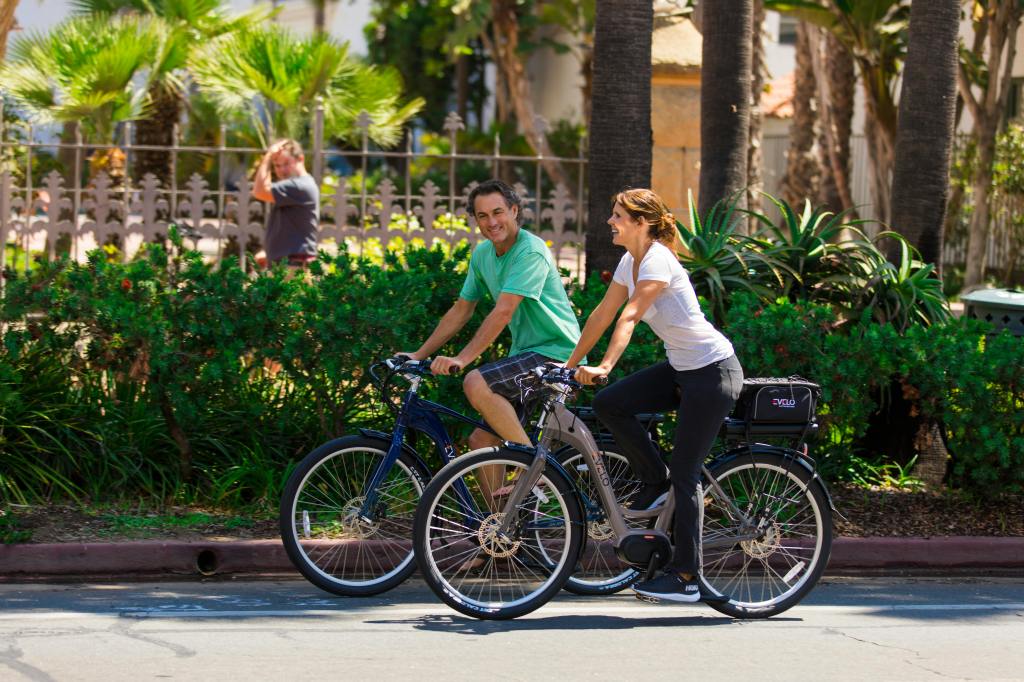
The majority of Americans are open to living car-free even after decades of car-centric planning, policy, and cultural programming aimed at getting as many people as possible behind the wheel, a new survey finds — and if transportation leaders can do more to meet that latent demand, it could radically reshape our communities.
A stunning 18 percent of car-owning U.S. residents indicated that they were “strongly interested” in living car-free, and another 40 percent said that they were “open” to it, according to a survey conducted by Arizona State University.
The results mean, basically, that a full century‘s worth of policymakers putting a massive thumb on the scale in favor of car dominance somehow hasn’t totally erased Americans’ appetite for other ways of getting around — and if the scales were leveled, there’s no telling how different our country might look today.
“About 10 percent of the U.S. lives without a car now. If that demand were to be realized — which is unlikely, given the current land use situation we’re in — we’d be reaching numbers similar to Europe,” added Nicole Corcoran, the lead author of the paper.
Initially inspired by the popularity of the nearby Culdesac subdivision — a car-free oasis in an otherwise deeply car-dependent corner of metro Phoenix — Corcoran says she and her fellow researchers eventually expanded their study to include the car-free-curious in all kinds of U.S. contexts, and to better understand the reasons why people are (or aren’t) interested in ditching their automobiles.
To her surprise, the study found that people across all demographics were intrigued by the idea of auto-independence — not just people who already live in transit-rich places, or who can’t afford the crushing costs of maintaining a personal vehicle.
“When you look at people who are living without a car now in the U.S., they often follow a certain archetype,” Corcoran adds. “They’re often lower-income, living in denser urban regions, things like that. But interest [in living car-free] really exists across income levels; it’s across education level, genders. Even suburban and urban respondents are interested.”
That’s not to say that the walk-and-bike-curious had nothing in common — or that the things they share don’t hold clues to how policymakers could recruit more of them.
For instance, the survey found that car-owners who already used alternative modes for at least 5 percent of their trips, or who already use transit on a regular basis, were each more likely to express interest in relying on shared and active transportation full-time.
Corcoran is careful to note that achieving 5 percent mode share isn’t necessarily a magic threshold after which Americans can consider themselves converted from the cult of car worship. Still, she argues that simple exposure to the joys of the world beyond the windshield is critical to changing hearts and minds — and that just a few cracks in the car-dependent bubble can sometimes be enough to shatter the illusion that automobiles are everything.
“If you grew up being chauffeured around in a car every day, and you got a car at 16, and you never biked, you never took transit, then [other modes] may not feel like a feasible choice to you,” she adds. “It might be intimidating; you might not know how to read a bus map. … [When people are] looking at themselves in their current context and thinking, ‘Oh my gosh, what would I do without a car?’, of course the interest [in car-free living] is low.”
Interestingly, Corcoran also found that people who had previous experience with living fully car-free were more likely to be able to imagine themselves doing it again. And while some respondents might have gotten their car-free kicks on, say, a long work assignment in Europe or during a few years on a bike-friendly residential college campus, she suspects many of them did it right here in the SUV-dominated streets of America — and still came out wanting more.
“Given how hard it is to live without a car in the US, you would sort of expect that to be the opposite,” she laughed. “You’d think, ‘Oh, people would never want to do that again.’ But that doesn’t seem to be the trend we found.”
Of course, simply increasing opportunities to bike, walk, and take transit won’t turn every driver into a car-free convert overnight. The study authors found that 49 percent of respondents who said they prefer driving feel that way because automobiles “make them feel free,” and 47 percent simply because they “enjoy” getting behind the wheel — and even if the context of our streets radically changed, some of those people would doubtlessly still prefer to haul two tons of steel around everywhere.
Still, if America can stop treating driving like a permanent part of our society and start untangling the knot of habitual, cultural, and structural reasons why 92 percent of U.S. households over-rely on automobiles, we can change how many of us get around. And Corcoran argues that the moment policymakers start trying to tilt the balance, they’ll be met by a wave of latent demand that might surprise them.
“What we hope that policymakers can take away from this study is that there are people who would like to see more mixed land use, to see better walkability, to see better bikebility — anything that allows them to move without a car,” she added. “And we also believe that car free experiences beget car-free experiences. Once you give them the exposure, we expect to see more and more interest over time.”

Read More:
Streetsblog has migrated to a new comment system. New commenters can register directly in the comments section of any article. Returning commenters: your previous comments and display name have been preserved, but you'll need to reclaim your account by clicking "Forgot your password?" on the sign-in form, entering your email, and following the verification link to set a new password — this is required because passwords could not be carried over during the migration. For questions, contact tips@streetsblog.org.