Advocates Warn Short-Term Transit Cuts Could Foreshadow Deeper Long-Term Slashing
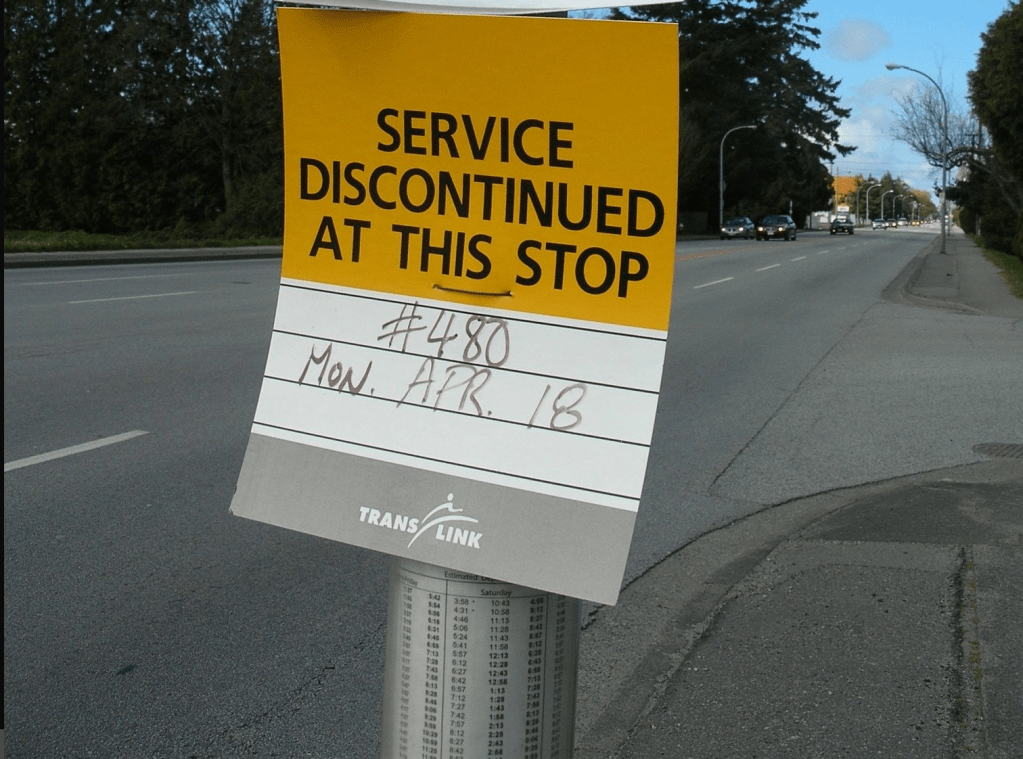
“Unprecedented” reductions to federal transit and rail dollars in the latest stopgap bill could offer a taste of even steeper cuts to come, advocates fear — unless Americans demand stable funding for the shared transportation options we deserve, and on which our economy depends.
More than a hundred members of the American Public Transportation Association descended on Washington earlier this month to protest Congress’s decision to let billions of dollars for multimodal transportation lapse under a recent stopgap spending bill to fund the nation’s surface transportation programs until December 11.
That “fly-in” brought agencies, transit equipment manufacturers and more face-to-face with well over 100 lawmakers, who were forced to pass that extension because they’d failed to negotiate a bill to replace the Infrastructure Investment and Jobs Act, or IIJA. The IIJA had previously been set to expire September 30.
Rather than simply copying and pasting that law for a few more months, though, Congress opted to exclude programs subject to the wonky funding mechanism known as “advanced appropriations.” That category disproportionately includes programs that benefit shared modes, while leaving most highway dollars untouched.
APTA — which represents agencies as well as private-sector interests that benefit from transit — estimates that public transit funding will take a 20 percent hit under the measure, and passenger rail will lose a staggering 81 percent of its formerly-guaranteed funding. And if the bill that replaces the IIJA or a subsequent extension mirrors it, the resulting loss of funding could devastate our collective transportation future.
“We’ve never seen an authorization act that has cut funding,” said Ward McCarragher, APTA’s vice president of government affairs. “This is a first.”
McCarragher explained that, while advocates have lauded the IIJA for making historic investments into mobility options besides driving, billions of those dollars were only guaranteed through the original five-year duration of the law. That left the door open for Congress to cut them now.
That’s because Congress funded a lot of discretionary programs using “advanced appropriations,” a novel funding strategy that critics argue is intended only for emergency situations where non-recurring programs need a chunk of guaranteed money for a few years, after which they’re expected to lapse.
But transit advocates argue that between sky-high traffic deaths, an escalating affordability crisis, a climate catastrophe and more, America is experiencing an ongoing transportation emergency — and as long as that emergency still rages, Congress must extend advanced appropriations for programs that could help address it.
“There have been some transit critics who said that this was intended as only a one-time investment, that this is not the way we’ve ever managed the transportation programs,” McCarragher added. “[But] you can’t address decades of underinvestment in public transit with a one-time, five-year investment — not when we’ve spent the last 50 years under-investing in the program.”
Many highway programs, by contrast, receive guaranteed funds under the IIJA, even though drivers haven’t paid enough in gas taxes and other road user fees to cover their costs for decades. The endless highway spending that followed has failed to deliver the congestion, safety, or affordability benefits that its backers promise.
Worse, legislators originally designed many of the specific programs slashed by the extension bill to address America’s most urgent transportation needs.
Popular competitive grant programs to make streets safer, eliminate deadly railroad crossings, and give cities direct funds to build multimodal infrastructure have all been at least temporarily chopped, with total cuts amounting to a staggering $36.8 billion, the National League of Cities recently estimated.
To be fair, some car-focused programs, such as the Bridge Formula and Investment Program, ended up in the budgetary crosshairs, too.
But Kevin X. Shen of the Union of Concerned Scientists noted that Congress made those cuts “without any measures to prioritize roadway maintenance over expensive expansions,” and that they’re unlikely to achieve the legislative body’s budgetary goals. That’s especially urgent against the backdrop of widespread attacks on shared mobility, which APTA says returns $5 to the economy for every public dollar invested — but whose benefits vanish when the money disappears.
“Regardless of budgetary mechanisms, in the end, a cut is a cut,” Shen continued. “Communities across the country will feel this in the coming months, amid tight budgets, high gas prices, and strained transit services.”
Despite setbacks this fall, McCarragher and his fellow APTA advocates aren’t giving up on restoring what public transit has lost. After the “fly-in,” many left their meetings with congresspeople feeling optimistic about the future.
“We got broad support for the effort to restore [this funding], and I think there’s going to be a renewed effort to address this issue as we turn to December,” McCarragher said. “I think they recognize the great economic benefit of these investments … beyond just the impact to the riders themselves. Every billion dollars invested [in transit] creates more than 41,000 jobs. [These are] the things that lawmakers have really taken hold of and recognized as important, not only for transit riders but for the broader U.S. economy.”
And even if their message didn’t land this time, advocates will almost certainly get a few more bites at the apple.
Because they’re so difficult to negotiate, federal transportation bills are notorious for needing endless extensions to keep America moving, and some suspect the IIJA will require several more before a replacement bill is finally passed. And in the meantime, the midterms are nigh — which means voters have a unique chance to voice their support for better policies.
“I think the timing is perfect for every citizen to engage with their members of Congress as we head into an election in November,” McCarragher added. “There are many opportunities to get their attention on this issue, and demand that Congress restore these funds in December for public transit and passenger rail … We [need to] create that bridge, so that when we complete the long-term authorization, Congress will have an opportunity then to continue to build upon the success we’ve had and strengthen our economy.”

Read More:
Streetsblog has migrated to a new comment system. New commenters can register directly in the comments section of any article. Returning commenters: your previous comments and display name have been preserved, but you'll need to reclaim your account by clicking "Forgot your password?" on the sign-in form, entering your email, and following the verification link to set a new password — this is required because passwords could not be carried over during the migration. For questions, contact tips@streetsblog.org.