Transportation Reform Has an Imagination Problem
Why is it so hard for Americans to imagine a future where they can live in their city without constantly driving?
That wasn’t exactly the topic of Time’s recent viral essay, but I sure thought about it a lot while reading it.
In “We Have a Climate Imagination Problem,” author and entrepreneur Solitaire Townsend argued that we won’t avert planetary disaster if the fight to do it remains “merely an ad nauseam echo of ‘climate change is real, humans are to blame, and the consequences are catastrophic.'”
Townsend is right, of course, that the “magic” of storytelling is an essential ingredient in any fight for systemic change, not just “the spoonful of sugar to help the scientific medicine go down,” as she put it. But it may be particularly difficult to spark our public imagination about our transportation future — never mind inspiring anyone to demand real change.
In other ways, though, transportation may just be the sector that has the most potential to inspire a new vision for how the world could be — if we just learned how to tell a better story about it.
To understand how storytelling could inspire transportation change, though, it’s important to be honest first about why so many advocates struggle to do it.
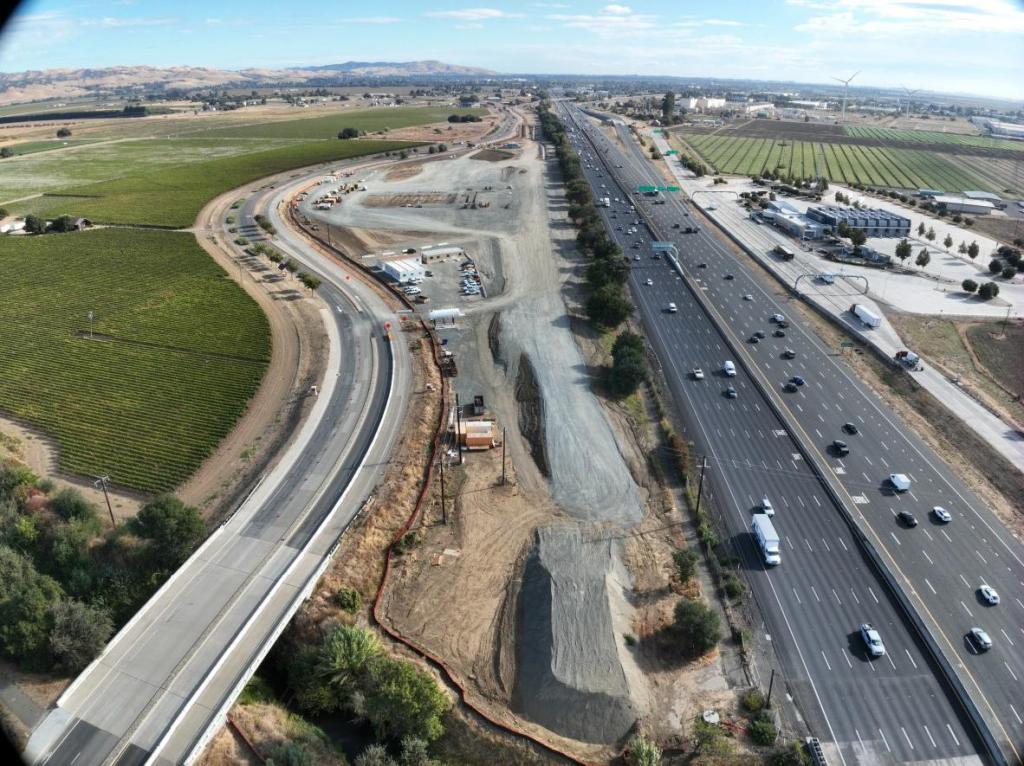
Perhaps more than any other part of the climate problem — or the affordability problem, or our many intersecting public health problems, or whatever else we may happen to care about — streets feel like something we can’t change. They are literally cast in concrete and steel, at the cost of unfathomable trillions of dollars that most people cannot imagine “wasting” by, say, tearing highways down — even if, with only a fraction of those trillions, we could do just that, and build world-class transit in every major city in America.
Moreover, transportation infrastructure is all around us — unlike, for instance, coal-fired power plants that so few Americans actually see on a daily basis. And because roadways are so ubiquitous, we become emotionally attached to these fixtures of our mobility landscape in a way we don’t to other kinds of fossil fuel infrastructure.
Even a climate denier might not have a visceral reaction to news that an oil field in Texas has quietly shut down. But many drivers will go to absolute war over new bike lanes that remove a single parking space.
Ask even a eco-conscious voter to imagine removing the interstate that they use every day to care for their grandmother, and the outrage can be even more acute.
In some ways, transportation reformers are actually pretty good at navigating this minefield — at least at the neighborhood scale.
A quick Google search is all it takes to find a motherlode of “street redesign porn,” where advocates have documented the transformation of formerly car-dominated places and challenged others to imagine similar renaissances across the country. Sites like the one you’re reading right now are stuffed to the gills with other policy ideas that your community could steal right now, as well as stories of how doing it could make all our lives better — and those stories are backed by quantitative data and emotional experience.
Many advocates go beyond pointing out what other places are doing well, too. In arguably one of the more defensible uses of generative AI, advocates have used tools like Craiyon and Gemini to instantly illustrate how even the worst stroads could be reborn as pedestrian paradises with the right mix of asphalt and new laws (though, to be clear, hiring a human illustrator would result in an even more effective advocacy tool.)
Tactical urbanists have even brought a version of these speculative possibilities to life with events like Park(ing) Day, which temporarily turns curbside spots into cafes, green space, and just about anything else you can imagine besides car storage for a single driver. Open streets, pop-up bike lanes, and other events do the same thing at the scale of an entire block.
When it comes to the big picture and the long term, though, many transportation reformers struggle to paint a vivid picture of how our country could work better without so many damn cars.
The lowest-lift strategy might be to harness those moments when cars are already displaced from the top of our transportation hierarchy, and go the extra mile to challenge our neighbors to notice that the world didn’t end — and maybe even that they’re better off without so much driving.
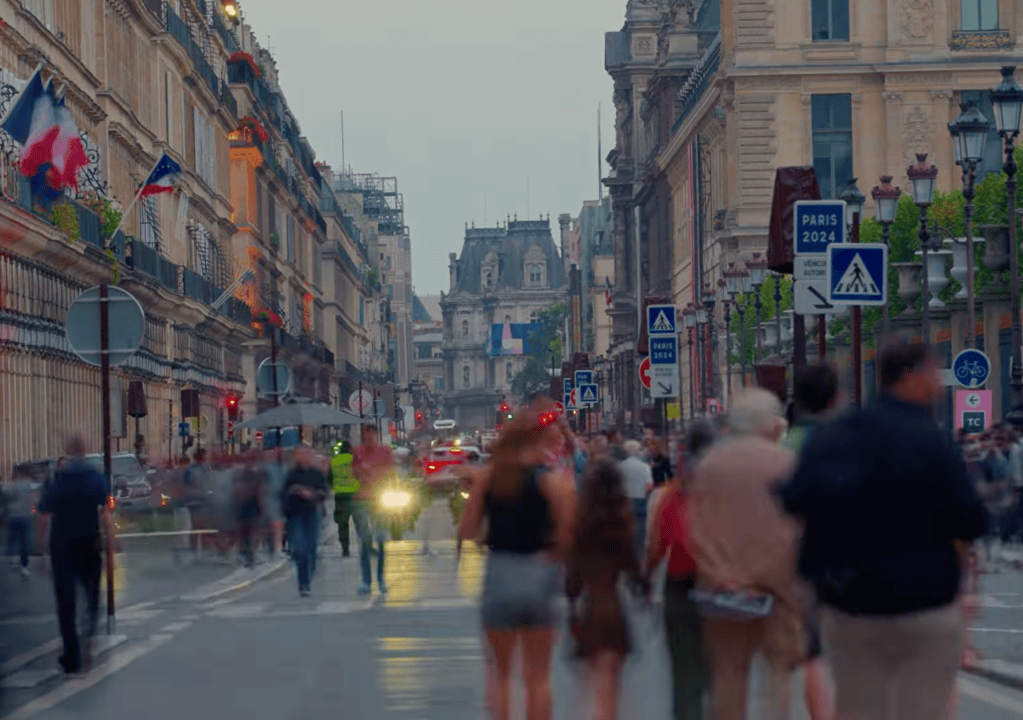
In major cities, massive events like the World Cup, the Olympics, and Taylor Swift concerts can all become powerful catalysts for mode shift and new — albeit temporary — investment in transit. They’re not always catalysts for deliberate conversation about how sustained transportation changes could reshape our collective lives, but they could be.
What if we papered every subway car with urbanist propaganda on game day, along with links to petition drives to change transport policy?
In smaller communities without a stadium, tactical urbanist experiments could be expanded to a bigger scale, a longer time frame, or a more ambitious, repeated program that gradually becomes permanent.
There’s no reason why, say, a Park(ing) Day demonstration can’t be done at the scale of a mega-mart lot, or that the regional craft market can’t reclaim that space every Saturday … and Sunday … and eventually, every day of the week, by installing more durable pop-up retail. With enough resources and coordination, the single, sad traffic-cone “bike lane” to your kid’s school could be part of a week-long blitz, sketching out a complete cycling network that makes not driving anywhere an actual option.
Pair it with a strong messaging campaign, and you could launch a whole movement of advocates who have glimpsed the possibility of a different transportation culture and want to make it permanent.
Big cities should think bigger about this stuff, too. Why shouldn’t Chicago hold more events like Bike the Drive on its notorious lake-front highway? Moreover, why can’t we treat bike events as a publicly funded demonstration of the future we all deserve, rather than a premium experience that costs $69 each — and that’s not including the price of the commemorative T-shirt?
Let’e be clear: lack of imagination is far from the only reason why so many American cities are ultra-car-dependent hellscapes.
We can could send every mayor in the country on a fact-finding mission to Amsterdam, and they wouldn’t all come home raring to build woonerfs. Not every driver who begrudgingly left his car at home for the Beyoncé concert can be transformed into a transit rider by encouraging him to just open his mind — or even by giving him a discount on his next month of rides.
Systemic reform is primarily about moving power, and it can take a frustratingly long time. Our country looks like an oil executive’s fever dream because those executives, and their allies in Big Auto, spent billions of dollars on lobbyists for a century, not just because they wished upon a star.
Still, it’s urgent that transportation reformers offer our neighbors a better vision for the future, rather than just doom and rage about where we’re headed if we fail to make a change. And to be frank, it isn’t even that hard.
A city where you don’t have to depend on cars doesn’t mean you can’t visit your sick grandmother across town, because there’s no interstate to take you there and nowhere to park where you arrive. It’s a place where grandma can afford to live around the corner, and you can simply walk to reach her, the sun on your face and the wind in your hair. You can drive if you want to; if you don’t, you aren’t forced to.
When enough people aren’t functionally forced to drive, our cities become more joyful, peaceful, healthy, safe, affordable, child-friendly, accessible to people of all abilities, and fun. And that’s not even the end of the list.
If we fail to tell that story – and so many of us do — then it’s no wonder why so few people believe it’s possible to make it real.

Read More:
Streetsblog has migrated to a new comment system. New commenters can register directly in the comments section of any article. Returning commenters: your previous comments and display name have been preserved, but you'll need to reclaim your account by clicking "Forgot your password?" on the sign-in form, entering your email, and following the verification link to set a new password — this is required because passwords could not be carried over during the migration. For questions, contact tips@streetsblog.org.