‘Our Roads Are More Than Just Highways’: Democrats Urge U.S. Senate Not to Defund Multimodal Programs
Congress could be days away from passing a bill that strips local communities of stable funding for multimodal transportation and deprives the entire country of predictable rail dollars that the overwhelming majority of Americans demand.
In a letter sent on Tuesday, Senate Democrats pressed the upper chamber’s appropriations committee to resist the Trump administration’s demands and renew multi-year funding for a raft of vital multimodal grant programs when they write the next federal transportation law.
The Bipartisan Infrastructure Law, colloquially known as the BIL, will expire on Oct. 1, and the House Transportation and Infrastructure Committee is scheduled to begin marking up the replacement bill as soon as next week.
That committee’s chairman, Rep. Sam Graves (R-Mo.), said in November that he would lobby for a “traditional highway bill” to replace the BIL, and promised that lawmakers would refrain from “spending money on murals and train stations or bike paths or walking paths” — a suggestion Trump echoed in his budget proposal, which recommends draconian cuts to multimodal programs.
What the BIL Did Right
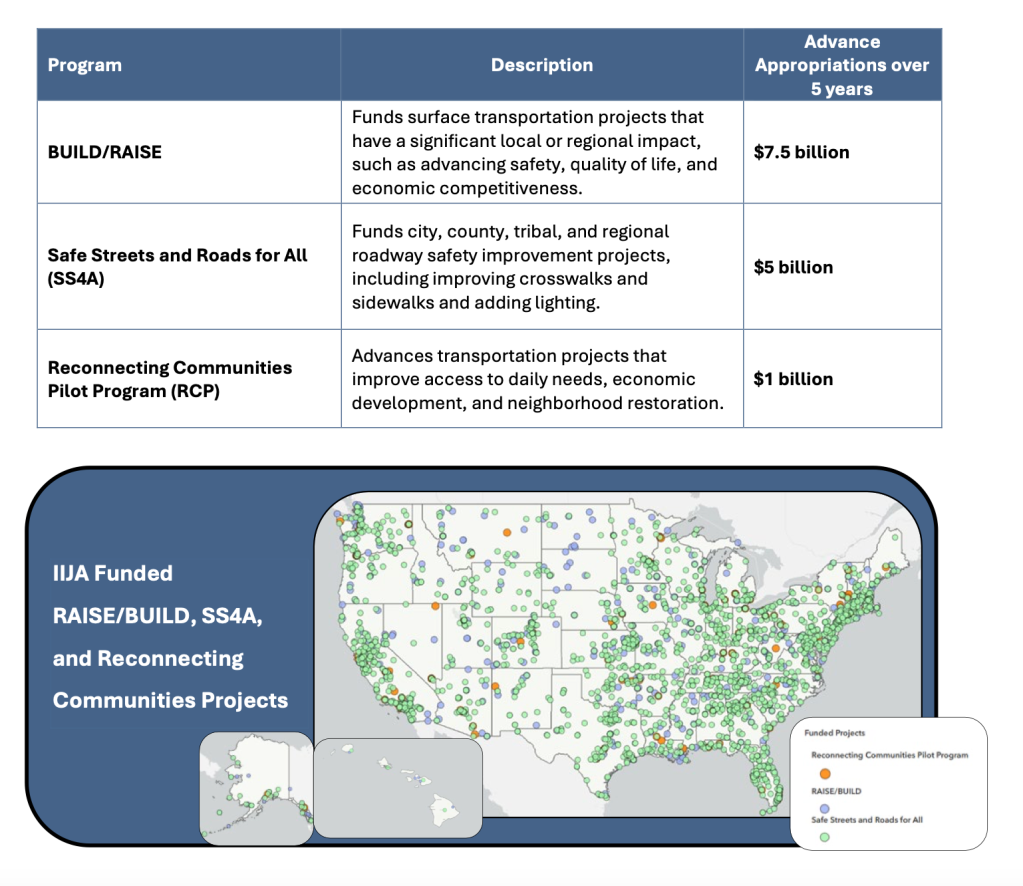
For all of its flaws, the BIL did at least one thing right: It provided local communities with historic levels of “predictable, multi-year funding” for multimodal transportation projects for five years, thereby insulating projects from the fickle whims of Congress’s annual appropriations process.
Since infrastructure projects generally take several years to plan and complete — especially ambitious ones like new rail lines, high quality bike paths and major road diets to keep pedestrians safe — this funding structure allowed communities to dream bigger about their transportation futures.
It also allowed locals to apply for far more grant money directly, rather than forcing them to rely on state-level Departments of Transportation, who far too often redirect gas tax receipts generated on city roads to pay for highway expansions in the suburban and rural periphery.
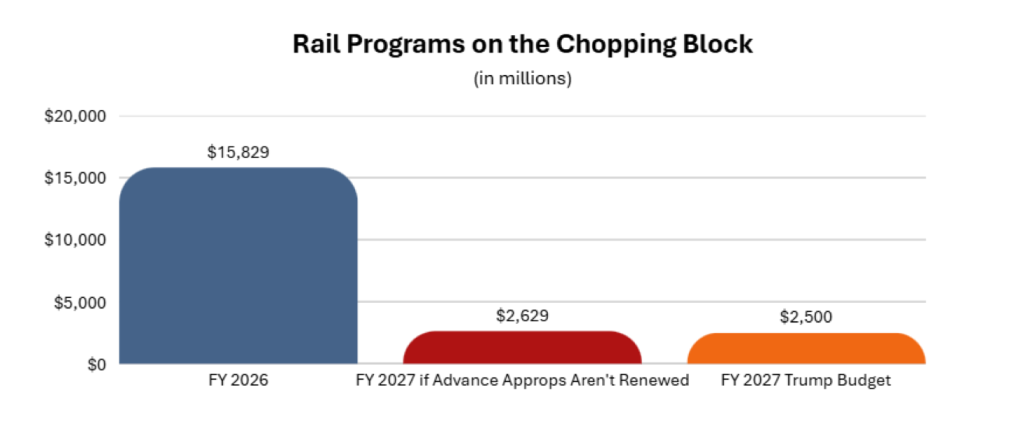
The BIL created a similar opportunity for the American rail industry, which secured its first predictable, multi-year funding streams in U.S. transportation history — finally allowing train operators to plan long-term expansions and start building out the expanded network that 92 percent of Americans want.
How Trump’s Proposal Could Halt Transportation Progress
If Congress accepts the Trump administration’s budget proposal, those rail programs would lose an astonishing 84 percent of their funding in fiscal year 2027, and they wouldn’t be guaranteed any money beyond that year. That would make it impossible for Amtrak and its peers to plan for the future.
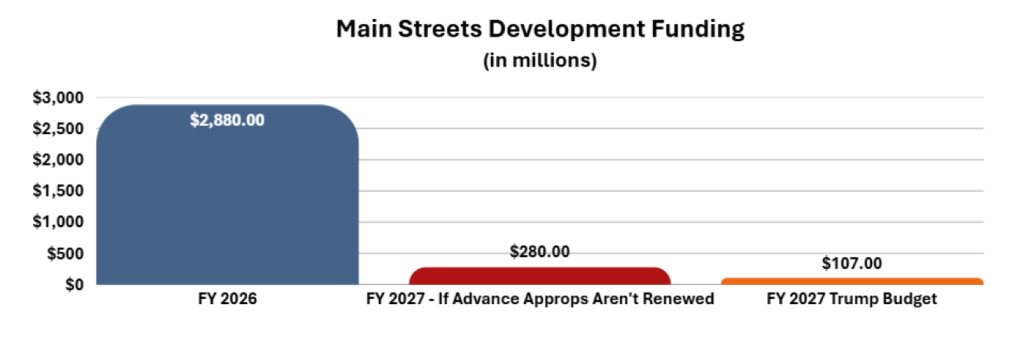
Meanwhile, a host of programs that fund multimodal transportation would lose 96 percent of their 2027 funding — with no assurance of more money later. Safe Streets and Roads for All, for instance, would be zeroed out completely in FY2027, while the Capital Investment Grants program, a major source of transit funding, would receive a 48-percent cut.
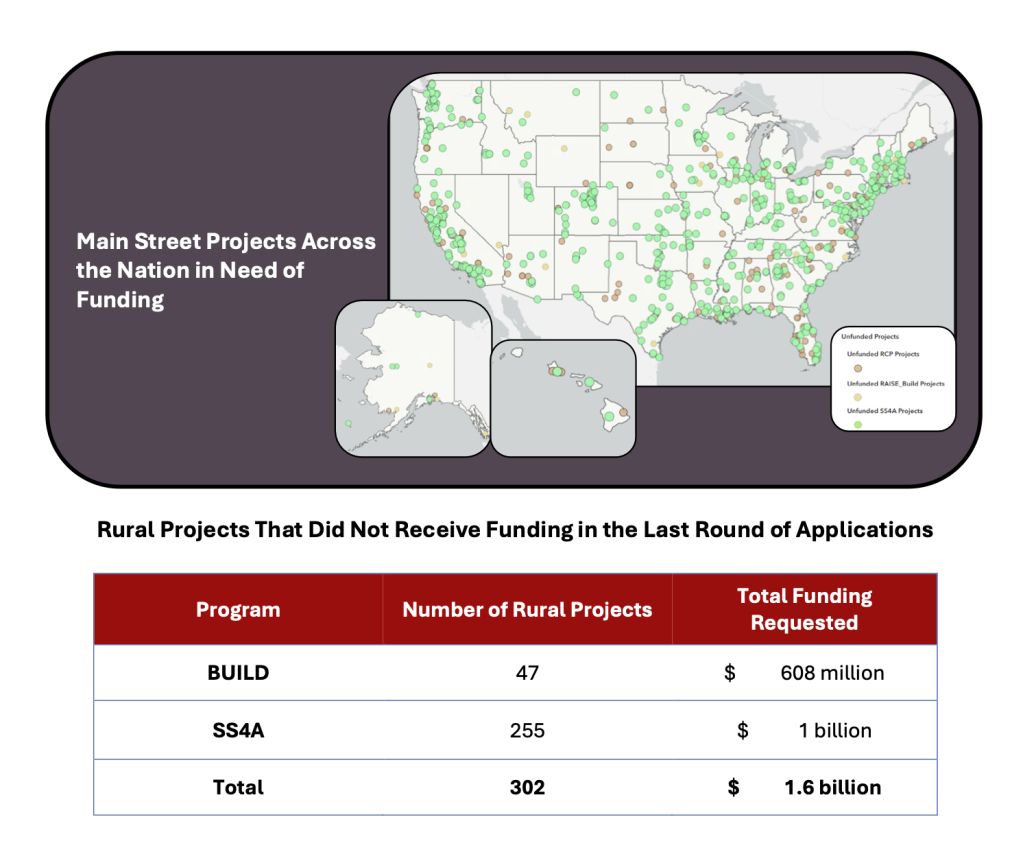
Sen. Maria Cantwell (D-Wash.), who led the letter’s release and serves as ranking member of the Senate Committee on Commerce, Science and Transportation, recently oversaw the publication of a 26-page report that described these efforts as “Main Street improvement” programs. The same document noted that these programs are especially vulnerable to budget cuts despite attracting so much interest that the Department of Transportation rejected more than 1,000 applications for funding.
“Congress must reject President Trump’s budget cuts and reauthorize surface transportation programs with advance appropriations that continue to provide dependable multiyear funding for our entire transportation system — not just part of it,” Cantwell’s office wrote.
Future-proofing the federal transportation program
Unfortunately, in an era of federal clawbacks, the mere existence of robust, multi-year funds for multimodal priorities doesn’t always mean that communities will actually receive their designated money — at least without a lot of lawsuits.
The Trump administration recently gained the dubious distinction of becoming “the first administration in at least three decades to fail to approve a new transit project in its first year,” according to Transportation for America’s Steve Davis. And that’s in addition to months of freezes, clawbacks, delays, and rescissions of programs that the administration deemed too “green” or “woke.”
That’s why advocates have launched parallel efforts to persuade Congress to stop negotiating the next transportation bill until Trump stops holding existing funds hostage — and, when negotiations resume, to build more guardrails to prevent future executive interference.
Until that happens, though, average Americans will continue to suffer from a lack of affordable, safe and multimodal transportation options — and that’s costing them real money.
Two years ago, the American Society of Civil Engineers estimated that discontinuing infrastructural investment and canceling money for freight priorities — as Trump’s proposed cuts would do — would cost the average U.S. household more than $700 per year. And that’s to say nothing of the missed opportunity costs of everything our transportation network could be if we funded multimodal priorities.
“Our roads are more than just highways — they are also hubs for community activity, hosts to small businesses, routes to and from schools, and drivers of economic activity,” Cantwell’s office wrote in its report. “Our federal investment strategy must reflect that reality and empower communities to make the most of their infrastructure.”
An earlier version of this article misstated Senator Cantwell’s role on the Senate Committee on Commerce, Science and Transportation. We regret the error.

Streetsblog has migrated to a new comment system. New commenters can register directly in the comments section of any article. Returning commenters: your previous comments and display name have been preserved, but you'll need to reclaim your account by clicking "Forgot your password?" on the sign-in form, entering your email, and following the verification link to set a new password — this is required because passwords could not be carried over during the migration. For questions, contact tips@streetsblog.org.