Study: Trump’s Transit Proposal Would Cost the Country So Many Jobs — And Not Just in Cities
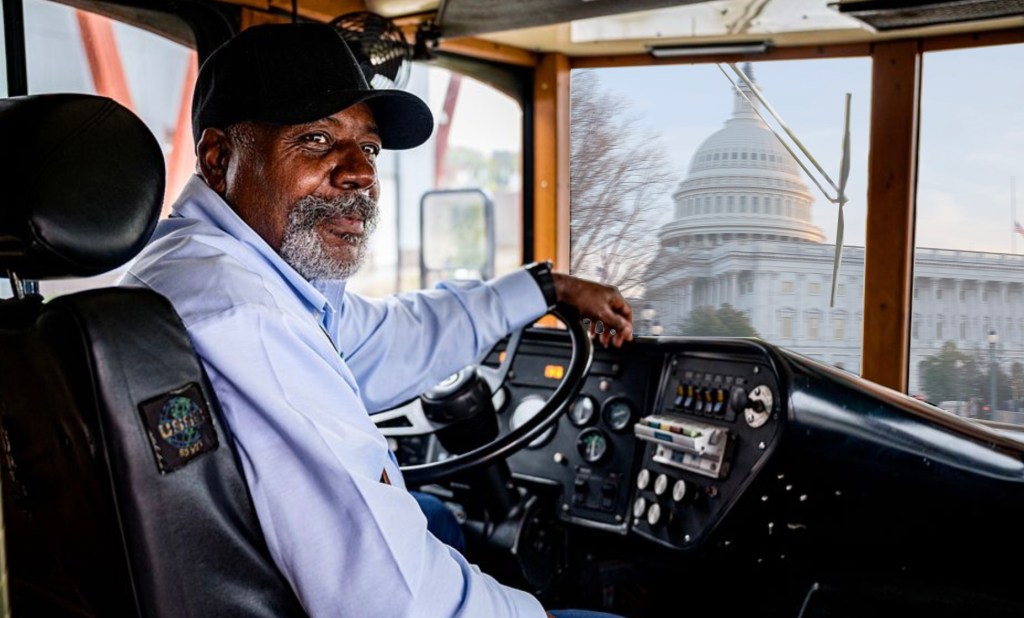

The Trump administration’s proposal to eliminate federal transit funding would clearly devastate riders, but it would also be a bloodbath for transit workers and the families who rely on them, particularly in the type of communities that make up much of the GOP base, according to a recent analysis.
Researchers at the Urban Institute recently found that the White House’s recommendation that Congress eliminate the Mass Transit Account of the Highway Trust Fund would force agencies in small metros and rural areas to cut half or more of their staff. That move which would force them to halve transit service, too, impacting countless U.S. workers’ ability to reach their jobs, too.
That’s because unlike bigger cities, which have been mostly restricted to using their federal dollars for capital projects since the 1990s, small agencies can rely on grants sent from Washington to help pay for the basics, like salaries for bus drivers and people to clean train stations.
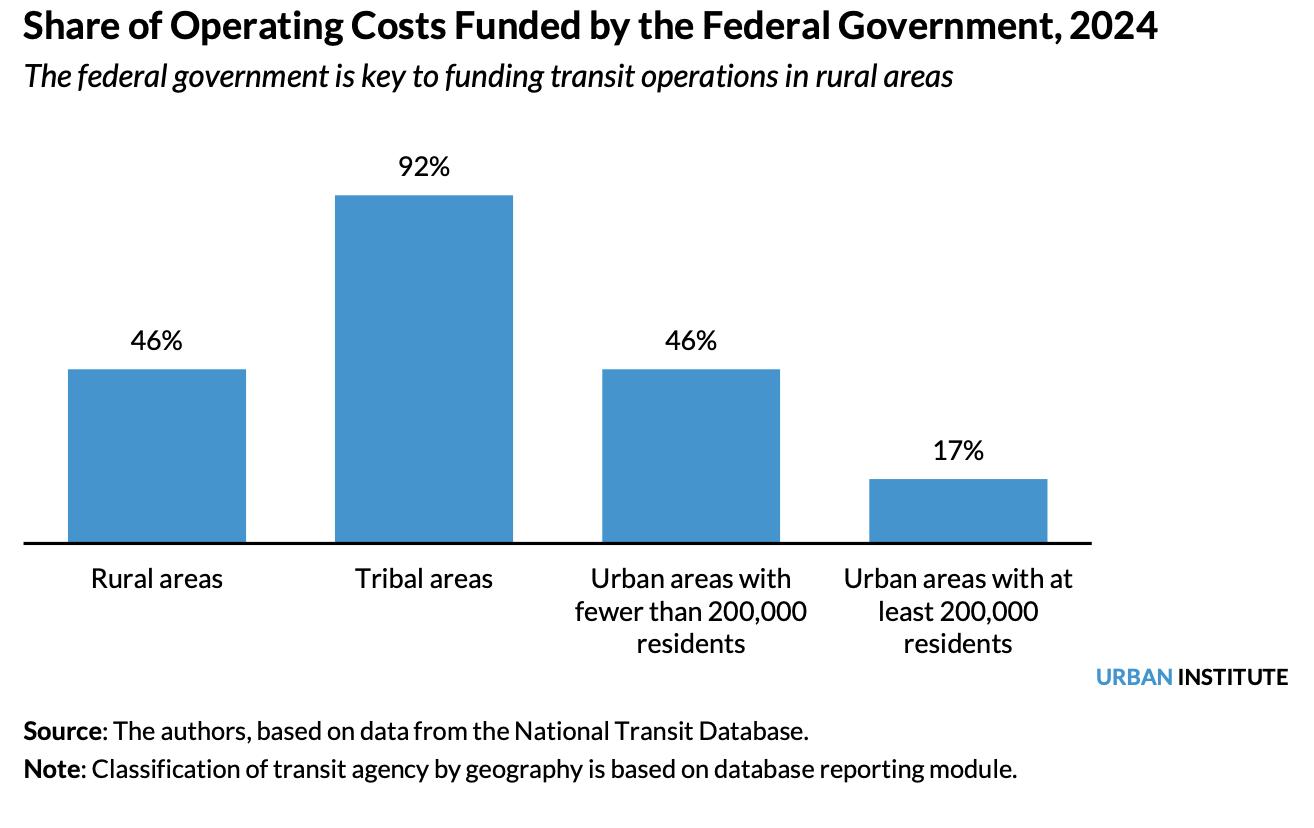
Even larger cities have come to depend more heavily on federal money for operations since the pandemic, when lawmakers relaxed the operations funding rule to help keep agencies afloat when riders fled buses and trains. The report authors say that makes it “difficult” for them “to estimate how much cuts in federal funding could affect workforce outcomes” even into the future, especially if local sources don’t fill the gap — which they often don’t.
As a result, by 2024 even urban areas over 200,000 residents were getting 17 percent of their operating costs paid for by U.S. taxpayers. Tribal areas, meanwhile, were getting an astounding 92 percent — which means the elimination of federal dollars could essentially wipe out transit for most indigenous communities in the country.
The human costs of that move can be even higher, the researchers behind the study say. People in non-urban areas are often even more reliant on transit than their urban counterparts — and even more devastated when it vanishes, too.
An astonishing 4.3 million rural residents in the U.S. don’t have personal cars, even as they face longer commute distances that often put even the most basic needs well out of walking or biking distance, along roads with little protection for people outside vehicles.
“When you talk about the federal government cutting funds for transit, we’re talking about essentially firing half or more of the staff who work for transit agencies in those rural and tribal areas,” said Yonah Freemark, who co-authored the report. “And if folks are not there to actually drive the bus, transit agencies do not have the ability to hire a scab to make up the gap. … There has to be somebody that provides the service when the bus is ready to run, or the bus will literally not run.”
Of course, the need for more federal operations funding alone isn’t the only reason why so many transit agencies are facing a worker shortage — even if it certainly doesn’t make matters easier.
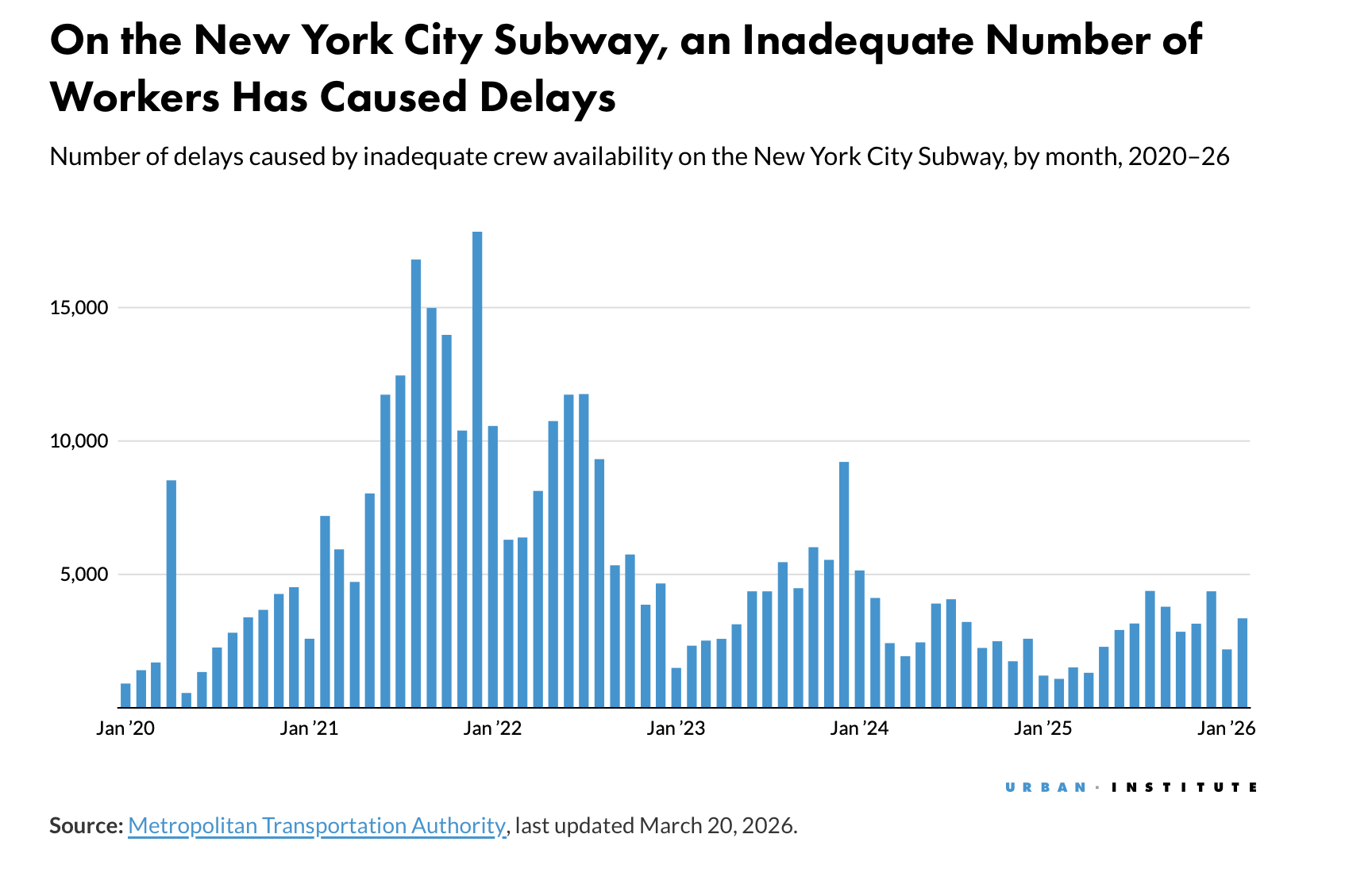
The researchers say that longstanding internal challenges like steep “job entry requirements, health and safety conditions, scheduling rules, and a lack of career advancement pathways” are all making it harder for communities to attract and retain workers, with direct impacts on the level of service they can provide. A companion study conducted by the Institute found that worker shortages in New York City caused as many as 17,843 delayed subway trips in a single month.
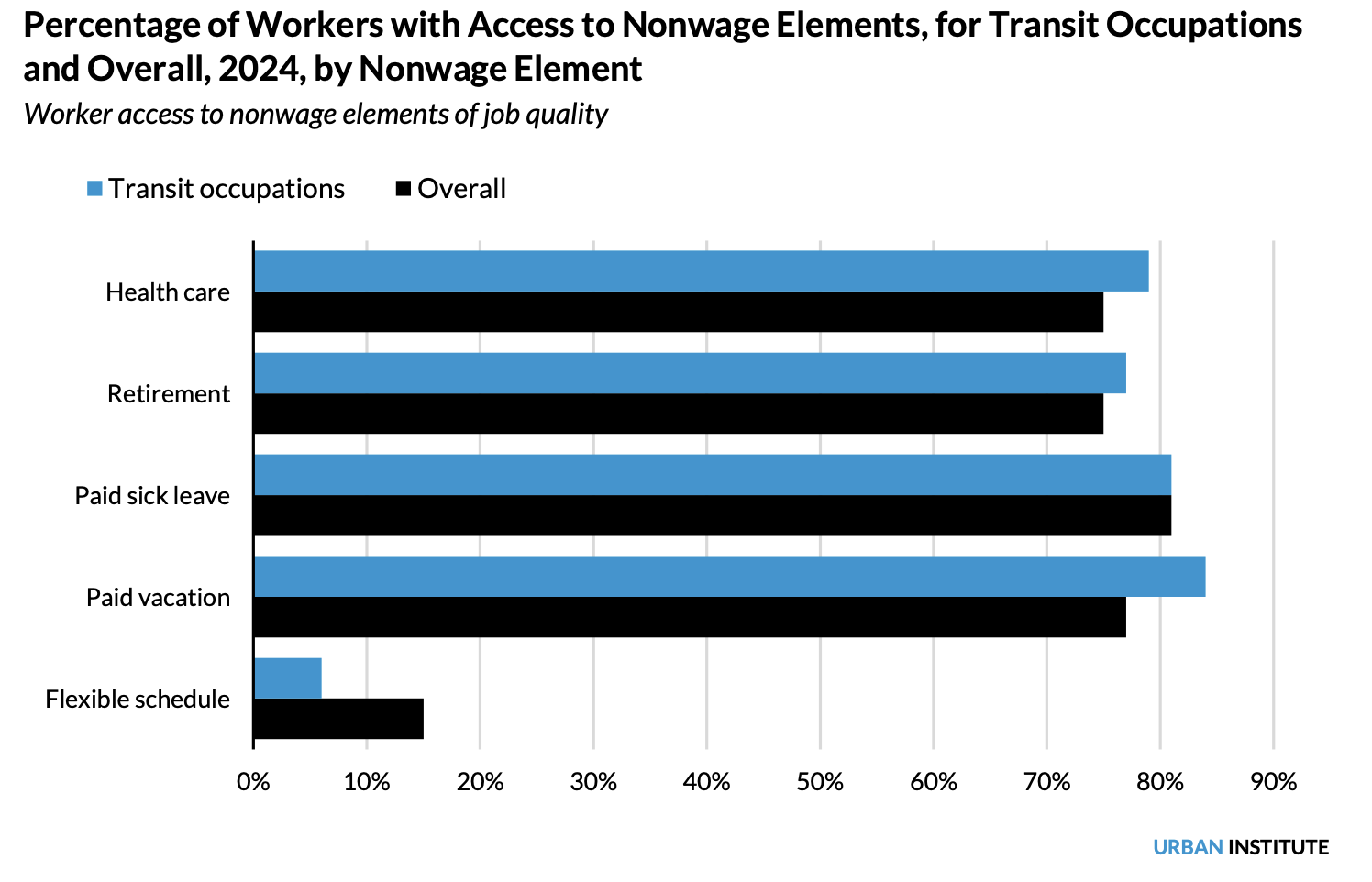
Low wages, on the other hand, might not actually be one of the main reasons why America is struggling to hire bus drivers and other staff — though that varies from community to community. Freemark says that while, by and large, “transit jobs are pretty competitive to other transportation industry jobs from a wage perspective,” places like Boston pay significantly less than the median wage for workers overall.
And while some GOP pundits paint transit as a lawless hellscape where workers and riders alike are under constant attack, but fear of violence is less of a concern today than it was during the pandemic — at least compared to stickier problems like inconvenient peak-hour schedules.
“Transit plays its most important role during peak hours, when other people are moving around the city or trying to get home to their families,” Freemark added. “And so from that perspective, I think transit agencies can play an important role by doing things like offering childcare benefits — which many of them do not do right now. But it could be beneficial in getting people to say, ‘It’s okay for me to take this job, even though it’s at this time that’s not ideal.”
Regardless of the reasons behind their hiring challenges, Freemark stresses that freeing up federal money for operations could help agencies solve them — and that, in turn, could help increase transit ridership across the country.
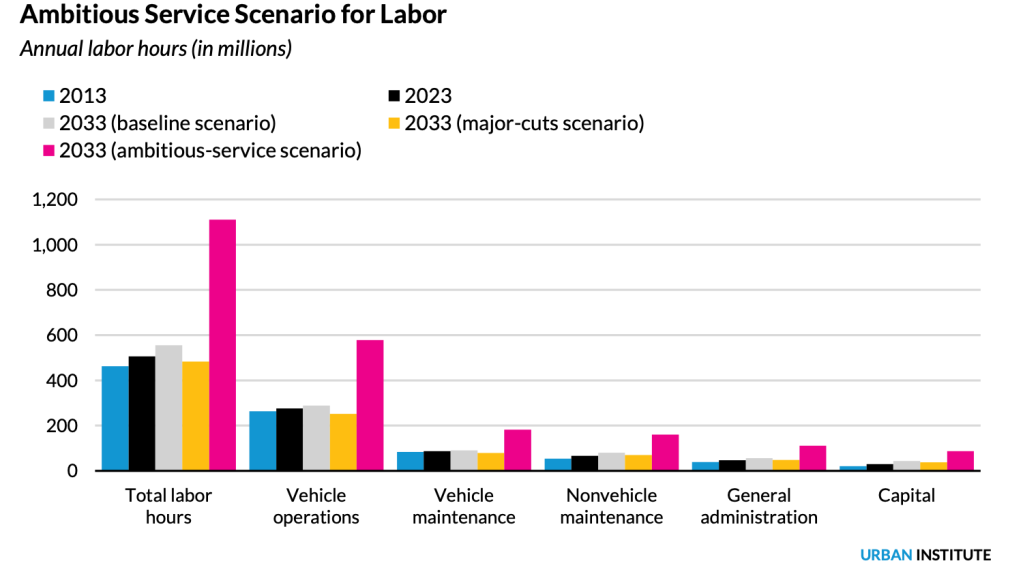
In addition to modeling Trump’s doomsday cuts (which have the support of some members of Congress), the Urban Institute also modeled what would happen if agencies got an infusion of federal operating money, by mapping how much staff agencies would need to double the number of revenue miles they operate by 2033.
That feat would require a lot of funding, but it would also result in a massive increase in jobs and access, which Freemark argues would pay for itself.
“If we were to make that investment of improved transit, it would also be a job generator, and that is not to be dismissed,” added Freemark. “Frankly, job creation is something that a lot of folks care about. We’re hopeful that this paper can help make the case for improved transit investment — not only as something that benefits riders, but also as something that benefits labor.”
Freemark acknowledges that with the GOP at the helm of the negotiations, there might not be much of an appetite in Washington for an influx of transit operating cash right now— even if advocates are still pushing hard for legislation like the Stronger Communities Through Better Transit Act to do just that.
Still, he says that we should never assume that getting shared modes more is a lost cause, especially if we can market that move as a job creator in addition to increasing access to basic mobility.
“At the beginning of Covid, transit agencies were on their knees, and Congress stepped up,” Freemark added. “I mean, they provided $69 billion — kind of out of nowhere — for transit agencies. That suggests that if the message is right and if the time is right, change can be made.”

Read More:
Streetsblog has migrated to a new comment system. New commenters can register directly in the comments section of any article. Returning commenters: your previous comments and display name have been preserved, but you'll need to reclaim your account by clicking "Forgot your password?" on the sign-in form, entering your email, and following the verification link to set a new password — this is required because passwords could not be carried over during the migration. For questions, contact tips@streetsblog.org.