These Advocates Are Mapping — and Grading — Every Bike Rack In Town
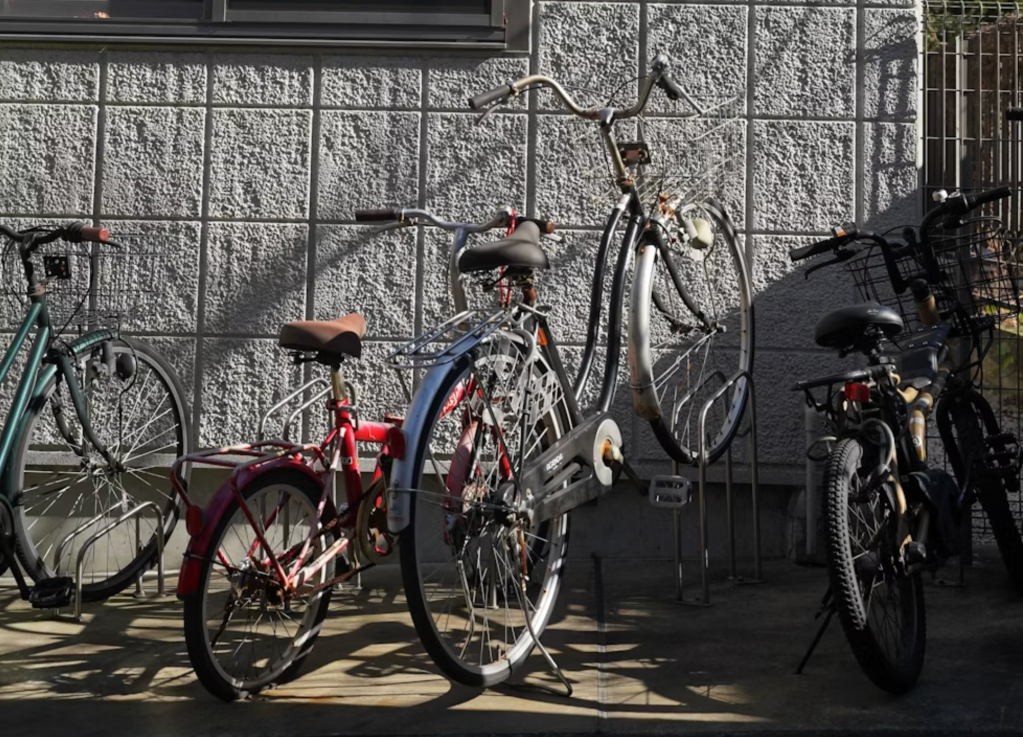
A group of Las Vegas advocates are tackling one of the trickiest problems in the fight for livable streets: making sure people on bikes have a good place to lock up once they’re off the street and done with their ride.
Sin City cyclists recently announced that they’d mapped more than 2,152 bike parking locations across the Las Vegas Valley as part of a campaign helmed by the founder of BikeRackMap.com, who lives in the area.
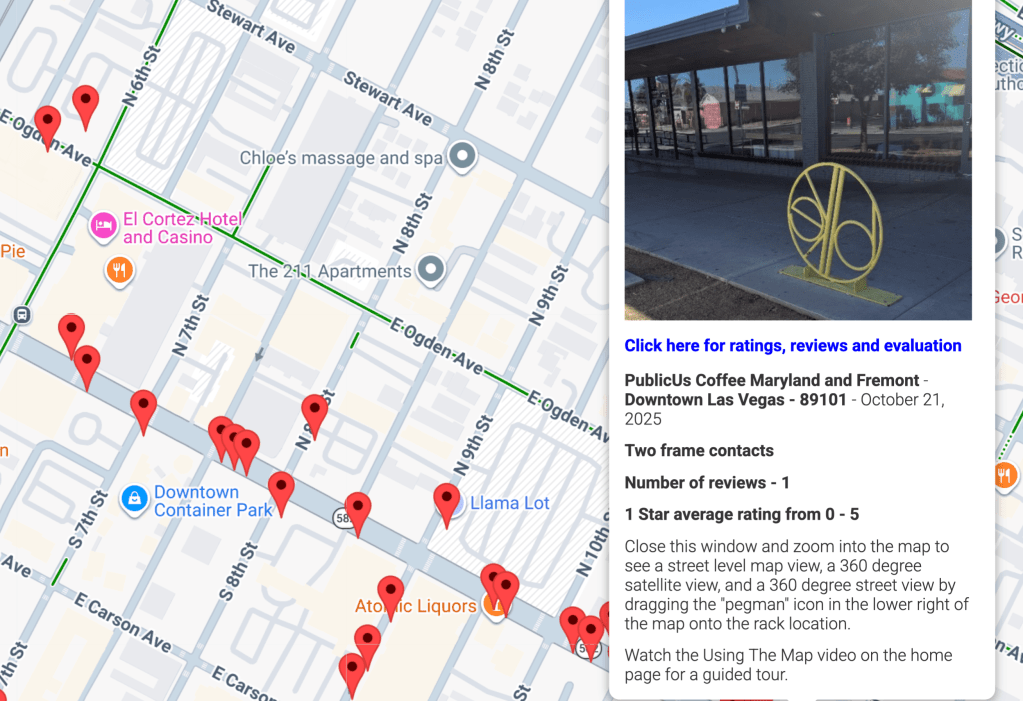
There’s no way to know exactly how much of the community’s bike parking the map represents — and that’s part of the problem. Because bike racks are often sited on private land — and because they’re not legally required by most city building codes, unlike car parking — many local governments have no idea where cyclists can publicly lock up, and do little to proactively increase the share of available spots.
Cyclists themselves, meanwhile, have no choice but to find storage on the go, even if that means reluctantly chaining to a pole and blocking the sidewalk, or praying their ride doesn’t get stolen off a shoddy, grid-style rack that all but asks thieves to pop off a front wheel and abscond with the frame.
For BikeRackMap founder Craig Davis, that’s simply unacceptable — and with the power of grassroots activism, it’s fixable.
“To have viable active transportation, you have to have safe, shared streets — and you have to have a safe, convenient, and secure network of excellent bike parking,” Davis added.
Davis says that while many city governments maintain searchable, public-facing maps of bike routes, few have similar maps for bike racks, making it hard to identify bike storage “deserts” with no cycling storage for multiple blocks. The maps they do have also tend to be published on user-unfriendly interfaces aimed at traffic planners like ArcGIS, which aren’t helpful for a rider who just wants to figure out where to park for a concert.
When it comes to the quality of bike racks, meanwhile, many governments do promote good bike parking guidelines like the ones published by the Association of Pedestrian and Bicyclist Professionals. In practice, though, it’s largely up to property owners to decide whether they’ll follow those guidelines, never mind exceed them by providing amenities like e-bike charging, covered bike “hangars,” or video monitoring.
In Las Vegas, the vast majority of them don’t clear that bar — and some are way worse than others.
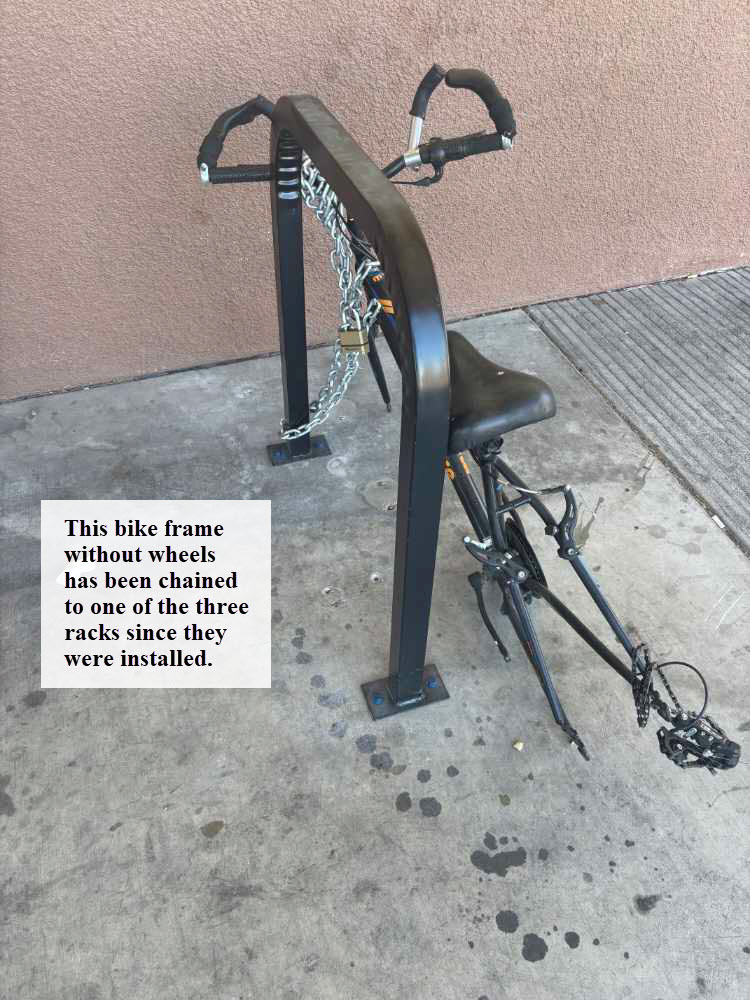
Davis and his fellow advocates recently did a survey of Albertson’s grocery stores across the Valley, and found that nearly all of the racks were obstructed, difficult to access, hard to lock to, or otherwise lost points on the site’s 10-point evaluation system. At the end of the blitz, the group gave a zero-out-of-five rating to 81 percent of the racks.
“[These racks] repel cyclists,” the group wrote in a blog post. “They do not make a positive difference in our communities. Rather, they force shoppers to use expensive and polluting vehicles instead of clean transportation that improves our communities, planet, and shoppers mental and physical well-being.”
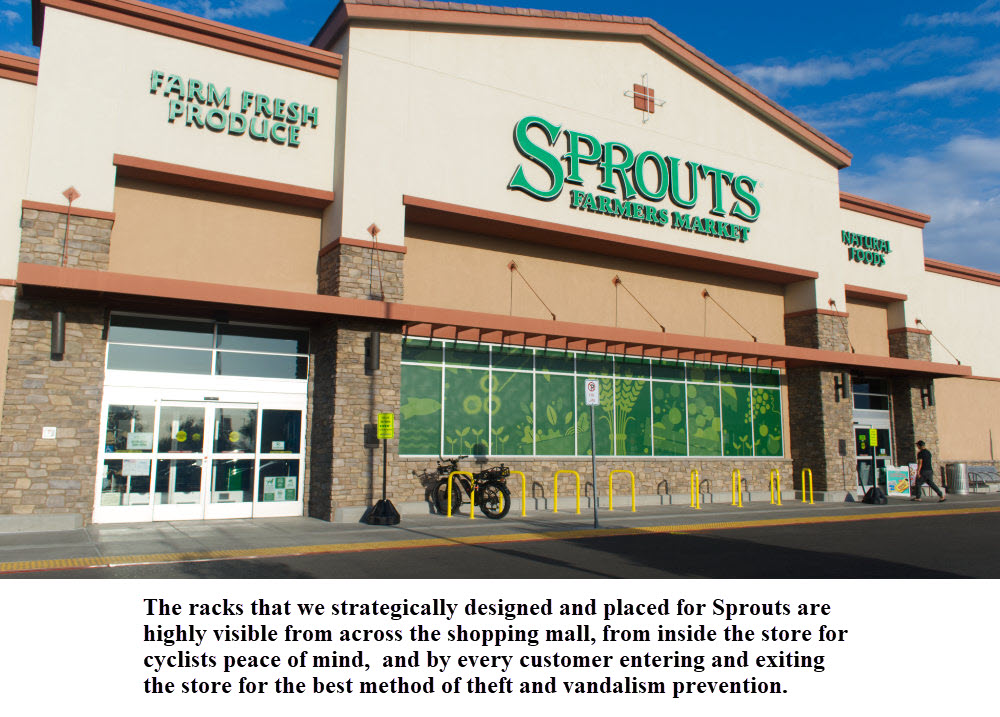
Racks at rival grocery Sprouts, though, consistently won high marks from the reviewers – a fact which they highlighted when they brought their results to Albertson’s store directors to lobby for change.
By making the map searchable by company as well as by neighborhood, Davis hopes advocates can pressure the property owners who install bad racks to do better — particularly if those owners are corporations with a stated commitment to promoting public health.
“If cyclists don’t feel that [these racks] are usable, then they won’t get used,” Davis adds. “And it will be a wasted investment, whether it’s from a corporation or from public dollars.”
With thousands of undocumented bike racks peppered across major cities, Davis acknowledges that it’s not easy to create a comprehensive municipal bike storage map — and that putting that burden on advocates isn’t realistic in all communities.
Still, he argues that some advocates enjoy scouting out their cities’ bike storage supply, like one group in Reno, Nevada who mapped over a hundred locations in a single go and ended the night with pizza and beer.
“Cyclists really want to have voice,” Davis continues. “This is giving them agency in this process, and generating very unique data that local governments don’t have.”

Read More:
Streetsblog has migrated to a new comment system. New commenters can register directly in the comments section of any article. Returning commenters: your previous comments and display name have been preserved, but you'll need to reclaim your account by clicking "Forgot your password?" on the sign-in form, entering your email, and following the verification link to set a new password — this is required because passwords could not be carried over during the migration. For questions, contact tips@streetsblog.org.