America Keeps Building Stadiums Like Transit Doesn’t Matter
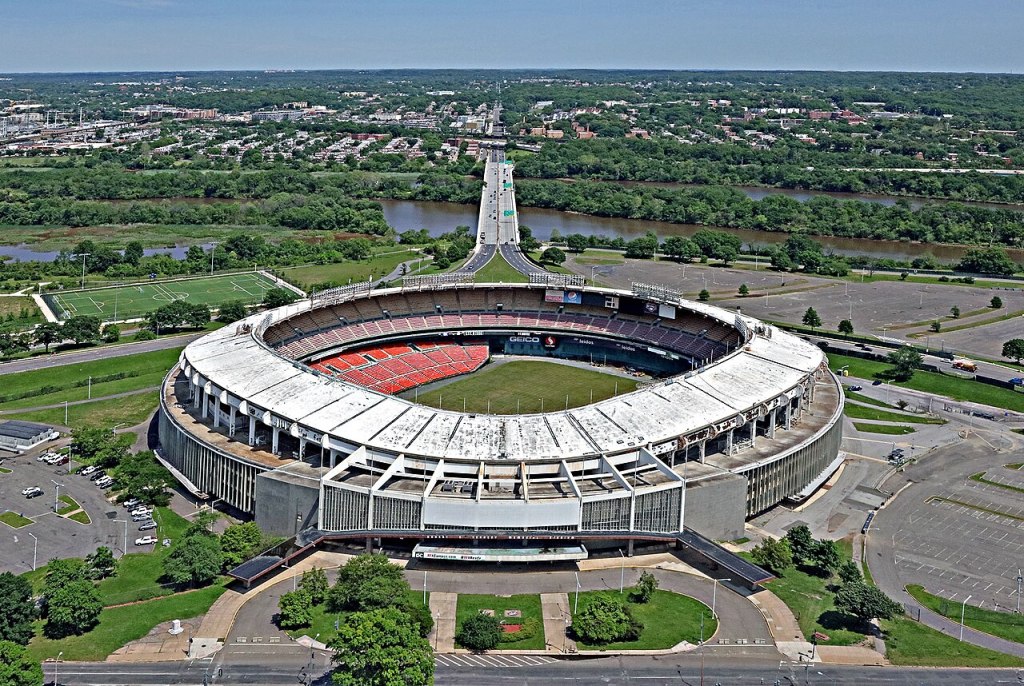
Washington, D.C. is preparing to make the same mistake too many American cities keep making: building a billion-dollar destination without building the transportation system to match it.
The proposed redevelopment of the Robert F. Kennedy Stadium site — the once and potentially future home of the Washington Commanders football team — is being sold as “transit-first.” And that phrase sounds ambitious — until you look at the numbers.
The plan anticipates that roughly 40,000 people — the overwhelming majority of attendees — will arrive by Metro, bus, walking, biking, or other non-car options. Only about 25,000 are expected to arrive by automobile, despite thousands of planned parking spaces.
In other words, the project depends on transit to function.
So why isn’t the city building a new Metro station?
Instead, Washington is preparing to funnel tens of thousands of people through the existing Stadium—Armory station and supplement the gap with expanded bus service. That may satisfy transportation modeling spreadsheets. But anyone who has stood shoulder-to-shoulder on an overcrowded platform after a concert, playoff game, or public event already knows what those models often miss: transit systems break down long before they technically fail.
They break down when stations become bottlenecks.
They break down when crowds overwhelm sidewalks, fare gates, escalators, and platforms.
They break down when moving people safely becomes secondary to simply moving them eventually.
And they break down when cities mistake “having transit nearby” for actually designing around transit.
That distinction matters.
The RFK redevelopment is not a suburban football stadium surrounded by parking lots. It is being positioned as a dense entertainment and mixed-use district capable of hosting NFL games, concerts, festivals, international events, and potentially World Cup-related activities. This is the kind of project cities spend generations talking about and decades financing.
Yet the transit conversation surrounding it feels stuck in the 1990s.
Globally, cities that build major stadium districts understand a basic truth: transportation is not an accessory to development. It is the development.
Look at London. Paris. Tokyo. Even newer international stadium districts in less transit-rich countries are designed around layered mobility systems, with multiple rail access points and distributed pedestrian circulation. These elements work together with bus integration, dedicated bike infrastructure, and redundancy to prevent one station or corridor from collapsing under pressure.
American cities, by contrast, too often approach mobility like an afterthought. We build first, celebrate renderings second, and only later realize we forgot to ask how 60,000 people are supposed to leave at the same time.
Then comes the predictable cycle. Overcrowded stations. Overwhelmed transit staff. Traffic spillover into neighborhoods. Emergency access concerns. And millions — sometimes billions — spent retrofitting infrastructure that should have been included from the start.
The most frustrating part is that Washington already knows what successful high-volume transit design looks like.
Stations like Gallery Place and the Farragut corridor work because they distribute people. Riders can enter and exit from multiple points. Crowds disperse across blocks instead of collapsing into a single choke point. Pressure is absorbed by the system instead of concentrated into one vulnerable node.
That is not just convenience. It is safety infrastructure.
A single overloaded station serving a massive stadium district creates risks that extend far beyond game day inconvenience. That might look like dangerous crowd surges, delayed emergency response, or simple platform overcrowding. It could even result in accessibility failures and ripple effects across the broader transit network.
And those burdens will not fall equally.
Residents east of the Anacostia River — many of whom already rely heavily on public transportation and endure longer commute times — will inherit the operational strain of a project largely marketed toward visitors, tourists, and regional entertainment consumers.
That is why this debate matters beyond football.
The RFK site is ultimately a test of whether American cities are serious about building transit-oriented futures — or whether “transit-first” has simply become another branding phrase used to justify mega-projects without making the hard infrastructure investments required to support them. Because a project cannot claim to be transit-first while treating transit capacity as optional.
If tens of thousands of people are expected to rely on Metro to make the project viable, then Metro infrastructure should expand alongside the project itself — not years later after overcrowding, delays, and public frustration become politically impossible to ignore.
And this is bigger than Washington.
Cities across America are racing to build stadium districts, innovation hubs, entertainment corridors, and waterfront megaprojects. But too many are still planning transportation the way previous generations planned highways: as something engineered around cars first and people second.
The result is infrastructure that looks impressive in renderings but feels dysfunctional in real life.
The RFK redevelopment offers Washington a rare opportunity to do something different:
2to treat mobility as core civic infrastructure, to prioritize long-term public movement over short-term construction savings, and to build a stadium district designed not just to attract crowds — but to handle them.
Because great cities are not judged only by what they build. They are judged by whether people can actually move through them.

Read More:
Streetsblog has migrated to a new comment system. New commenters can register directly in the comments section of any article. Returning commenters: your previous comments and display name have been preserved, but you'll need to reclaim your account by clicking "Forgot your password?" on the sign-in form, entering your email, and following the verification link to set a new password — this is required because passwords could not be carried over during the migration. For questions, contact tips@streetsblog.org.