Opinion: It’s Time to Rethink Our Congestion Obsession
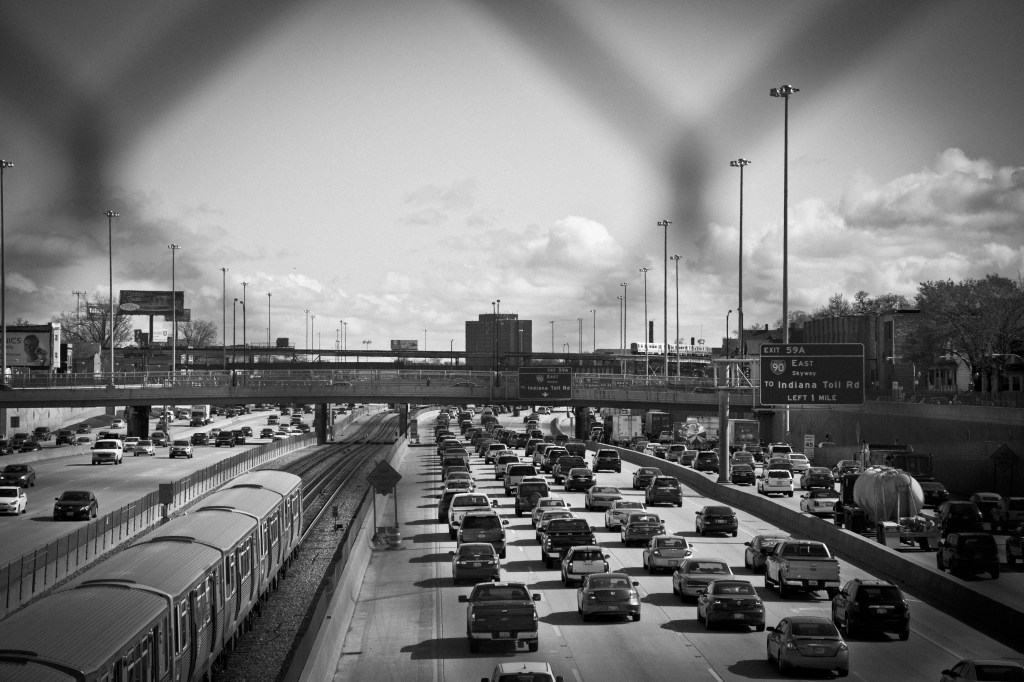
The US Department of Transportation launched a “Freedom to Drive” initiative last month that aims to “tackle the nation’s growing congestion problem.” The belief that congestion is a problem is not new. People have been complaining about traffic congestion for more than a century, from when cars first clogged city streets. They are complaining about it still, as in a recent New York Times article describing traffic in Los Angeles as “soul-crushing.”
It is not surprising, given all the complaining, that congestion remains the primary focus of transportation policy in the United States. But why all this obsession with congestion?
Congestion is unquestionably bad for us. It causes stress and negatively affects mental well-being. By adding to travel time, congestion increases exposure to potential injuries and fatalities as well as air pollutants for drivers and passengers. The simple act of sitting in a car is not good for one’s health. Compounding these problems, time stuck in traffic is time that one could otherwise spend in activities healthy for mind and body.
Psychology might also explain our hatred of traffic. Because a driver stuck in traffic cannot go as fast as they think they should be able to, a twenty-minute trip with traffic feels worse than a twenty-minute trip without traffic. The inability to move means that drivers have lost not just time but autonomy, their ability to act independently of external forces. Being trapped in a traffic jam might trigger feelings akin to claustrophobia. All these effects are possibly greater when one does not anticipate the congestion.
From a policy standpoint, we villainize congestion for its impacts on the economy. The annual Urban Mobility Report, published by the Texas Transportation Institute, estimates that “Americans lost an average of 63 hours sitting in traffic in 2024” and converts this into monetary impacts of $269 billion annually.
In promoting its new initiative, US DOT even calls congestion a “drain on American families and our economy.” Time is money, after all.
According to this line of thought, efficiency depends on speed, and economic growth depends on minimizing delays. This belief explains a century of highway expansions sold to the public as solutions to the congestion problem and essential for the economy.
But these projects have succeeded in reducing congestion only in the short-term despite consuming vast sums of public funding. The new federal initiative, which encourages states to expand their highways, are likely to be as ineffective as the old ones.
It’s time for some new thinking.
We can start by embracing the one proven strategy for reducing congestion: congestion pricing.
Congestion pricing is a way of prioritizing driving trips: if driving is important enough for a given trip, the driver will pay; if not, the driver will switch to another mode or reschedule or forgo the trip. This sorting results in more efficient use of the roadway system by ensuring that it serves the driving trips with the highest value to drivers at peak hours.
We can address the equity concerns this pay-to-drive strategy raises by using the toll revenues to improve transit and other driving alternatives and to subsidize tolls for low-income workers who need to drive. A year of congestion pricing in New York shows it can work.
We can think about congestion not as a phenomenon in need of reduction but rather as an experience that should be optional. Congestion becomes optional if we provide good alternatives to driving.
This would require a shift in funding away from highway expansion projects that have at best a short-term effect on congestion to alternatives such as transit, biking, and walking that give people a long-term way to avoid it. It would also require changes in land use patterns to improve the viability of these alternatives and that would, as a bonus, enable shorter driving trips. We would also need to make housing more affordable in these places, and one way to do that is to waste less land on roads and parking.
We could also reconsider our definition of congestion.
Congestion is measured relative to “free-flow” speed, the speed at which one can drive in light traffic conditions, usually around 70 mph on highways. An average speed less than that produces a “delay” — defined as the difference between the travel time at the free-flow speed and the travel time at the actual speed given roadway conditions.
But this is an entirely subjective standard, and it is also an unrealistic expectation, as experience has proven time and time again. By simply resetting our expectations to lower speeds, by reconciling ourselves to having to spend a bit more time getting places, we lessen the congestion problem by definition.
After all, time isn’t the only way to think about the efficiency of the system. The congestion problem stems in part from the fact that cars are a spatially inefficient way to move people: each car requires considerable roadway and parking space but carries less than 1.5 people on average in the US.
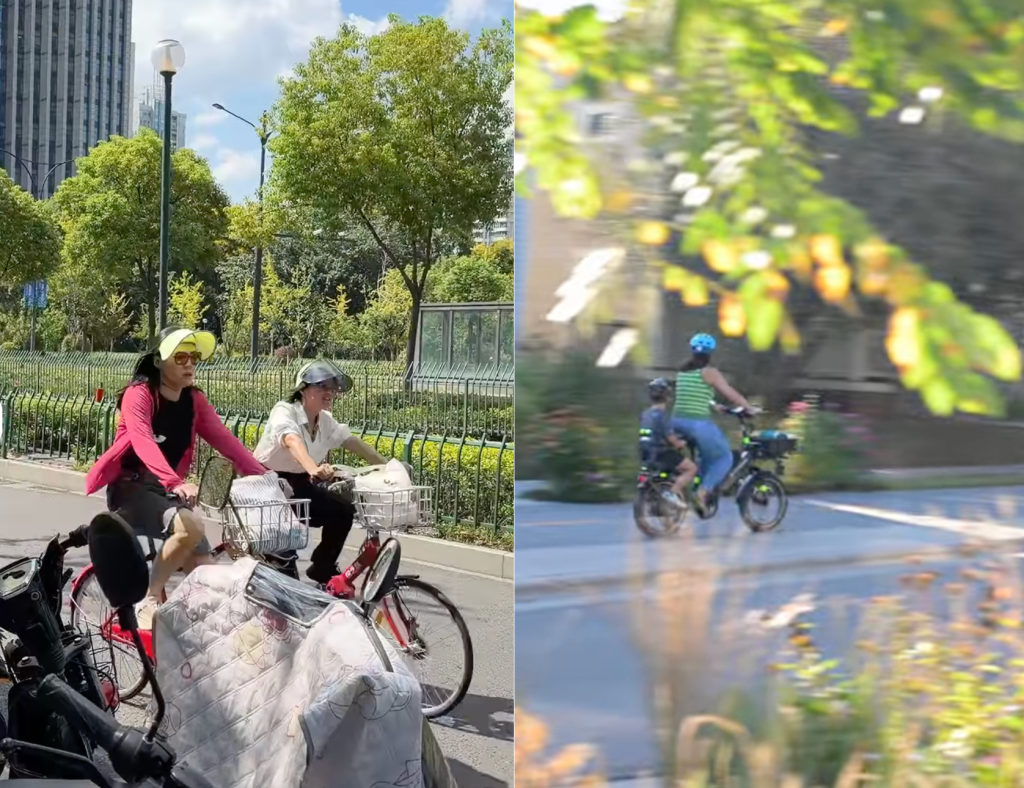
From a space efficiency standpoint, it would make sense to devote more road space to modes such as transit, biking, and walking that consume far less space per person moved. Contrary to the backlash against bike lanes in cities like Toronto and Washington, DC, studies show that taking space away from cars does not generally increase congestion.
Recalibrating our fear of the economic impacts of congestion would also help.
Although decision-makers justify highway expansions on the basis that congestion is an economic drain, research suggests that congestion has little impact on economic growth. This is in part because congestion is to some extent self-correcting: when congestion gets bad enough, people adjust their choices to cope with it.
It is also helpful to recognize that congestion, as history shows, is a fact of life in vibrant urban centers with thriving economies. The entire world experienced this truth in reverse during the COVID pandemic.
All of which is to say that maybe we shouldn’t be quite as obsessed with congestion as we are. Thinking differently about congestion would open the door to more effective strategies for addressing it while creating space for increased attention to other pressing problems —like safety.
The single-mindedness fostered by our congestion obsession has been counterproductive. Approaching the problem with a more expansive, more equanimous frame of mind might just get us to a solution.

Read More:
Streetsblog has migrated to a new comment system. New commenters can register directly in the comments section of any article. Returning commenters: your previous comments and display name have been preserved, but you'll need to reclaim your account by clicking "Forgot your password?" on the sign-in form, entering your email, and following the verification link to set a new password — this is required because passwords could not be carried over during the migration. For questions, contact tips@streetsblog.org.