Study: How Capping Vehicle Sizes Could Help Save the World

The rising popularity of massive SUVs and trucks has made it impossible for the world to achieve its transportation goals, a new study argues – and until global nations take action to control vehicle bloat, we’ll all struggle to curb fuel demand, emissions, road deaths and more.
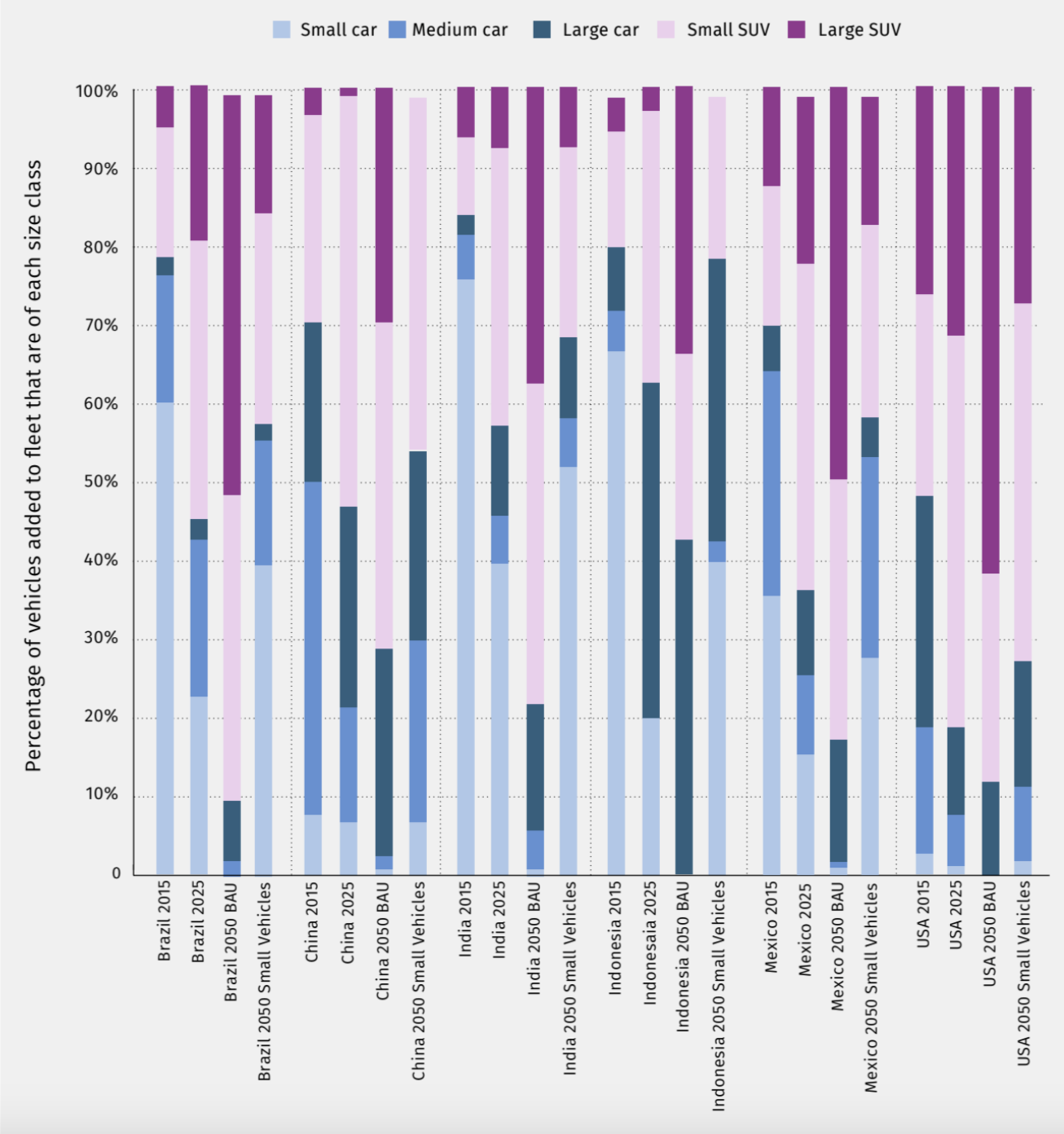
Capping the maximum size of any new passenger vehicles sold at 2020 levels could save global consumers up to 22 percent, reduce liquid fuel consumption as much as 12 percent, and reduce traffic deaths up to 9 percent — and simultaneously slash transportation sector emissions as much as 10 percent, a new report from the Institute for Transportation and Development Policy found.
While it’s not a a silver bullet for the planet’s transportation woes, the report’s authors point out that keeping car sizes in check could also sharpen an even more powerful tool in the transportation reform arsenal: shifting commuters out of cars all together.
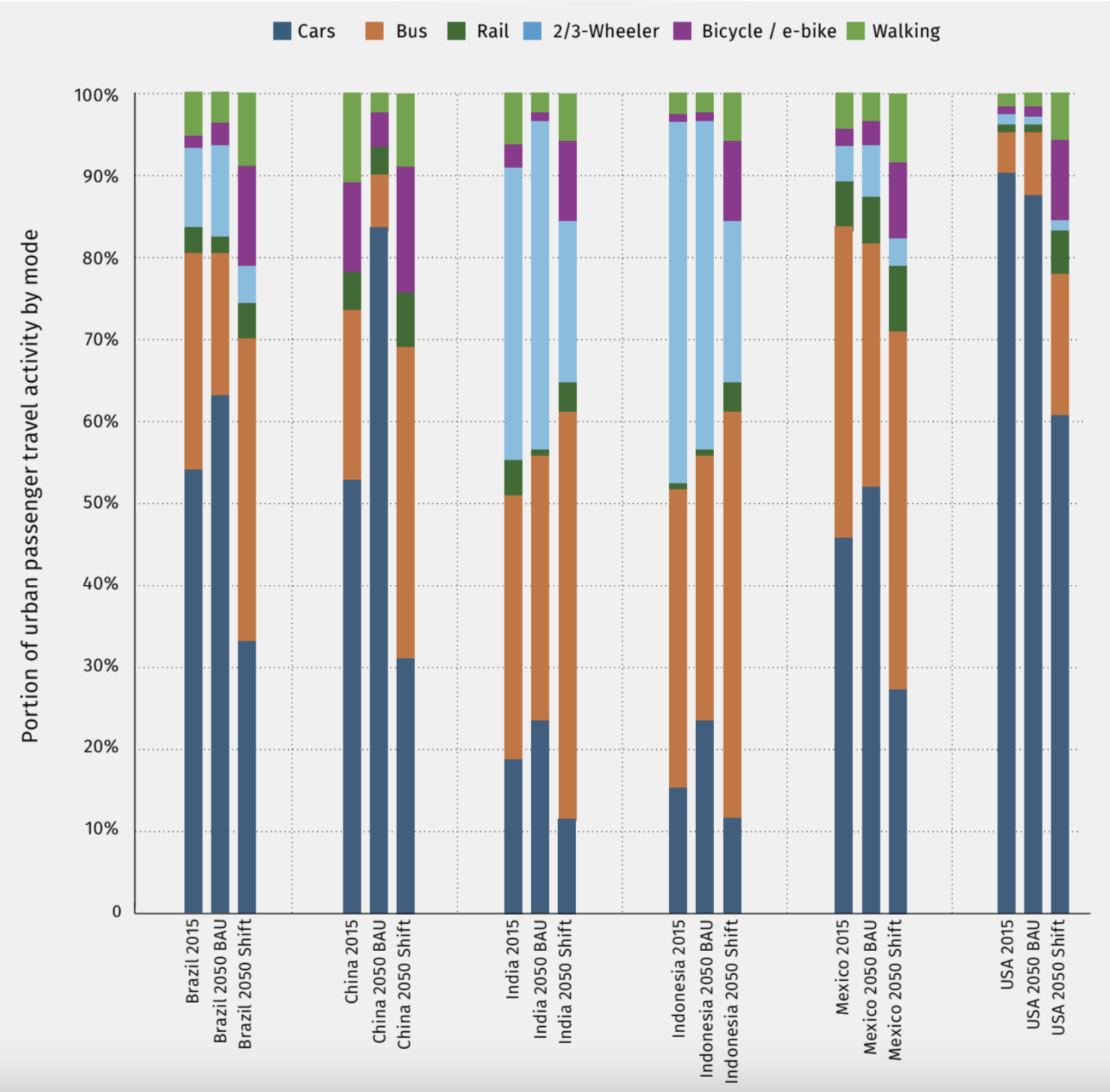
If would-be pedestrians were no longer afraid of being crushed under a Cybertruck or Hummer and started walking, biking and taking transit more, the researchers estimate that global traffic deaths would plunge an astonishing 40 percent by 2050. And when people really have to drive, right-sizing any cars left on the road could also accelerate our electrification efforts, since shifting to smaller vehicles could stretch the supply of scarce battery minerals rather than letting mega-cars gobble them up.
Add these three strategies together, and the Institute estimates that humans could reduce liquid fuel demand by 85 percent by mid-century, stabilizing the energy market and radically remaking the planet.
“People around the world are seeing their costs at the pump and elsewhere rising by the day because of their reliance on fossil fuels,” said Sheila Watson, deputy director of the FIA Foundation, which supported the study. “This report shows how the right combination of policies … reduces that reliance and saves consumer costs, all whilst significantly pushing the dial on climate action.”
Described as “the first known country-level analysis of the impact of growing vehicle sizes in urban passenger transport,” the study draws on data from six major nations including the United States, as well as “extensive, iterative reviews with country-level experts” who could speak to the specific potential for transportation reform in each nation.
No matter where those experts looked, though, it was clear that North America’s appetite for massive cars had taken over the world — and that the success of other transportation reform schemes at least partly depends on halting that trend’s trajectory. In 2008, around 20 percent of cars sold around the world were SUVs; by 2022, that had risen to more than half.
“The spread of this North American model of increasing vehicle sizes will have substantial negative impacts for countries around the world if they continue along this path,” the report warned.
To illustrate the consequences of this dark path, the authors looked at a “business as usual” scenario in which mega-cars continued to claim more and more the vehicle market, electrification efforts failed to speed up, and trips on other modes remained in the microscopic minority as overall vehicle miles traveled rose.
Then, they compared that bleak vision with three other scenarios where their focus nations threw their weight behind just one transportation reform strategy — encouraging EV adoption, limiting vehicle sizes, or pushing for mode shift — and a final scenario where they combined all three approaches in one.
That full-court press was the only scenario that came close to accomplishing the transportation goals most sensible nations share, like decarbonizing the transportation sector enough to curb climate change, bringing road deaths down, and reducing the public health impacts of air pollution in our neighborhoods.
More surprising, though, the researchers found the three strategies were mutually reinforcing, creating a virtuous cycle where success in one sector accelerated progress in the others.
Increasing the share of biking, walking and transit, for example, could reduce market demand for massive cars and scarce battery minerals; electrifying vehicles, meanwhile, could make the experience of walking in neighborhoods less noisy, smoggy and unpleasant, eventually encouraging people to skip driving for short trips altogether. And if cars shrank, so could parking lots and roads, clearing land for new developments in neighborhoods that make a walkable lifestyle possible.
“These strategies bring many benefits that we could not quantify,” the researchers added. “For example, ‘mode shift’ strategies reduce the destruction of natural areas and
farmland, and ‘high EV’ strategies reduce urban noise and improve vehicle
performance. Smaller vehicles can help free up road space for other uses, [too].”
With so many benefits to pursing a multi-pronged transportation reform strategy, it’s clear that it’s time for world leaders to act — even if many in the U.S., at least, seem intent on making car dependency worse.
“The implications are clear, and the choice of urban future rests with each city and each country’s government,” the report authors wrote. “How will they choose?”
Editor’s note: An earlier version of this article contained at typo about the year in which SUV sales rose to claim half of the vehicle market. It was 2022, not 2002.

Read More:
Streetsblog has migrated to a new comment system. New commenters can register directly in the comments section of any article. Returning commenters: your previous comments and display name have been preserved, but you'll need to reclaim your account by clicking "Forgot your password?" on the sign-in form, entering your email, and following the verification link to set a new password — this is required because passwords could not be carried over during the migration. For questions, contact tips@streetsblog.org.