Trump’s ‘Freedom Means Affordable Cars’ Rings Hollow As Gas Prices Surge
The Trump administration’s effort to maximize oil consumption is hitting a roadblock as its war on Iran sends gas prices to dizzying new heights. But will stratospheric fuel costs finally force cities to get serious about providing their citizens with real freedom to choose how they get around — including not driving at all?
Late last year, the Trump administration announced a controversial new initiative called “Freedom Means Affordable Cars” aimed at rolling back federal fuel economy standards set by the first Trump administration … which they nonetheless claimed would “ELIMINATE hidden costs that would have been imposed by the Biden-Buttigieg” DOT (excessive capitalization theirs.)
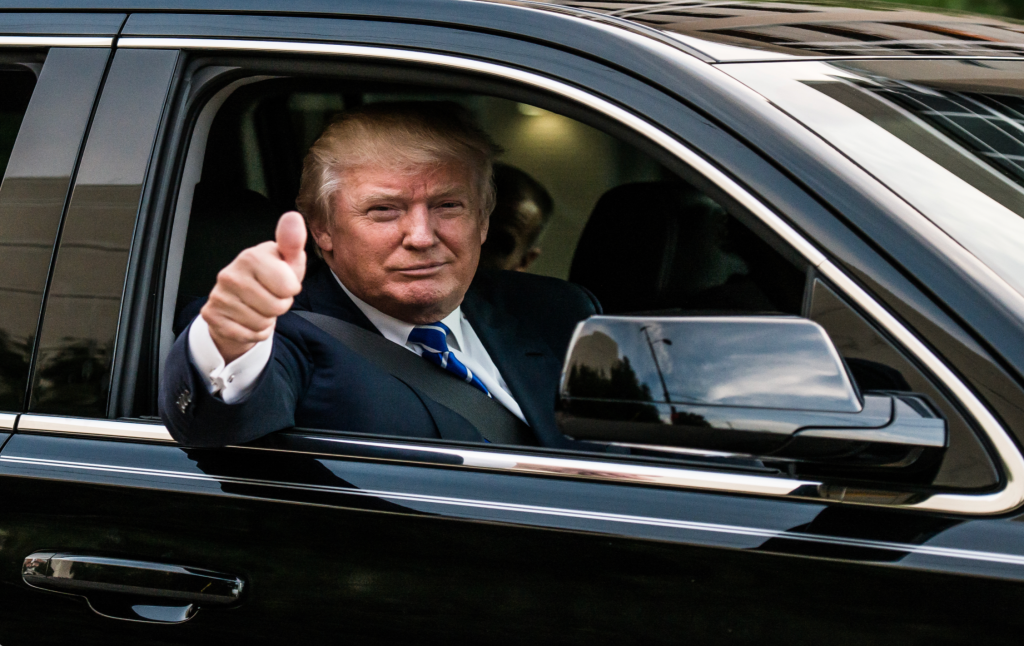
The campaign came complete with fliers featuring Trump giving a thumbs up from a passenger’s seat and unsubstantiated claims that the proposal would save American families an average of $1,000 per new vehicle, despite having to stop more often at the gas pump.
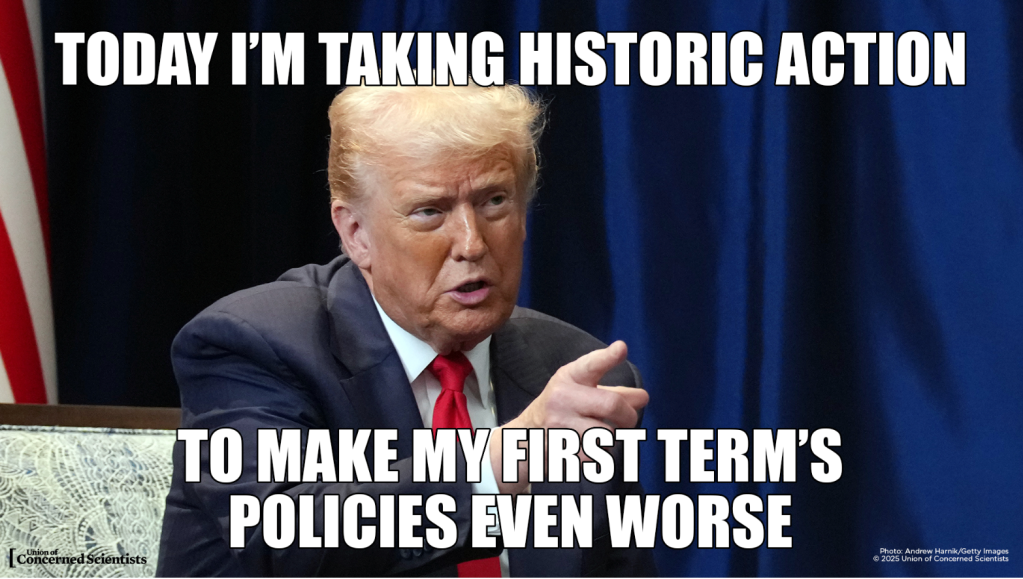
Those claims were quickly debunked by the Union of Concerned Scientists, which pointed out that the administration’s own analysis had found relaxing CAFE standards actually cost consumers — to the tune of about $600 on average over the life of the car.
With the global oil supply slowing to an expensive trickle, though, Trump’s plan to make cars even less fuel efficient “to save Americans money” — rather than, say, enrich his donors in the fossil fuel sector — rings more hollow by the day.
And American cities’ inability to provide their residents with any meaningful mobility alternatives is getting more stark by the day, too.
Here at Streetsblog, we’ve written approximately one bazillion articles about how car dependency saddles much of America with transportation costs they will never be able to afford — and how providing mobility alternatives for at least some of our trips is the only way to bring affordable transportation within reach.
If for some reason you need to hear it again, though, sure: $4-a-gallon gas might well prove to be the tipping point for some U.S. residents to ditch their gas guzzlers and buy electric cars — if they have enough money up front, plus a personal garage with a wall outlet or a local network of chargers that hasn’t been starved by policies that make federal EV charging funds functionally unusable.
But there’s no tipping point at which those same residents will climb on the train if they live in a community that doesn’t have a train, because policies at every level of government have starved their communities of transit funds for decades. And even if they have a bus, they probably won’t take it if it doesn’t reliably get them where they’re going at a speed that’s competitive with private automobiles — two failures that are the direct product of policy choices that we can fix.
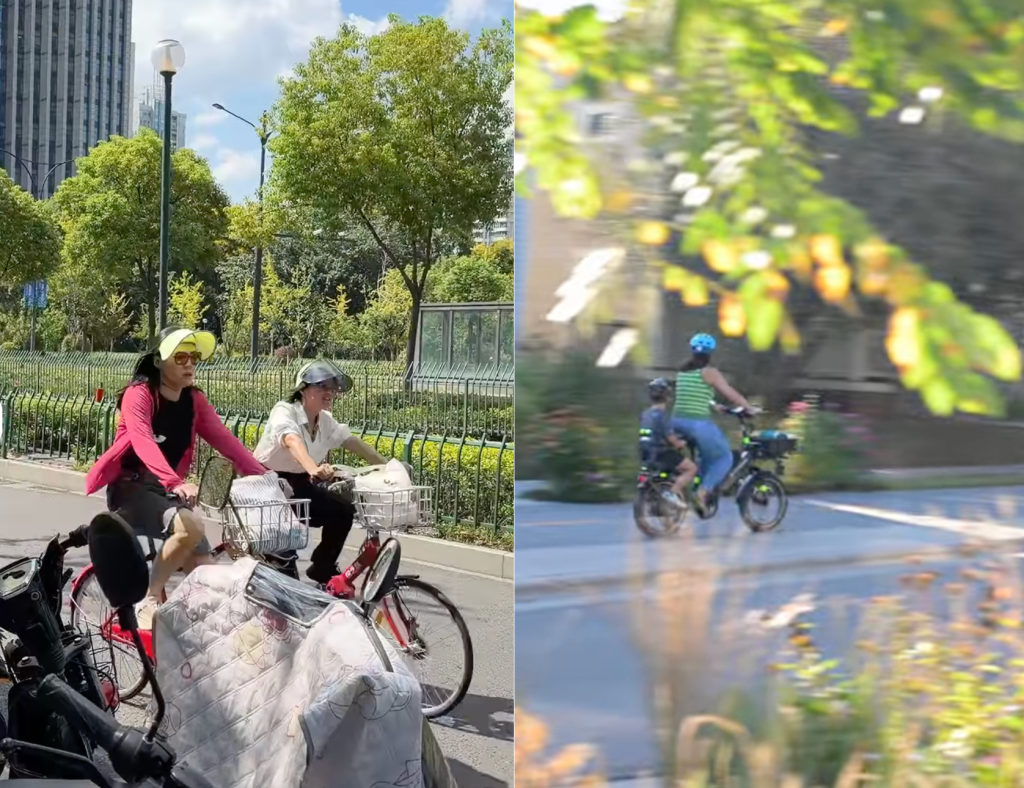
Maybe some handful of people will take those stratospheric numbers on gas station signs as their sign to finally buy an e-bike, at least to drop the kids off at the school around the corner now and then. But they probably won’t if the only route to get there is a 45 mile per hour arterial with no bike lane where they’re worried their children will be slaughtered.
Hell, hard research has already proved that most Americans are open to going completely car-free — but they’re not very likely to actually do it if they can’t so much as walk to the grocery store because decades of exclusionary zoning has ensured that the closest one is all the way across town.
It’s worth noting, though, that the “freedom” part of the “freedom means affordable cars” slogan is questionable, too, even if if you have enough money to afford the most expensive SUV on the lot. And that becomes especially clear when you consider all the kinds of harm and oppression that truly multimodal transportation systems can buy us freedom from.
In the context of a global geopolitics where as much as 50 percent of all military conflicts are fought in the name of oil, we will never be free from the burden of constant war while most U.S. residents depend on gasoline to travel even a block or two away. And that problem won’t be solved by EVs, since oil wars increasingly double as wars for other natural materials essential to the broader automotive supply chain, like helium, which is in short supply thanks to the war in Iran, too.
A broad range of transportation options also buys us freedom from the public health burdens of mass car dependency, like rampant traffic violence, air pollution, and the social isolation inherent to a system where everyone moves in a personal pod.
Unless they travel, residents of many U.S. neighborhoods will never know the palpable, intoxicating freedom of setting off on a bike or on foot without the weight of fear that they’ll be suddenly and violently killed by a driver, or slowly killed by huffing exhaust. Increasingly, children are denied the basic freedom of leaving their homes at all without a caregiver available to personally chauffeur them — and those caregivers are denied the basic freedom of a few minutes to themselves between the time their kids set off for school on the bike bus and the time they leave for work.
And let’s not even start on the many ways that car dependency has super-charged the threat of losing our freedom to incarceration, the presence of police in our communities, and the disproportionate impact of both on the marginalized.
Here’s the thing: even if you believe only in the most limited possible definition of “freedom” — the freedom to move whenever and wherever you choose — transportation systems that functionally force us to drive still don’t guarantee us more liberty.
Yes: even in a city with great transit, you might have to wait a few minutes longer for your train to show up versus the mere moments you’d spend hopping in the car in your driveway. But there is a hard geometric limit to how many people can converge on the same destination in a private car before the “freedom” to just get up and go whenever you please becomes the obligation to circle endlessly for a parking place. And many of our communities hit that limit every single day.
Take it from someone who once biked three miles to a Beyoncé concert in a gridlocked downtown, parked the bike, and was through the doors singing the Renaissance album in a cowboy hat in 20 minutes flat: once you know that kind of freedom, you’ll never want to go back. And as land-use policies are rewritten to deprioritize parking and gradually bring everyday destinations within easy biking, walking, or bussing distance, that bliss only multiplies.
Local land use changes aren’t the only tools that states and cities can use to give their residents the freedom to move however they choose — no matter what oil-guzzling mobility agenda the Trump administration tries to impose on them. Many of the most powerful tools of transit expansion are not subject to federal control, like lowering speed limits, calming traffic, and generating state and local revenue sources to expand transit service.
With gas prices showing no signs of declining anytime soon, it’s more important than ever that they use tools like these — because if we don’t, the snares of forced car dependence will only continue to tighten.

Read More:
Streetsblog has migrated to a new comment system. New commenters can register directly in the comments section of any article. Returning commenters: your previous comments and display name have been preserved, but you'll need to reclaim your account by clicking "Forgot your password?" on the sign-in form, entering your email, and following the verification link to set a new password — this is required because passwords could not be carried over during the migration. For questions, contact tips@streetsblog.org.