What If The Rising Costs of Car Dependency Were As Visible As Gas Prices?
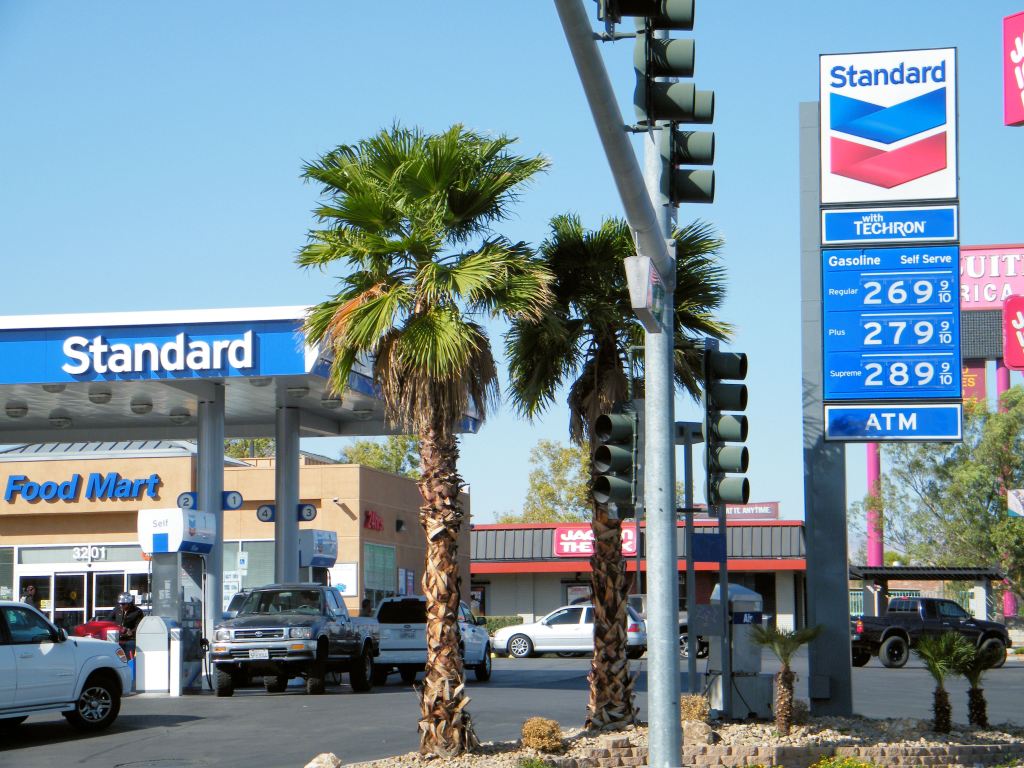
Another day, another “energy crisis.”
Sky-high gas prices resulting from President Trump’s attack on Iran are sending drivers spiraling across America — but what if the high costs of car dependency commanded the same level of attention?
Yes, motorists are reacting to $7-plus-per-gallon prices at the pump.with rage. But that anger is only a part of the broader cause of driver anxiety: the high cost of forced vehicle ownership.
Because so many American cities are so heavily car-dependent, most U.S. residents have no choice but to pony up the cash and drive anyway. Indeed, even when gas prices climbed above $5 a gallon in 2022, driving did not plummet; a Time magazine analysis at the time found that “the only time that fuel consumption really took a hit in the last 23 years was during the pandemic,” and “that, of course, had nothing to do with gas prices, which had collapsed.”
Needless to say, people who are functionally forced to drive everywhere can’t opt out of the other immediate costs of car ownership, either, like vehicle maintenance, repair, insurance, financing, and fees. And they really can’t dodge the broader costs of car dependency, like scarce and expensive housing, rising public health burdens, and the staggering costs of pollution and climate change, to name only a few.
Of course, all those cost were disturbingly high long before the energy crisis du jour. There just aren’t billboards announcing it on the side of virtually every U.S. road. But what if there were?
Here are a few ideas that we lovingly (and poorly) generated with online photo editing tools (because we don’t use generative AI).
The real costs of car ownership
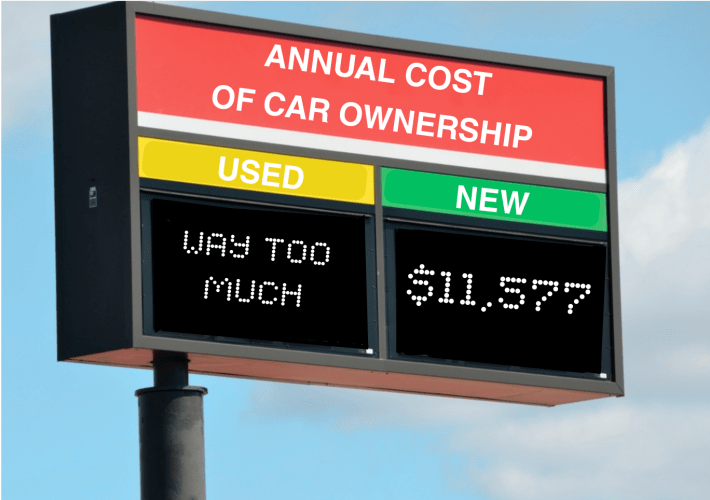
When drivers see gas prices soar — even if those prices have barely kept up with inflation — they demand that politicians bring them down … somehow. If drivers saw a daily reminder that one-quarter of their paychecks goes towards their car, though, would they demand a cheaper way to get around, like a bus or a train?
Maybe not, but it’s still interesting to imagine if AAA’s estimate for the average cost of U.S. car ownership were plastered on the side of every highway in America — and dynamically updated as, say, tariffs drove the costs of auto parts through the roof. Used prices vary a lot more, but the Bureau of Transportation Statistics estimates that the fixed costs of overall vehicle ownership alone are north of $8,500 a year — and that’s not including gas, which is heavily subsidized.
Road violence totals
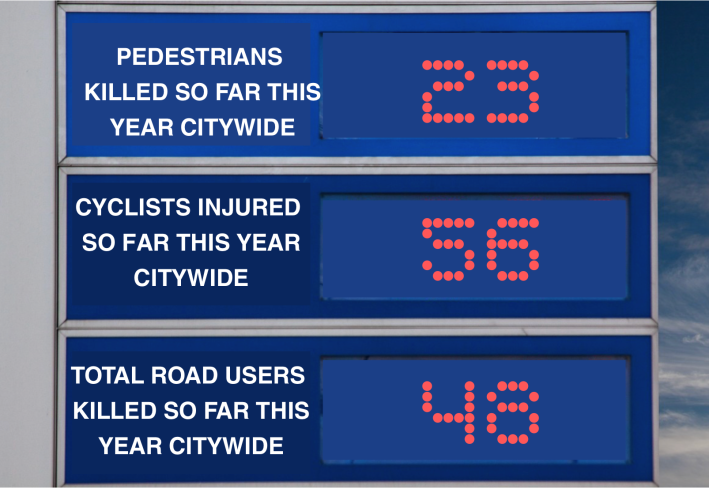
Fun fact: this daily tracker sign literally could not exist in most U.S. cities, since transportation officials usually only tabulate traffic deaths more than a year after the fact and bury them on a government website.
For the sake of this example, we pulled these 2024 year-end numbers from St. Louis — and they were put together by a non-profit, because the city doesn’t even have an official portal where residents can see just how bad their traffic violence crisis has gotten, much less use those numbers to demand accountability. And a live estimate of how many public health dollars we’re collectively spending because of all this bloodshed? Forget about it.
Still, an advocate can dream of a world where rising vehicle violence made everyone freak out as much as rising oil prices.
The falling share of walkable neighborhoods
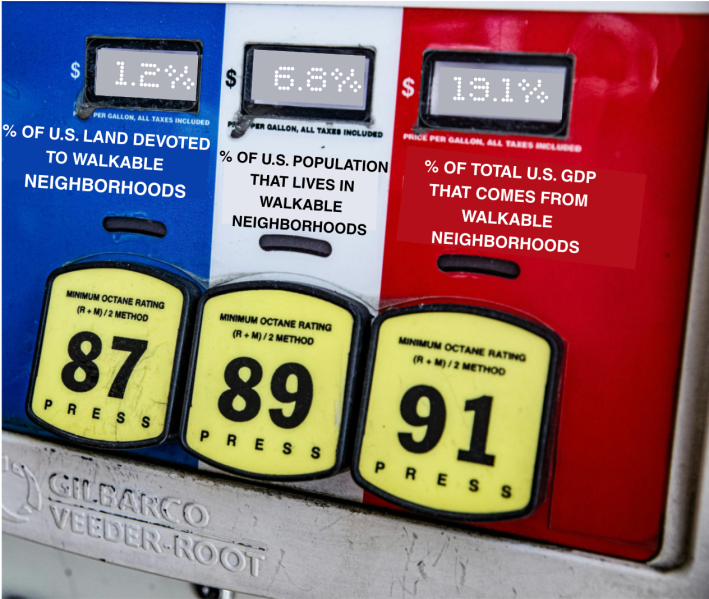
A lot of U.S. residents don’t need a daily reminder of how severe the housing crisis is, because they’re struggling to pay rent or put a roof over their heads. But not everyone realizes just how severe the shortage is in walkable neighborhoods, specifically — and what that means for our larger economy.
These stats from Smart Growth America give a quick glimpse into just how bad that drought is. But they can’t illustrate just how much money, opportunity, connection, and joy so many Americans miss out on because we’ve been forced to living car-dependent places where meeting our most basic needs without an automobile is impossible.
Cancelled grants
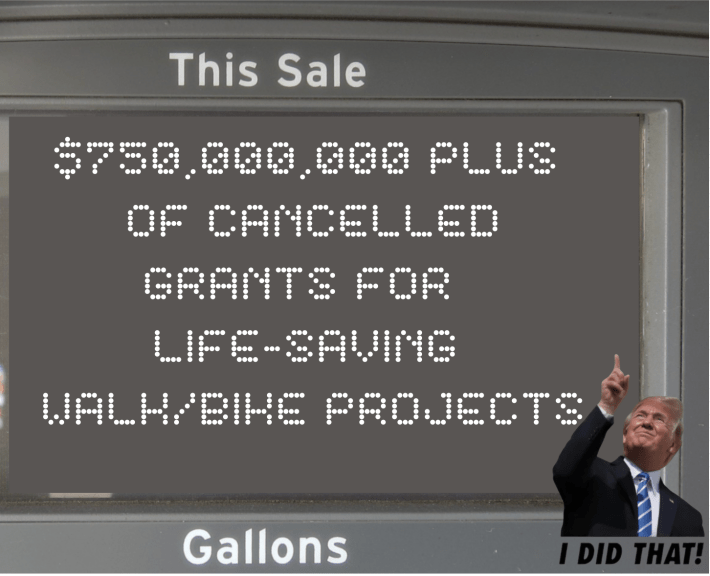
It’d sure be nice if the average U.S. resident had any idea how much taxpayer money is being wasted as the Trump administration axes grants for previously approved transit, walking and biking projects — including those that our communities have already spent millions to develop before they fell prey to the “war on woke.” Hell, the assault on federal grants has been so widespread that even we don’t know how big that number actually is — and we’re pretty obsessed with this stuff.
Let’s imagine for a moment, though, that we lived in a country where it was common knowledge and a public outrage when even a single federal dollar for sustainable modes got clawed back by the executive branch. This particular number is just the portion dedicated to trails, walking, and biking projects under the $2.4 billion Neighborhood Access and Equity Grants program, which the Trump administration nuked last summer; the real amount that communities have lost for sustainable an equitable projects in the last year, sadly, wouldn’t fit on a pump station screen.

Read More:
Streetsblog has migrated to a new comment system. New commenters can register directly in the comments section of any article. Returning commenters: your previous comments and display name have been preserved, but you'll need to reclaim your account by clicking "Forgot your password?" on the sign-in form, entering your email, and following the verification link to set a new password — this is required because passwords could not be carried over during the migration. For questions, contact tips@streetsblog.org.