A Rolling Protest Helped Win Some of the Best Provisions in Congress’ New Infrastructure Bill
Critical policies that could unlock funding for cycling and pedestrian infrastructure across America have cleared the first hurdle in Congress — and the advocates who fought for them are launching a national nonprofit to promote a model that they hope can get the bill across the finish line and achieve similar wins.
Last month, advocates for the bipartisan Sarah Debbink Langenkamp Safety Act celebrated after legislators folded several key provisions of the bill into the House’s latest major transportation law, the BUILD America 250 Act.
That bill passed out of the Transportation and Infrastructure Committee on May 22, and will now make its way through a months-long legislative gauntlet known as the federal “reauthorization” process. If the Langenkamp provisions survive those negotiations on Capitol Hill, though, they will explicitly encourage communities across America to spend their guaranteed Highway Safety Improvement Program dollars on filling gaps in their active transportation networks for the first time.
Even better, these provisions will allow communities to fortify their bike lanes and greenways with federal money alone. In years past, the same process required an onerous local match that many governments pointed to as an excuse to neglect people outside of cars in their HSIP plans.
“There is tremendous bipartisan support in the country for making our roadways far more pedestrian and cyclist friendly,” said Rep. Jamie Raskin (D-Maryland), who introduced the legislation, in an interview with Streetsblog. “And this is especially true at a time of soaring gasoline prices. The pressure has been on for us to make sure that our tax dollars go to help people who are using every conceivable kind of transportation — including walking and bicycling.”
They might sound wonky, but the measures outlined in the Langenkamp Act have topped many advocates’ policy wishlists for years. Proponents say they could unlock millions of dollars and catalyze countless active transportation projects that wouldn’t otherwise happen.
But they’ve been particularly urgent since the 2022 death of the mother, diplomat and cycling advocate for whom the bill is named — and the advocacy rides her family have organized in her memory every year since.
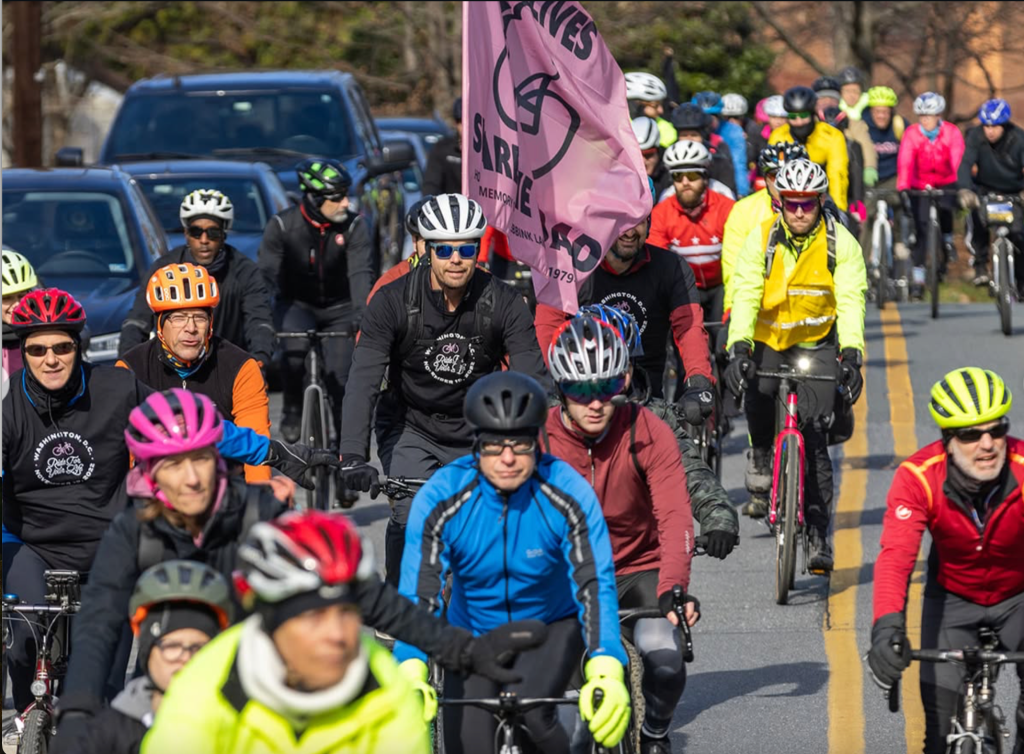
Known as the Ride For Your Life, these rolling protests have flooded D.C. streets with thousands of cyclists who turned out to demonstrate their support for Langenkamp’s namesake law and other measures to end traffic violence.
Langenkamp’s family recently established a nonprofit that will fight for similar legislation across the country. With each campaign, they’ll organize similar advocacy rides, which the family described as the cornerstone of their efforts. Raskin said these rides were essential to “mobilize focus and attention” around his legislation.
“People keep getting killed on our roads, and almost everywhere that happens, there’s a huge community of people who want to do something about it,” said Dan Langenkamp, Sarah’s husband. “I hope that we can work with those people to help channel their grief and anger into advocacy.”
Of course, Ride For Your Life isn’t the first or only organization to adopt the humble group ride as a tool for policy change.
Cyclists who participated in Amsterdam’s Stop De Kindermoord protests in the 70s, for instance, helped transform the Netherlands into the biking capital of the world by laying down alongside their bikes in the street — long before the word “die-in” was common parlance.
More recently, the Magnus White Cycling Safety Act gained significant momentum after the Ride for Magnus: Ride For Your Life turned out more than 4,300 cyclists across 48 states. The provisions of that bill, which would require new cars to carry automatic braking systems capable of detecting cyclists and pedestrians, also appear in the current draft of BUILD America 250.
But Langenkamp says that other bike advocates still struggle to identify the kind of hyper-specific demands that could truly save lives on the road — or to meaningfully engage the powerful people who can fulfill those demands. And even well-intentioned organizes sometimes struggle to successfully tie “awareness” rides to their cause, he said.
With support from an organization that’s done all three, though, he hopes Ride for Your Life can help organizers conduct advocacy rides with real impact — and pass laws with real teeth.
“What we’re trying to do is affect real change on the ground by pairing our rides with legislation or policy asks,” Langenkamp stressed. “We bring in not only the families or people impacted by traffic violence, but also sympathetic legislators, the general public, and advocates to this effort. It actually works in getting things done.”
Both Langenkamp and Rep. Raskin acknowledged that their bill alone won’t end the epidemic of cyclist deaths in America, and that group rides alone aren’t always enough to get good legislation off the ground. Even with much of the Langenkamp act included, the larger bill to which their legislation belongs drastically overfunds highways at the expense of other modes, and it will take all kinds of organizing to change that, including flipping seats in Congress itself.
“That’s really what elections need to be about,” added Raskin. “We need to have a rigorous public conversation about whether or not we are doing enough to invest in our transportation infrastructure in a way that benefits everybody in the country — and not just motorists.”
With Ride For Your Life events planned in Madison, Boston, and D.C. this autumn, Langenkamp hopes his group will continually refine their recipe for demanding change through more rides and smart organizing — and, in the process, potentially create a powerful new community of advocates on wheels.
“We all know that there are more than 100 people killed a day on U.S. roads — and it’s not just cyclists and pedestrians, it’s everybody,” said Langenkamp. “There’s no reason why there should not be more people interested in this subject … I think that we can actually help change the narrative and make this a higher priority issue, if we organize better.”

Read More:
Streetsblog has migrated to a new comment system. New commenters can register directly in the comments section of any article. Returning commenters: your previous comments and display name have been preserved, but you'll need to reclaim your account by clicking "Forgot your password?" on the sign-in form, entering your email, and following the verification link to set a new password — this is required because passwords could not be carried over during the migration. For questions, contact tips@streetsblog.org.