OPINION: U.S. Should Scale Autonomous Vehicles Thoughtfully, Not Slam the Brakes
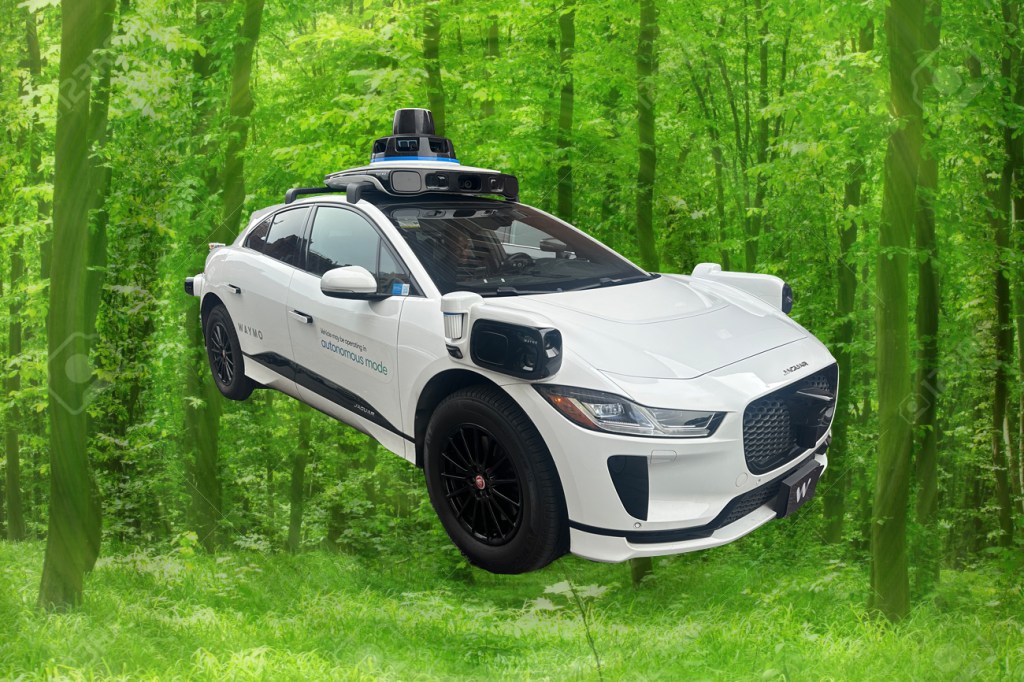
Streetsblog is, officially, dubious on autonomous vehicles because our coverage focuses on all of the deleterious effects of cars on cities, not just the safety effect. As a media outlet devoted to presenting news about how to reduce car dependence, we are skeptical that AVs will move the needle on that. But our recent coverage has spurred many AV boosters to demand the space to make their arguments. Today, we present one such piece.
Roughly two New Yorkers die in traffic crashes every three days. The state’s own comptroller traced most of those deaths to the same preventable causes: speeding, distraction, impairment. So when a technology promises to take human error out of the driver’s seat and save lives, New Yorkers should pay attention.
Autonomous vehicles have incredible potential to save lives and prevent injuries. Waymo’s own safety data shows a remarkable record. Compared to a human driver over the same distance and environment, Waymo’s autonomous vehicles had 94-percent fewer serious injury crashes, 93-percent fewer pedestrian crashes with injuries, and 82-percent fewer injury-causing crashes.
Critics often point to a recent Hunter College analysis to argue autonomous vehicles are less safe than advertised. But even the study’s lead author acknowledged the limits of the evidence, saying Waymo is like “a rookie hitter who goes two for five in his first game and claims to be a .400 hitter.”
Meanwhile, the Insurance Institute for Highway Safety, an independent group with no stake in the outcome, once again found that autonomous vehicles were far safer than human drivers: 68 percent fewer police-reported crashes, 85 percent fewer single-vehicle crashes, and 81 percent fewer injury crashes.
Even if you believe the evidence on autonomous vehicles is mixed – which it is not – should embrace a measured rollout built around pilot programs, public reporting, and clear safety benchmarks.
A responsible autonomous vehicle policy for New York would be to target the exact risk of distracted, drowsy, and impaired driving.
The case for autonomous vehicles is also a mobility one. Residents of transit deserts, seniors, people with disabilities, and overnight shift workers could all gain from transit options that don’t depend on owning a car or staying awake to drive. A Chamber of Progress poll shows that residents believe AVs can benefit seniors and residents with disabilities. In addition, AV deployment is already creating manufacturing, maintenance, and fleet-operations jobs, most paying above the national median wage and requiring no college degree. We should embrace this shift, not slam the brakes.
New York is right now in a pause after allowing Waymo’s testing permit to expire in March. Two pilot programs — a supervised AV program on New York City streets with trained safety drivers and a cold-weather test upstate in Buffalo — should not be one-offs. City Hall, the Taxi and Limousine Commission, and the New York City Department of Transportation should expand the city pilot with more vehicles, a longer timeline, and public reporting to let the data speak for itself. State legislators should also turn evidence from these pilot programs into a statewide framework for testing, insuring, and deploying AVs, which would replace the patchwork of waivers currently in place.
New York already has the mechanisms in place to measure safety, mobility, and the economic benefits of AVs. Let’s not let skewed studies halt a technology that saves lives.

Read More:
Streetsblog has migrated to a new comment system. New commenters can register directly in the comments section of any article. Returning commenters: your previous comments and display name have been preserved, but you'll need to reclaim your account by clicking "Forgot your password?" on the sign-in form, entering your email, and following the verification link to set a new password — this is required because passwords could not be carried over during the migration. For questions, contact tips@streetsblog.org.