Letter From Bogotá: How A Great World Capital Puts Housing, Transit and Public Space First
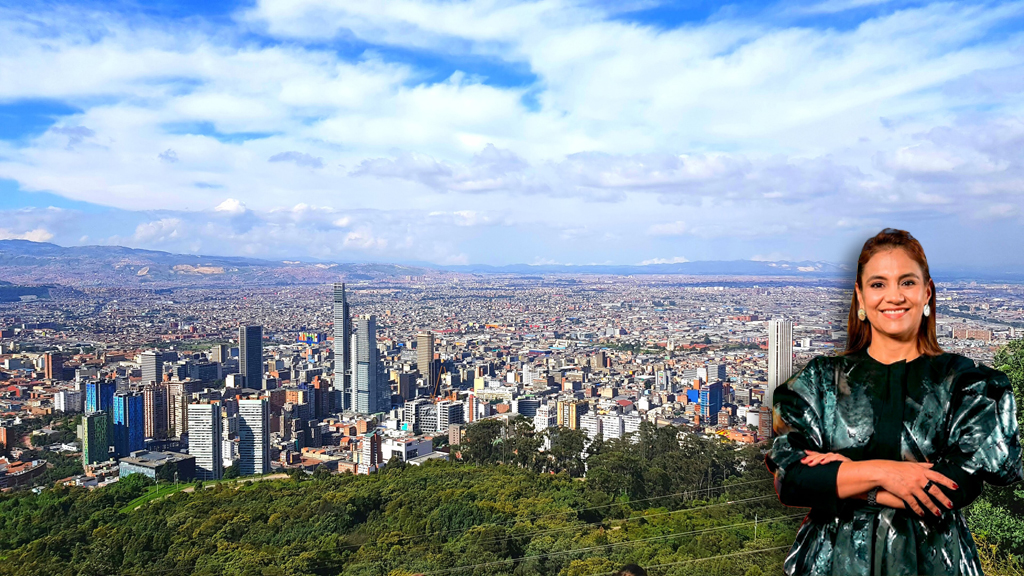

We at Streetsblog love Bogotá, what with its TransMilenio bus rapid transit, its expanding network of cable cars and, of course, its car-free Ciclovia every Sunday.
Now we have another reason: In addition to a Department of Transportation or a Department of Housing, the Colombian capital of eight million people has a Sector Habitát, or Habitat Department, that combines urban renewal, transit-oriented development, civic works, and affordable housing into community-first development that centers public transit.
Habitat Secretary Vanessa Velasco took a few minutes out of her busy day to talk to Streetsblog’s Sophia Lebowitz about Bogotá’s first metro line and all the other things that make the city great.
Streetsblog: Have you visited the U.S.? If so, what’s your favorite city and why?
Vanessa Velasco: I have yes. I think that L.A. is amazing, and I really enjoy the growth. But I think that for living, and basically the whole idea of the combination between architect living, possibilities of economy, and also the capacity of the city I think that New York is amazing.
Streetsblog: Why don’t you just tell me for whoever’s listening a little bit more about your role as the Secritería de Habitat? How is your agency distinct from the kinds of agencies that generally oversee urban development in cities around the world?
Velasco: First of all, the Habitat Secretary is part of the cabinet of the mayor of Bogota. The Habitat Secretary is in charge of three things that are important in the city. First, it oversees the development of the policies for housing, urban development, and public services. We are also in charge of the implementation and execution of some of the housing programs and small civic works that are allocated in neighborhoods. That means that we also have a role in implementation that is quite different for some of the other secretaries.
The third aspect is that other entities are part of the structure of the secretary. So basically, the Urban Development Agency, the Housing Development Agency and the Regeneration Development Agency are all part of the secretary. Also, the public services companies and the public services entities are part of the secretary. The secretary is in charge of the whole policy for housing, urban development, and public services of the City of Bogota. It’s also part of the implementation as well of the housing, neighborhood improvement, and public services in rural areas program. We define policy, we implement, and we enable the whole habitat ecosystem of both.
Streetsblog: And so you mentioned urban development, housing development, regeneration development. Tell me more about that third one.
Velasco: Nowadays still in Bogota and Colombia and I think most Latin American cities, we have a large number of informal areas. Basically, we are in charge of both things: policies for the improvement of the slum areas, basically urban development. And we are also in charge of the regeneration of strategic areas in deteriorated downtown areas. That’s regeneration.
Streetsblog: A lot of what you’re doing is integrating all these things together like housing, mobility, transportation, and employment. How does that work, and why is it important to kind of integrate these things from the start?
Velasco: The Habitat Secretary is in charge of enabling the whole urban development ecosystem. We are in charge, as a Habitat Department, of all public services: water, solid waste, electricity, gas network. All the public services are part of the Habitat Department. Also, affordable housing program execution is a main part of what we are doing. At the same time, urban development networks, civil works, and policies are defined by the secretary. I like to think that the Secretary of Habitat is quite unique because it’s the possibility of enabling the whole habitat and urban development ecosystem. However, we need to work together, of course, with the different other secretaries that are linked. For instance, with the transportation secretary and the and the urban infrastructure and transportation department, which includes TransMilenio, and the transportation companies that are connected with the transportation secretary. As a department, we don’t develop the master plans of the city, we execute the master plans of the city. We are in charge more in the execution and integrating.
Streetsblog: And zeroing in on that transportation portion. What changes when you emphasize access to transportation over just transportation itself?
Velasco: What we have done can be defined in three main pillars. The first is that an affordable housing program, needs to be articulated with the accessibility of a transportation system. We define that through the housing demand strategy, to create new housing offers in the surrounding areas of the metro, bus rapid transit, and cable car stations. So nowadays we have almost 4,000 housing subsidies and housing incentives, financial incentives, for the allocation of affordable housing units in the surrounding area of those programs.
The second aspect linked with transportation is that housing is the first step to how a citizen is connected with the city. So we are also committed to the idea of the improvement of the public space and also the neighborhood in civil works recovery linked to public space, green areas, main roads, or local roads are going to be needed as part of the work that we are doing in the habitat sector. So we have defined 20 areas of the city that are connected with accessibility of the transportation system, and we put some efforts, financial and technical efforts, for developing civil works connected with the neighborhood strategy that also improve the accessibility to the public transportation station. We call this strategy neighborhood revitalization.
The third aspect is that we know that transportation can’t be completely disconnected from a public services network. I think that 20 percent of the total network of the water and drainage system allocated in the surrounding area of the new metro is going to be renovated because of that. And all those aspects, civil works for the neighborhoods, housing programs, and housing subsidies allocated close to the station of the metro, and the bus rapid transit and cable car, and the regeneration of this public services network are part of the whole spectrum of how we connect with the transportation system.
Streetsblog: I report locally on New York City, where we have all these sort of siloed agencies that work independently and then have to share information with each other, and residents often complain about new development. So are you saying you’ve found a way to mitigate that before it becomes a problem? Are you thinking about not only the new housing, but the transportation, and then also about the utilities in these designated areas that you choose for development?
Velasco: We cannot do this without community participation. I think that that’s one of the main pillars of the planning, execution, and maintenance of most of this infrastructure that we are doing. I think that main civic works connected with public services and public space need to be maintained and operated by the public sector, but there are some small things that are needed for community maintenance. For instance, a gardening area that has this kind of agricultural perspective inside one park, the solid waste collection and the solid waste treatment in the neighborhood level; those kind of aspects are also linked with the community, and that’s one of the aspects that we are also in charge of.
Streetsblog: Tell me about the San Cristobal cable car project and how that is an example of all these things that you’re talking about.
Velasco: The San Cristobal cable revitalization strategy is combining four different things that for us have been really interesting. Before everything started, we worked with the community using tactical urbanism that basically was minimal interventions that are connected with the recovery of some small public areas. For instance, working with the facades of some of the areas.
Tactical urbanism is the way that we can connect with the community on a first level. Once we did that, we defined a strategy that is connected with transit-oriented development, but on more of a neighborhood level. Basically, we work with them in recovery of green areas that are located in the surrounding area of the cable stations, recovery of these small public spaces or parks that are recognized by the community but also close to the future station, and recovery of the local roads that could be effective for them not only to connect with the cable station, also that could connect those roads with different neighborhoods.
We use the public works as a key component for neighborhood integration, but also for their improved accessibility that they have with the stations. We have some home-improvement projects that we have done in the area of the cable car station. We have some rental subsidies that we have allocated in the area, but also we allocated new affordable housing subsidies and incentives so new units are built in the surrounding area of the cable station.
We understood that housing is not only one of the needs that need to be covered in the community; it’s also one of the aspects that could be part of the whole strategy for the recovery. The cable station is an opportunity that the community has not only for the accessibility of a transportation system, but also for the possibility of the recovery of the economy of the area.
I think that Bogotá is so interesting to see at this point because everything is happening now and in the past. We are building the metro, we are finalizing the cable car as a part of the transit system. We are working on the water treatment system, we are shorting the housing deficit as well. So my point in this is that it’s not only that the sum of different neighborhoods gives us this idea of Mosaic City. It’s also that we are using each of the infrastructure components that define the city as a possibility for urban transformation in different scales.
Streetsblog: So you’re saying that with all these different types of neighborhoods in the city, you want to use the strengths of having that mosaic and keep that in order to develop in a way that benefits all the residents?
Velasco: There’s two layers. The first one is to understand that in Latin American cities, each neighborhood has different characteristics because some of those neighborhoods are informal settlements. I think that’s the beauty of a Latin American city. You can be working on an upgrading project, but at the same time you can be working on this huge regeneration project that is going to have this huge real-estate revenue because everything is happening at the same time.
You need to identify the difference in each of the areas and then propose a strategy that needs to combine those four aspects: housing, civil works, working with the community, and transportation.
The second layer in Bogotá is there are many things happening that are part of the regional strategy. Like the new metro, BRT, new cable lines, and the new Bogotá River water treatment plan. We are looking forward to the development of this new solid waste strategy with infrastructure that is needed for the whole region. It’s going to be very interesting because in the metro you’re going to have 16 stations in the first line that connect informal settlements with new urban regeneration areas. That’s the way that we can combine different layers of information, but also understanding that the main cell is going to be the neighborhood, and understanding this is a mosaic city that is going to connect different neighborhoods with different characteristics. But also understanding that the infrastructure is going to be like the axis.
Streetsblog: How do you measure the success of what you’re doing? How is Bogotá measuring the success of this Habitat Department?
Velasco: We have already supported almost 34,000 families that now have a new housing unit that is improved, or they have the opportunity to rent housing because we are supporting them in a financial way. So I think that saying that seeing 34,000 smiles during these last two and a half years has been one of the ways that we can measure the success in the housing plan.
The other aspect is that we can see that in the housing plan we already created 25,000 new jobs after implementation.
We measure that because the allocation of these new housing programs, almost 25 percent of the total subsidies, had been effectively allocated in the surrounding area of the metro, BRT or cable station. That means that they can go from spending one hour and 40 minutes commuting to 20 minutes because they are going to be living close to one of the metro, BRT or cable lines. So the effort has been to allocate affordable housing really close to the station so that Bogotá residents spend less time in the transport synthesis system and more time with the families or doing any kind of activities they want.

Read More:
Streetsblog has migrated to a new comment system. New commenters can register directly in the comments section of any article. Returning commenters: your previous comments and display name have been preserved, but you'll need to reclaim your account by clicking "Forgot your password?" on the sign-in form, entering your email, and following the verification link to set a new password — this is required because passwords could not be carried over during the migration. For questions, contact tips@streetsblog.org.