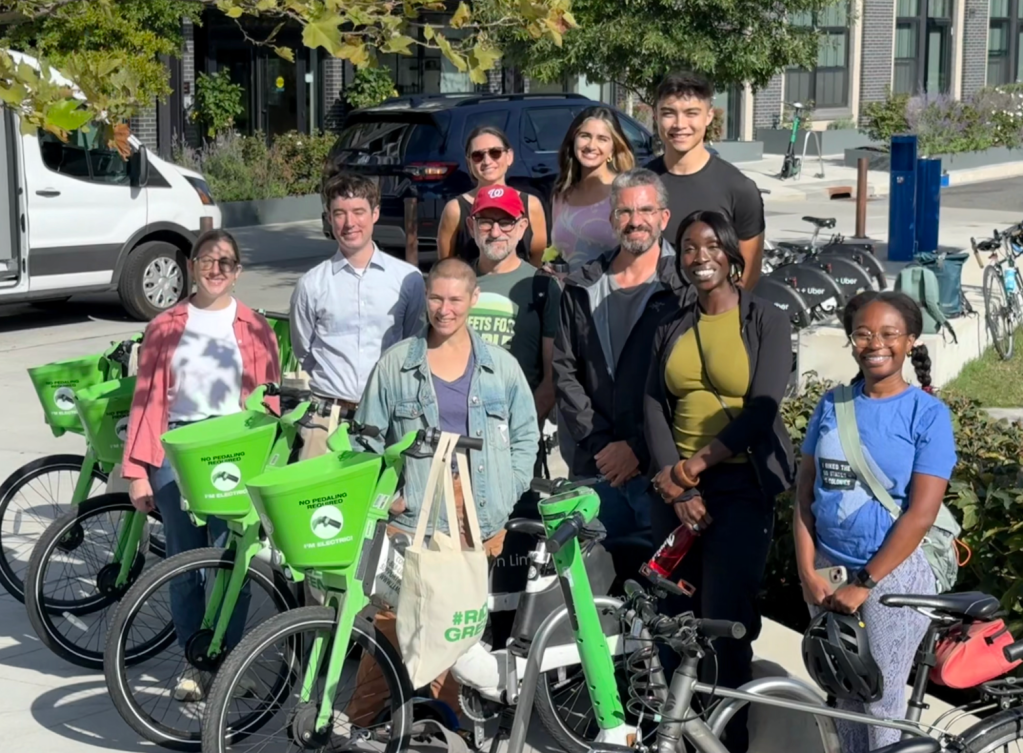
Pittsburgh Goes All-In On ‘Week Without Driving’ By Celebrating New Bus Lanes
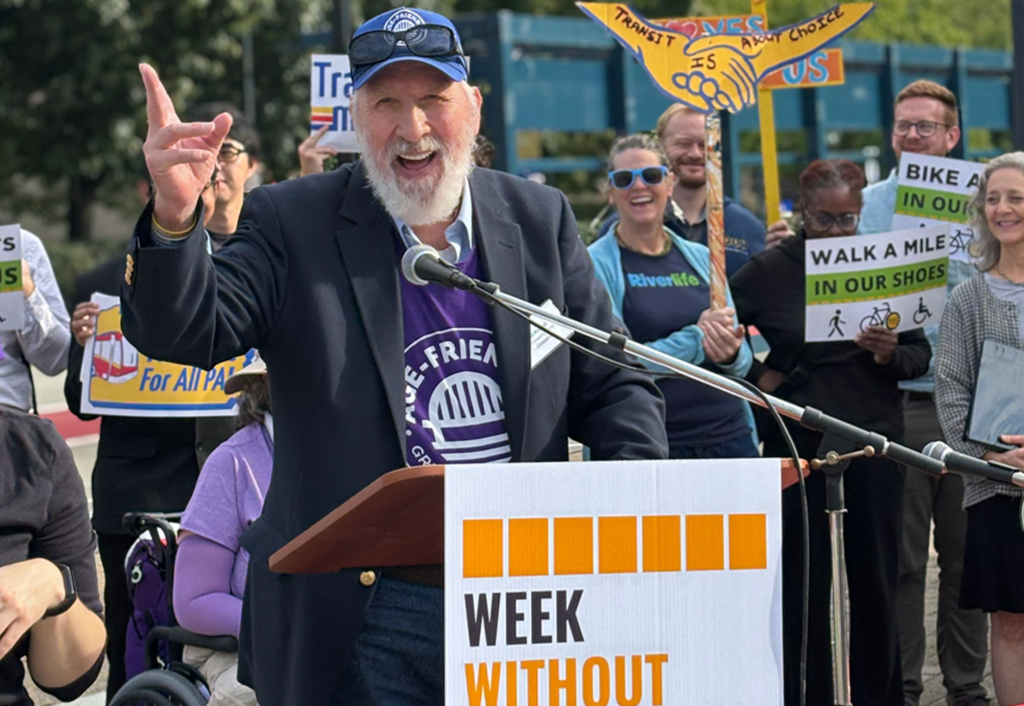
Pittsburgh is shouting for car-free travel options — and as city leaders install new bus lanes, actions are speaking even louder than words.
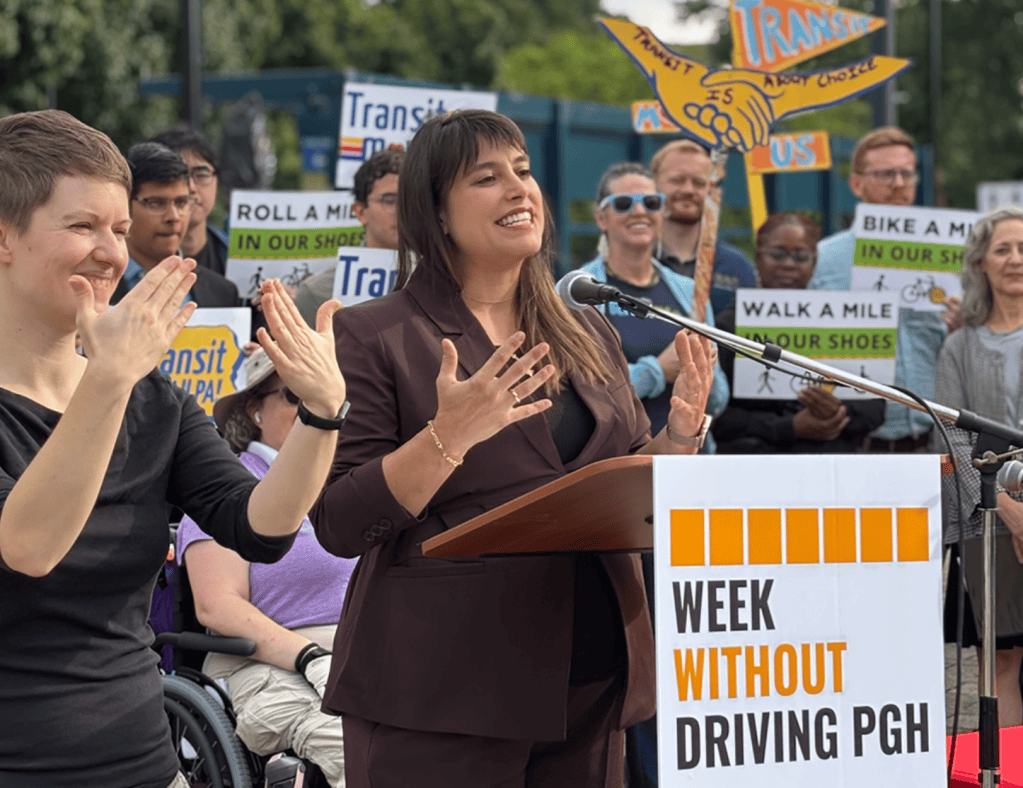
Steel City leaders and transit advocates gathered last week to celebrate Week Without Driving, the annual nationwide event bringing awareness to the pitfalls of American car dependency. The convening occurred next to one of the city’s newest bus lanes, still shiny from their installation in August.
“This is the result of transit riders, people without cars, being put at the center of public policy,” said Dan Yablonsky, the digital organizing director of Pittsburghers for Public Transit.
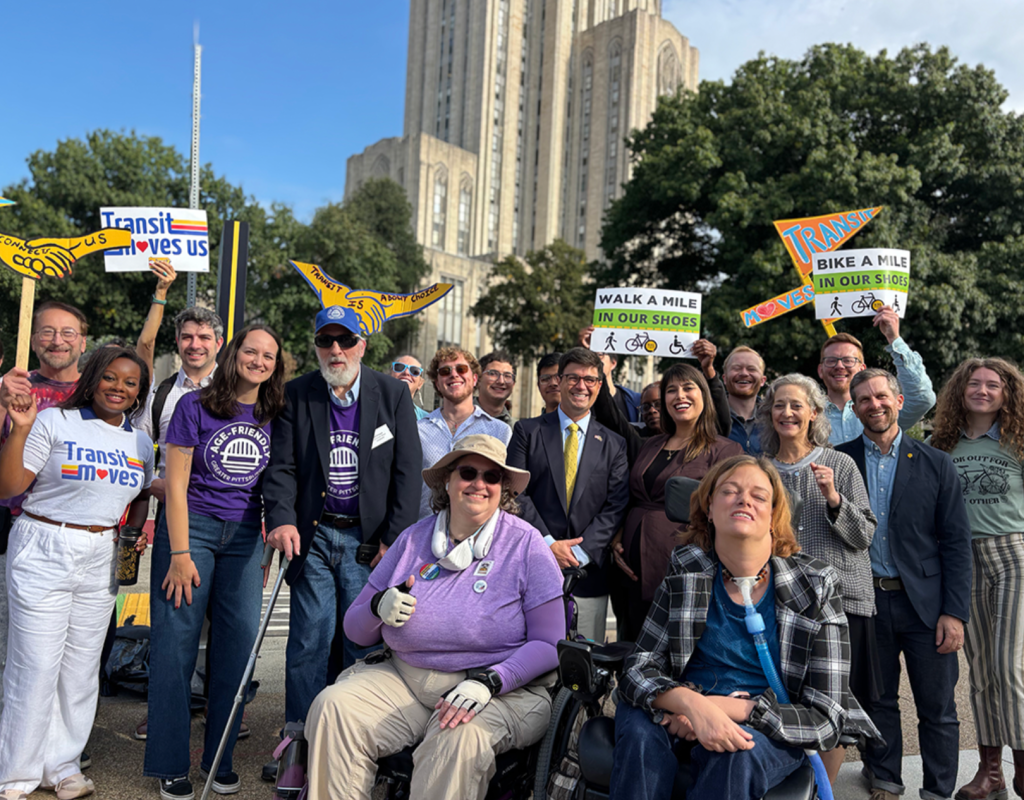
Week Without Driving began in 2021 to show local leaders the challenges that their non-driving constituents experience regularly. Elected officials, transportation planners and policymakers are all encouraged to hang up the keys for a week and put themselves in their neighbors’ shoes — and on their bikes, buses and trains.
“For people who can grab their keys and go, transportation often isn’t a major concern,” according to the campaign’s website. “But for those of us who can’t drive or can’t afford to, transportation is something we think about daily.”
While the week traditionally highlights the burden of getting around for the one-third of Americans who can’t drive, Pittsburghers highlighted the potential to improve other mobility options — and the progress their city has already made.
“Riders are really excited about these lanes,” Yablonsky said. “The buses breeze by these previously congested roadways that always made [trips] late or unreliable.”
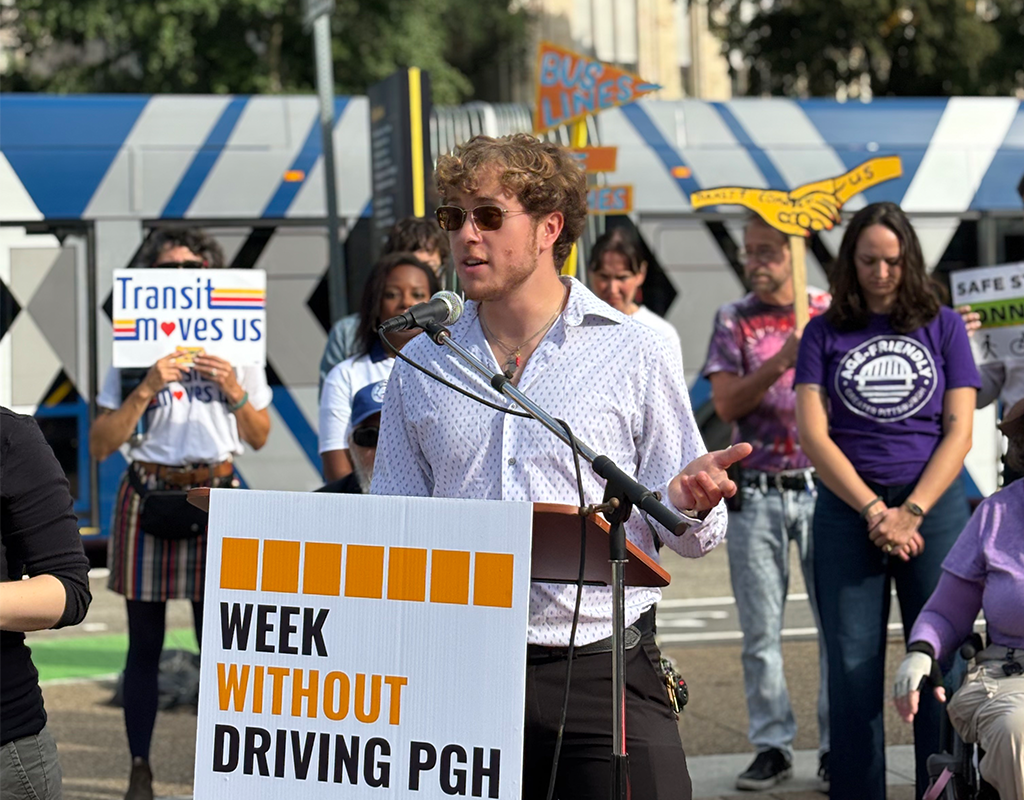
It’s no secret that frequency and reliability can make or break how well a transit system works — and by extension, how willing people are to ride it. Very few people will willingly wait for a bus that takes an hour to arrive, or one they’re not certain is coming at all.
By contrast, the kind of bus lanes winning applause in Pittsburgh can insulate transit from car traffic, ensuring on-time pickups and faster drop-offs for riders. Put another way: more bus lanes plus more transit riders equals less driving.
Pittsburgh’s new red paint runs along the University Line, a proposed rapid bus corridor operated by Pittsburgh Regional Transit. The line will feature upgraded shelters, real-time arrival screens and safer walk and bike connections, as well as the bus lanes. The University Line will serve one of Pittsburgh’s most important corridors, connecting the University of Pittsburgh and the Downtown, Uptown, and Oakland neighborhoods.
The bus lanes are not done yet, with several blocks still awaiting upgrades, and a highly-anticipated expansion still in the planning stage. Still, Yablonsky says Pittsburghers are feeling the investment.
“It’s night and day,” he said.
Pittsburgh is upgrading a series of bus corridors in Downtown, Uptown, and Oakland neighborhoods, with future expansions being planned. Map: Pittsburgh Regional Transit via Remix
Pittsburgh’s Week Without Driving celebration also marked city leaders’ commitment to expanding car alternatives — even as their federal and state counterparts disappoint.
Rather than encouraging the development of bus lanes, the Trump administration spent its summer urging lawmakers to “prioritize [spending for] motor vehicle travel” and dismissing bike lanes as tools of harmful “DEI” initiatives. Meanwhile, Congress just passed an extension of its transportation spending bill — but not without gutting transit funding first.
Pennsylvania legislators have played a similar card for years. State funding for public transit has dropped to what advocates describe as “crisis levels”, ensuring service cuts, layoffs, and even trains catching on fire.
Like many other cities, that’s effectively left Pittsburgh to fend for themselves. But as Allegheny County Executive Sara Innamorato pointed out at the event, local governments aren’t powerless to improve transit and deter driving — even without much help from higher levels of government.
“We will keep pushing for [state funding],” said Innamorato. “We will not pause until we get the funding that our neighbors deserve to build the transit system that works for all of us.”
Read More:
Streetsblog has migrated to a new comment system. New commenters can register directly in the comments section of any article. Returning commenters: your previous comments and display name have been preserved, but you'll need to reclaim your account by clicking "Forgot your password?" on the sign-in form, entering your email, and following the verification link to set a new password — this is required because passwords could not be carried over during the migration. For questions, contact tips@streetsblog.org.