Rural and Disabled Pennsylvanians Fighting For Transit As Keystone State Budget Nears Late Deal
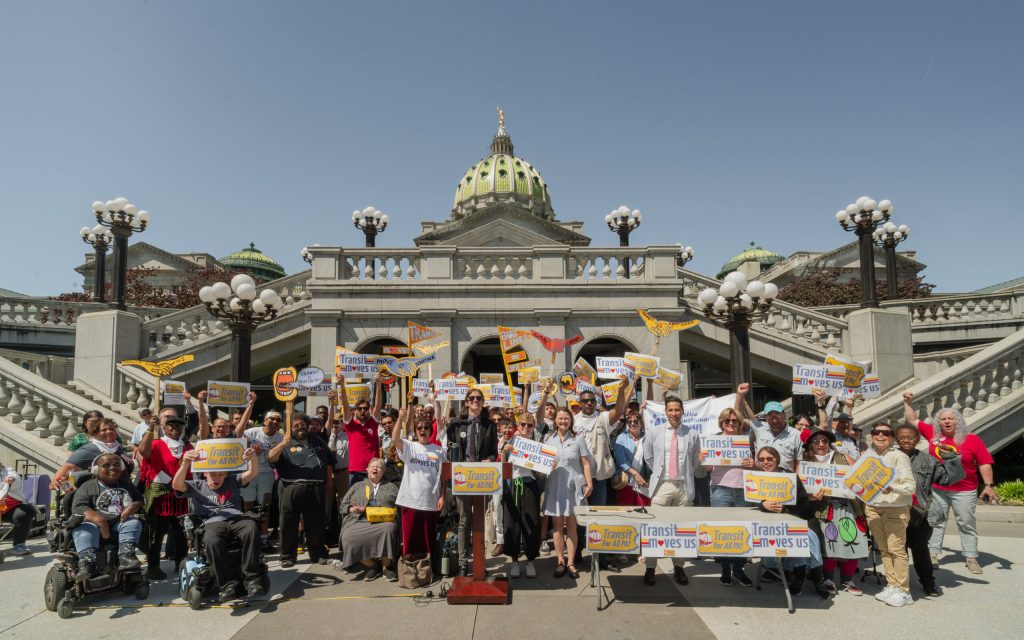
The freedom of movement for hundreds of thousands of Pennsylvania transit riders is hanging in the balance as state legislators in the Keystone State are struggling to pass an already late budget without gutting transit funding.
Funding levels for public transit across the Commonwealth have dropped to what many advocates are calling “crisis levels.” Transit and paratransit agencies in every region are weighing service reductions, layoffs, and route eliminations.
The scenario may ring a bell: last year’s state budget came four months late after fierce debates over how – and how much – to spend on public transportation.
Gov. Josh Shapiro ultimately approved Philadelphia’s SEPTA and Pittsburgh’s PRT flexing capital dollars for operations over the course of two years. Now in its second year, the temporary deal exempts Pennsylvania’s two largest transit agencies from this budget cycle.
The state’s 65 other counties, however, weren’t so lucky.
Lehigh Valley’s LANTA cut service on 13 bus lines earlier this year, one of four total reductions meant to balance a reduced budget. The bus operator, which served more than four million trips last year, also raised fares and eliminated free transfers.
The steep investment gap between urban and rural counties deepens economic disparities, small town residents say.
“We just have to make sure that it’s equitable,” said Sherry Mergner, a resident of Westmoreland County whose son, Noah, cannot drive due to his autism, but lacks an adequate alternative. “We have to make sure … rural communities are as supported as urban communities.
“I know there will come a day when I can no longer provide transportation for my son,” she said. “I think about what will happen when I am gone.”
In addition to church, Tae Kwon Do, and therapy, Noah uses Westmoreland County’s paratransit shuttles to access his job at a Lowe’s hardware store. By the time his 4-9 p.m. shift ends, the day’s last shuttle is long gone. The same service ends at 2 p.m. on Saturdays, and does not run at all on Sundays.
“I guess they think [disabled people] don’t work Sundays,” Mergner said.
Disabled Pennsylvanians are contending with an especially dire outlook. Disability Rights PA, a statewide advocacy organization, found state residents with disabilities to ride substantially more public transit than the general public.
Poor service, advocates pointed out, exemplifies the need for a long-term funding solution.
“The challenges [transit agencies] face are not due to a lack of commitment,” Mergner said in a speech to legislators last month. “But rather a lack of adequate funding and resources.”
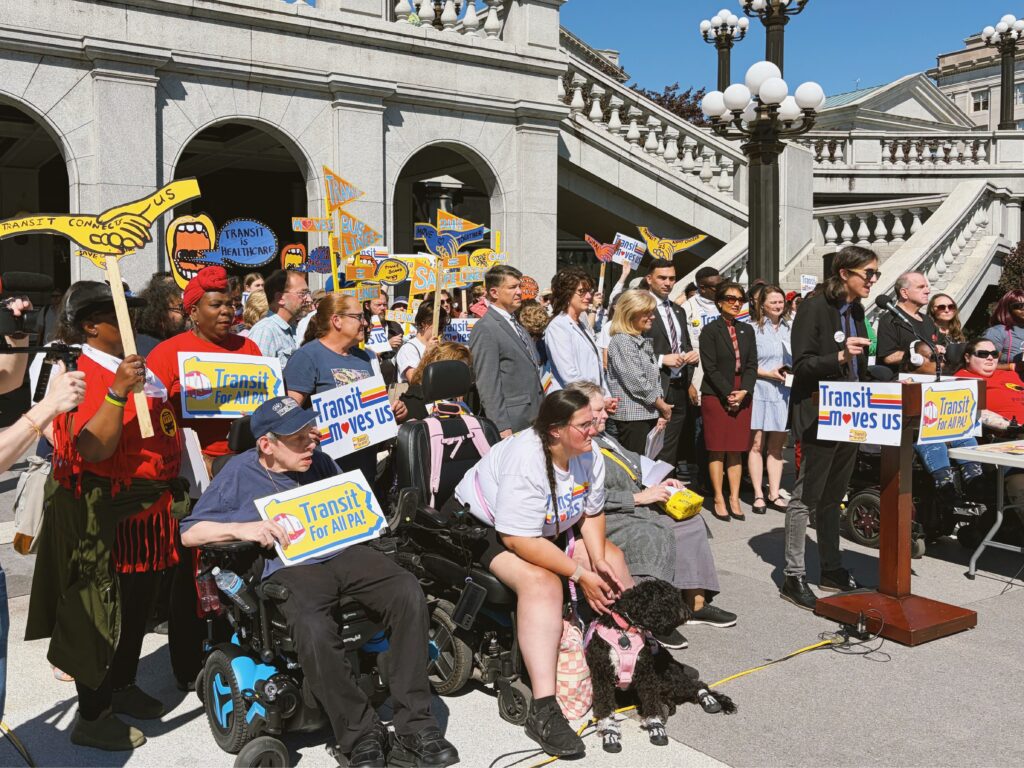
Should Pennsylvania lawmakers decline funding, their most transit-dependent constituents could shoulder even more of a burden.
In the 6,000 person town of Enola, paratransit is a lifeline. Cathy Long’s total blindness prevents her from driving, and she occasionally uses a walker to help with a bad knee.
“I choose wisely,” Long said, describing her transportation options. She’ll use the region’s on-demand shuttles where possible – mostly to doctors’ appointments and visiting friends.
Funding cuts could leave her more reliant on Ubers and rides from friends. Many of her fellow passengers lack even those backup options.
“They stay at home a lot,” Long said of her blind peers. “The big thing is to help them get out and be in the community so that they make friends and … get to know service providers.”
Budget deficits could pull friends and health services out of reach. In Lancaster County, Red Rose Transit is set to charge up to 50 percent more for on-demand rides.
Philadelphia and Pittsburgh transit, though exempt from this year’s budget, will still need future funding. SEPTA’s State of Good Repair budget deficit has doubled in the past decade, now surpassing $10 billion. PRT, which was also forced to raid capital funds to mitigate cuts, is in comparable trouble. Any deal without long-term funding risks deepening deficits and neglecting infrastructure.
Now, state legislators are weighing whether to provide a long-term solution, or let transit deteriorate.
The solution could come in the form of a legislative package put forward by Transit for All PA!, a statewide public transit advocacy group. The package includes HB1523 and HB1524 (with matching bills in the state Senate). The package has more than 40 co-sponsors, but the same package was introduced last year and didn’t budge.

HB1523 creates a new tax on rideshare services, such as those provided by Uber, Lyft, and Waymo. HB1524 is a moderate increase to existing taxes on car rentals and leases. Together, Transit for All PA! estimates revenue from the package generating $396 million for transit services across the state.
“Our legislature’s ongoing neglect of public transit has led us to the brink of disaster,” Se. Nikil Saval (D-Philadelphia) said last year in a statement. “We must explore every available option to bridge current funding gaps.”
Alternative proposals would only partially fix the transportation budget’s deficit, leaving lesser cuts on the table across agencies. Last year, Gov. Shapiro increased the share of transportation funds directed towards public transit, providing an additional $292 million to protect service.
“The amount of money was … foundationally not enough,” said Connor Descheemaker, the Statewide Campaign Manager for Transit for All PA! “It would not serve to meet the stated needs of any transit agency in Pennsylvania.”
Their group’s proposal is designed to complement the Governor’s allocation. The anticipated $688 million in total revenue would exceed the $590 million necessary to restore 2019 service levels statewide, with room to spare for improvements.
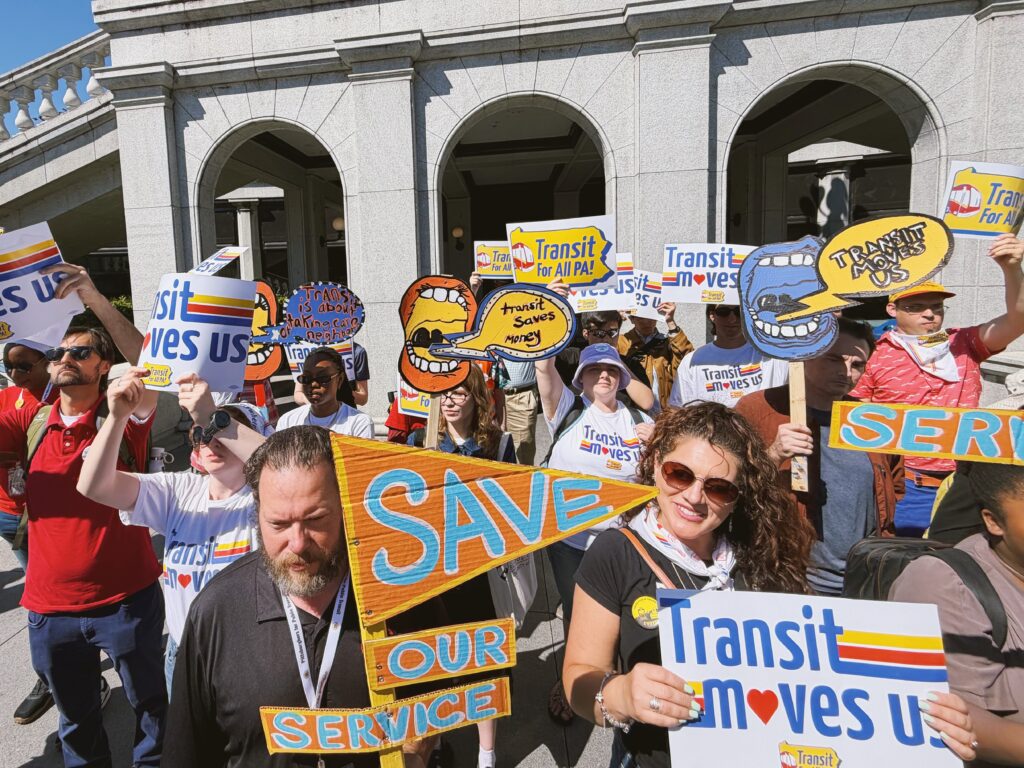
As the budget deadline looms closer, advocates are racing to get their bills passed. Both Mergner and Long traveled to Harrisburg last month to testify to lawmakers the necessity of public transit in their areas.
“Transportation gives [Noah] agency and autonomy over his own life,” Mergner said in a speech. “It allows him to make choices, participate in his community, and build the independence that every adult deserves.”
With budget negotiations continuing into July, Transit for All PA! is calling for supporters to demand a solution from state leadership. As of July 3, they have sent more than 47,000 letters from every legislative district in Pennsylvania.
“We want people to fight for something,” Descheemaker said. “And expand service in the places where we know service has long been lacking.”
Find out more about the Transit for All PA! legislative package at www.transitforallpa.org/takeaction.

Read More:
Streetsblog has migrated to a new comment system. New commenters can register directly in the comments section of any article. Returning commenters: your previous comments and display name have been preserved, but you'll need to reclaim your account by clicking "Forgot your password?" on the sign-in form, entering your email, and following the verification link to set a new password — this is required because passwords could not be carried over during the migration. For questions, contact tips@streetsblog.org.