A Futuristic Baltimore Art Exhibit Could Catalyze a New Freeway Fighting Movement
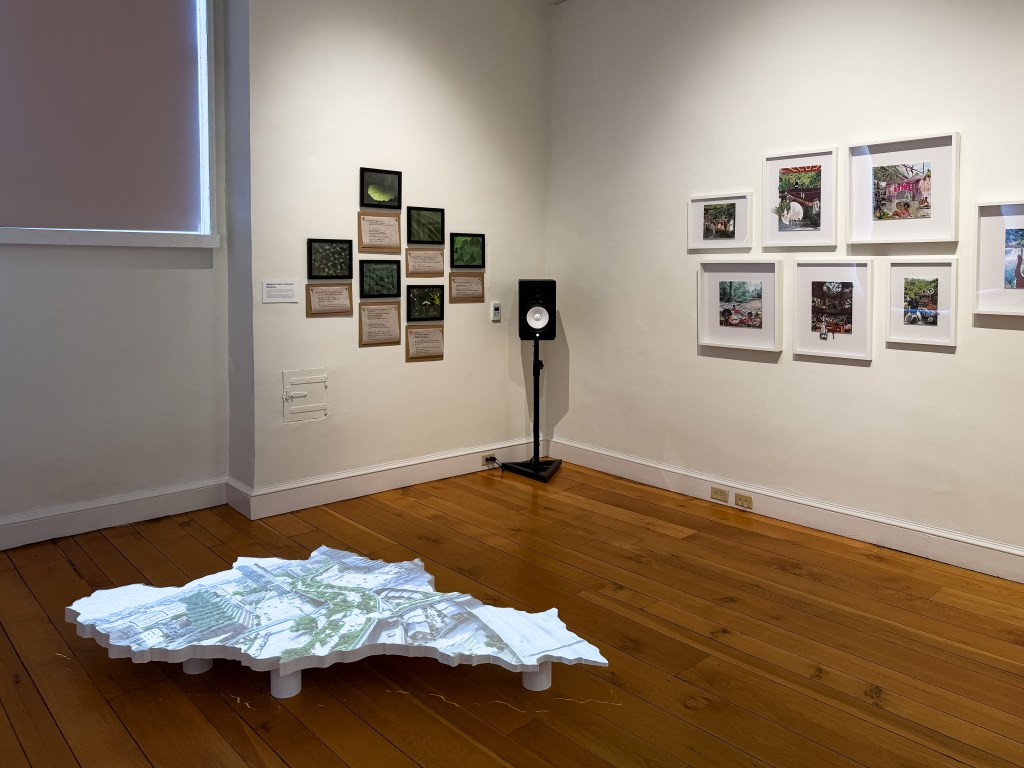
A Baltimore art exhibit is challenging Charm City locals to envision a bold new future without one of their city’s most notorious urban highways — and building a constituency to make that “impossible” dream real.
The Peale Museum is in the final days of its “Jones Falls 2076” exhibition, which co-curator Bruce Willen describes as “a public dreaming project and imagination campaign” to explore what the river currently buried under Interstate 83 might look like in 50 years.
That puts the 14 artists, designers and writers in the exhibition ahead of Maryland transportation officials, who have yet to launch a formal process to address the aging highway — despite the fact that its first sections were built way back in 1960 and are on their last legs.
And if Baltimore wants to do something besides just replacing the “Jones River Expressway,” as it’s known locally, Willen told Streetsblog that activists need to start expanding the public’s imagination now — and maybe, take the first steps towards becoming America’s answer to Korea’s famous Cheonggye Creek.
“I feel like so many of these conversations start with, ‘Oh, we can’t do that; there’s no way we’ll be able to find the funding.’ Or, ‘You can’t tear down the highway, because the car commuter constituency is too strong,'” Willen said. “We wanted to start from this place of almost fantastical possibility … to lay the groundwork for different futures for the river — and then, hopefully, the next steps will include concrete actions like feasibility studies, and design competitions.”
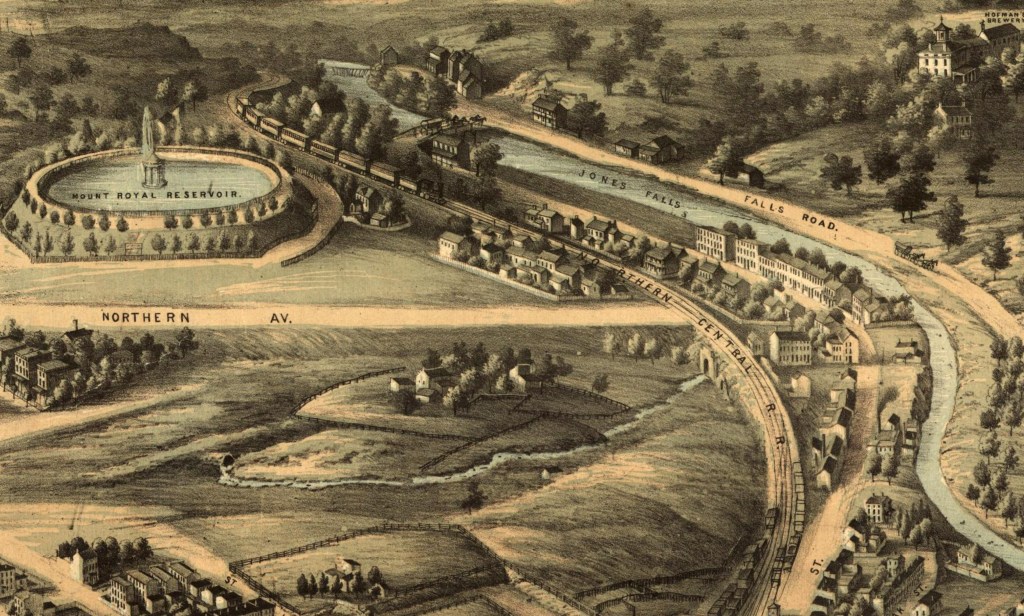
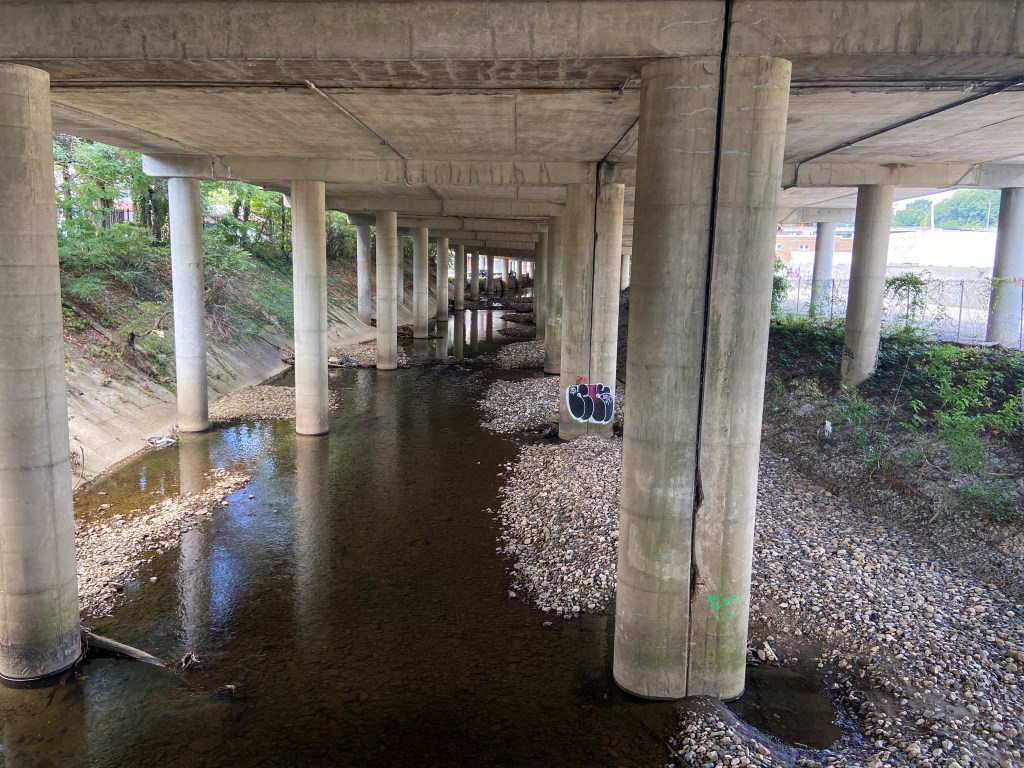
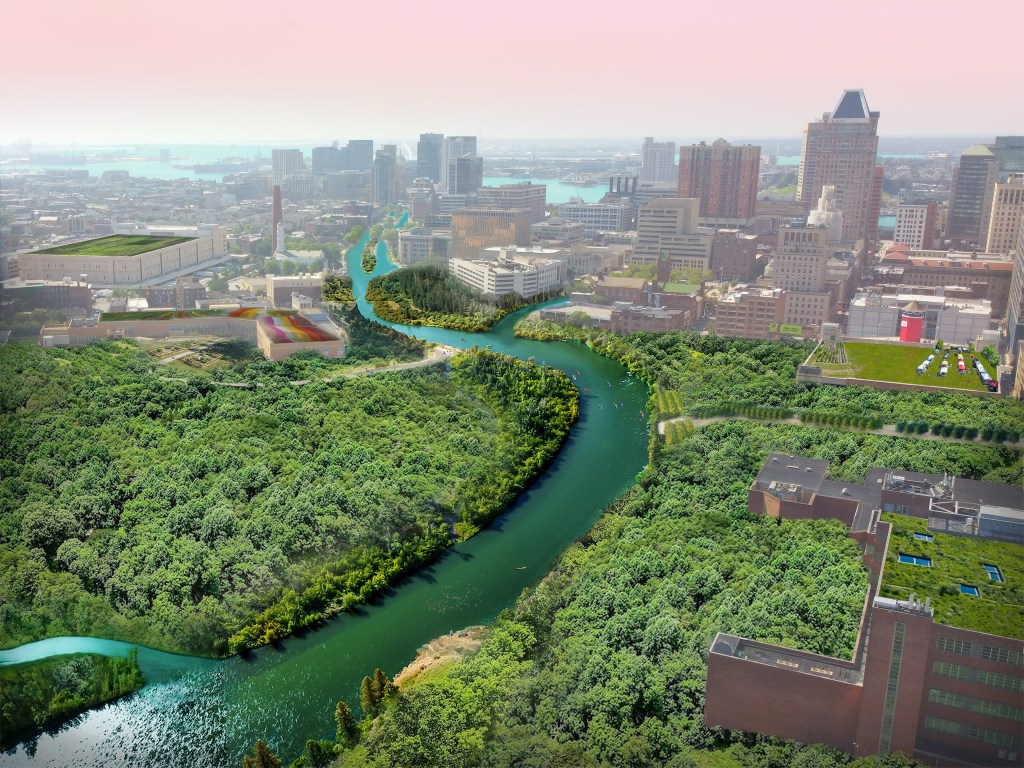
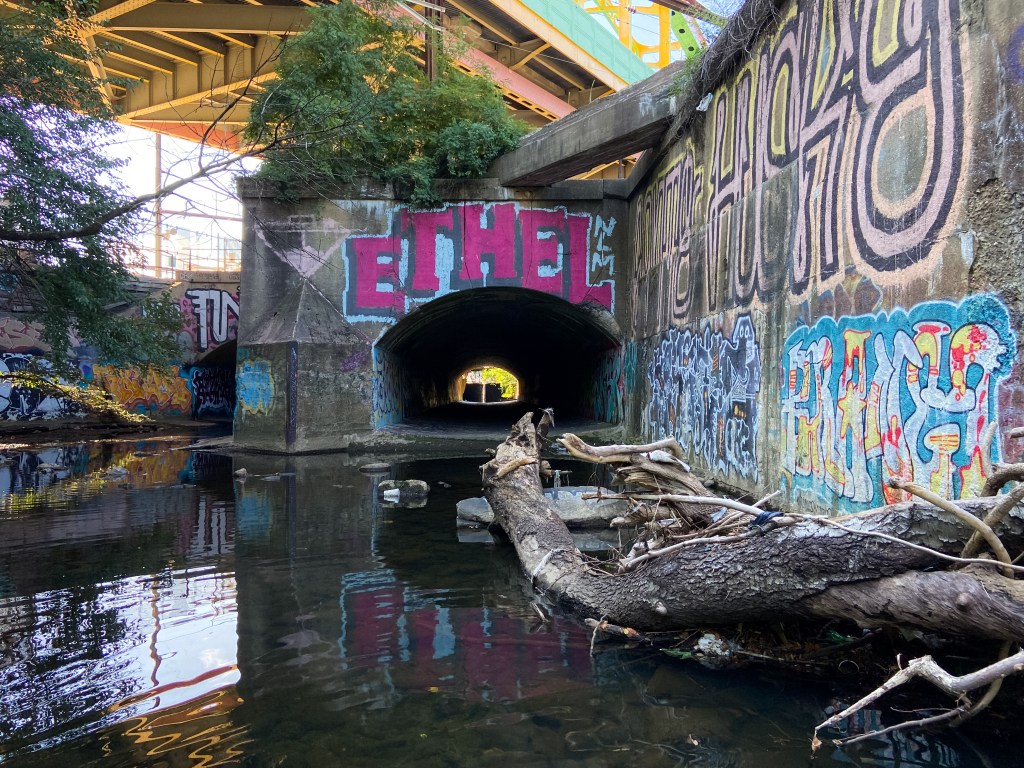
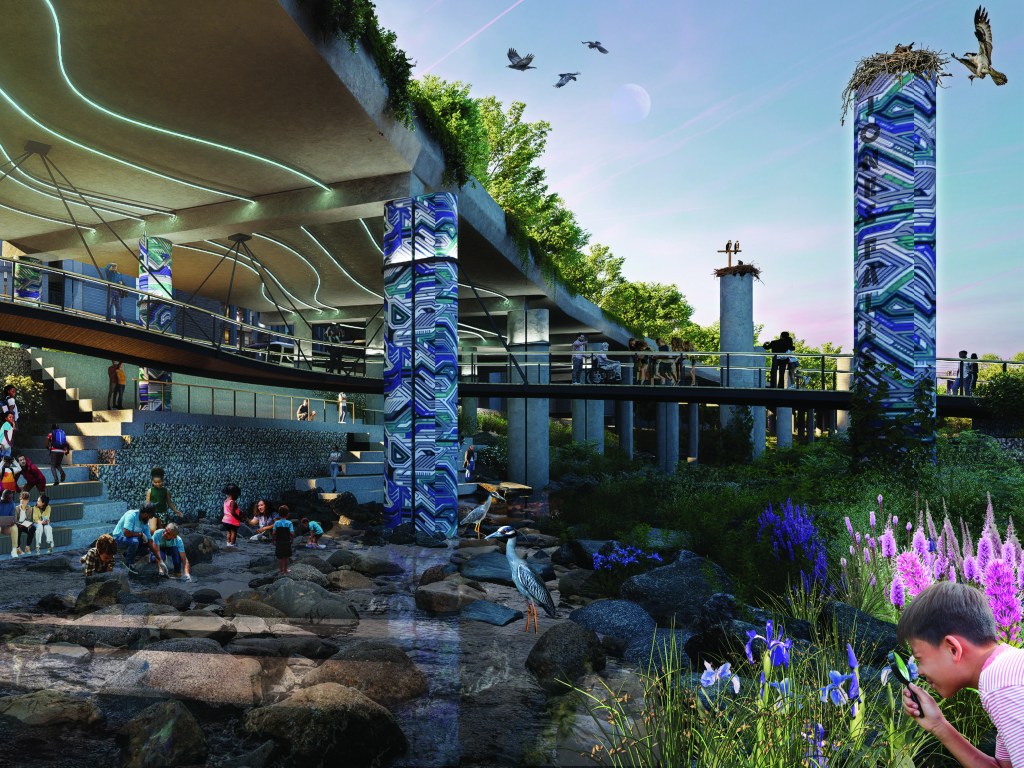
The Jones Falls Rivers then, now and in one possible future explored in the exhibition.
Many residents today don’t even know it exists, but contemporary Baltimore is deeply shaped by the Jones Falls River, on whose banks European colonists initially settled after sailing in from the Chesapeake Bay. The river’s currents powered the region’s industrial rise, which gave birth to what is the 30th-largest U.S. city by population today.
By the 19th century, though, the Jones Falls had become badly polluted, prompting the city to “entomb” it in an underground culvert — and eventually, Willen said, “add insult to injury” by building an elevated interstate directly on top of it.
That interstate deepened divides between east and west Baltimore, isolating historically Black and low-income neighborhoods from affluent white ones. As of 2019, I-83 experienced more than twice as many car crashes as all comparable Maryland highways, and the neighborhoods around it breathed the city’s highest levels of air pollution.
Still, many people struggle to imagine downtown without the Jones Falls Expressway carved straight through it — much less how it might look in half a century if the river were resurrected.
“So much change is possible 50 years into the future,” Willen added. “Yet that’s also going to be within many people’s lifetimes.”
To help fill that void of imagination with possibility, the exhibit harnesses the power of “speculative futurism,” which urban designer Joanna Hoffman defines as “design spaces that play with the space between fantasy and reality.”
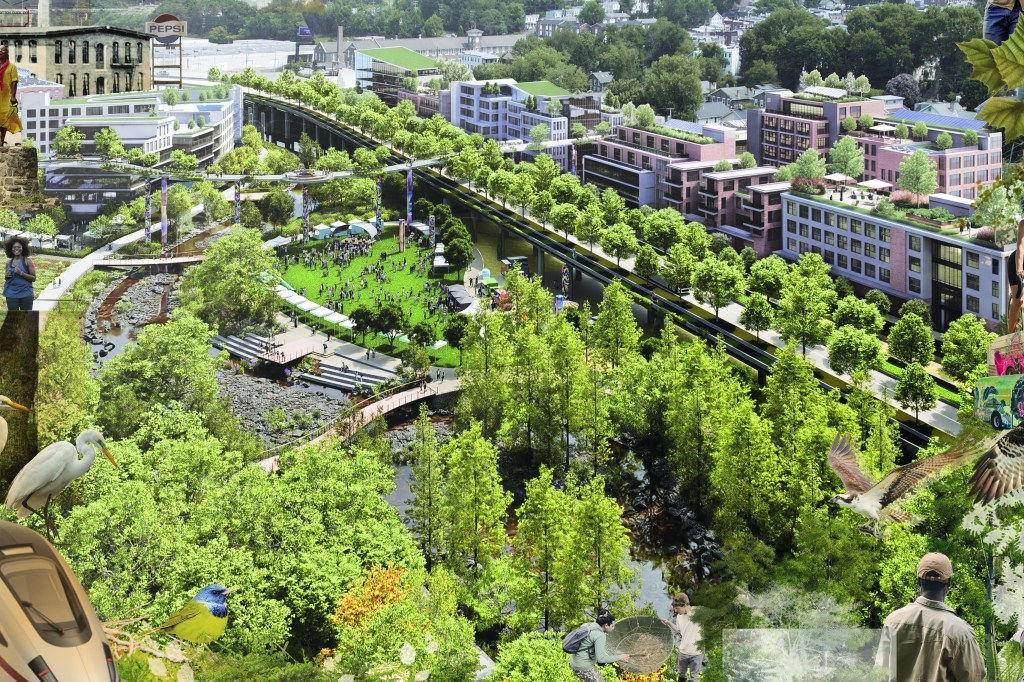
Some of the exhibit’s visions for Jones Falls are technically feasible renderings done by professional landscape architects, like Mahan Rykiel’s proposal to transform the expressway into a narrower, multimodal transit corridor and parkland space.
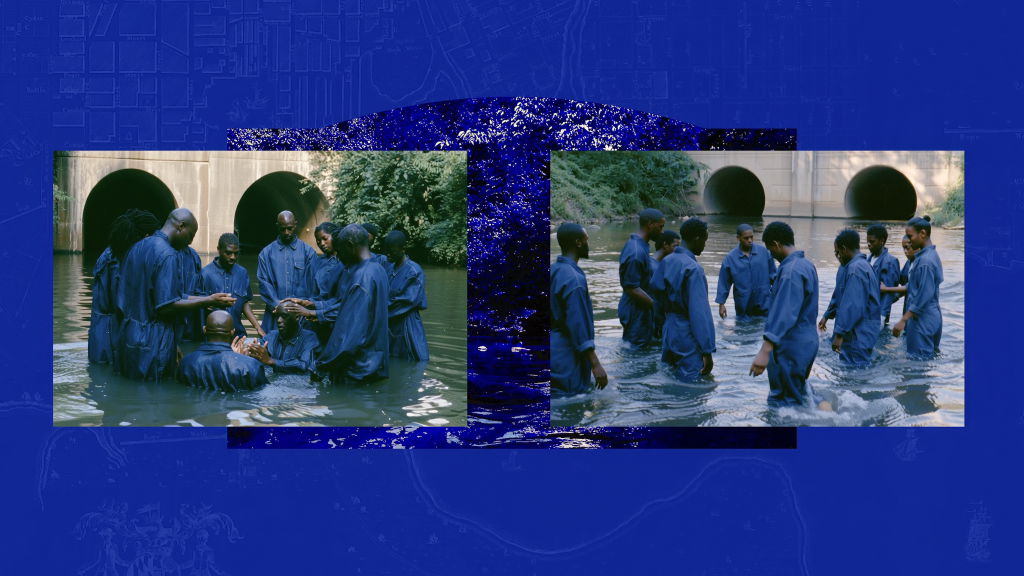
But others take a more artistic approach to evoke what the Jones Falls is — and could be. Multimedia artist Curry J. Hackett, for instance, submitted a video piece that considers the river “through the lens of traditional black and indigenous knowledge,” as Willen describes it; writer Lia Purpura wrote a poem “from the voice of the river” itself, “trying to imagine, what does the river want? As well as all of the creatures who are sustained by the river — including people.”
The exhibit culminates a much longer and further-reaching community engagement process that started in early 2026 and has continued throughout the show’s run.
A series of “river reimagining workshops” in the spring drew neighbors and advocates together to discuss their visions for the corridor — before any consultants had a chance to roll out the whiteboards and tamper their ambitions.
“Within the planning process, everything tends to operate from a restricted set of parameters within the realm of the possible,” Willen said. “[We wondered:] what if we opened that process up and engaged the people of Baltimore — and especially artists, writers, designers, and the creative community — to do more speculative designs, and use that as a way to catalyze these bigger conversations?”
Left: Bruce Willen. Right: Mahan Rykiel.
With the exhibition in its final weeks, the curators have turned their attention to keeping the conversation going — and just maybe, catalyzing a movement to actually remove the expressway and activate the river beneath it.
A series of panel events has brought actual city officials and designers together with the Baltimore community to consider case studies of other cities that have restored buried waterways and dream up possibilities in their own backyard. The most recent event was standing room only.
“I feel like we’ve built a huge constituency through this project,” added Willen. “We’ve quite like literally engaged thousands of people, and had so many folks attend our workshops and events … I’m hoping we can help connect the dots between grassroots energy and more concrete next steps.”
Willen hopes Jones Falls 2076 can serve as an inspiration for other advocates to use art, design, and community conversation to mobilize around highway removals and fight to create thriving neighborhoods beyond their wildest dreams — before transportation officials have a chance to replace the same old polluting road with another one.
“it’s important to dream, and the dreaming part is what gets people excited,” he added. “I think the earlier you can have a broad conversation, the better.”