Study: It’s More Expensive Than Ever to Drive America’s Most Popular Car
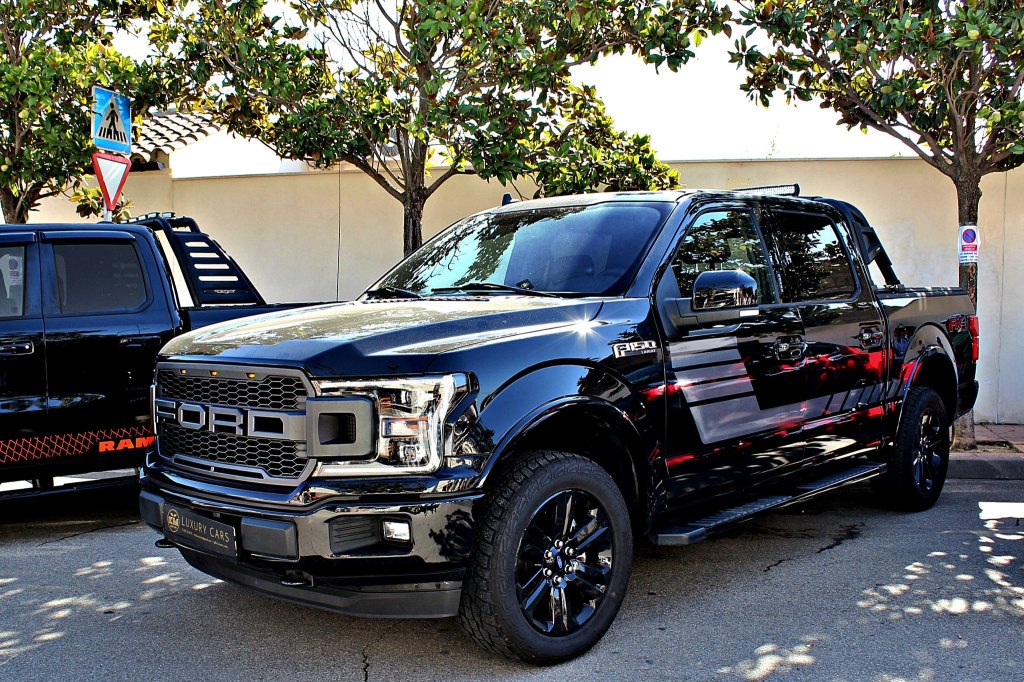
Fueling up America’s most popular car now costs an extra $85 every month compared to last year — and it costs even more in car-dependent states that require more driving, a new analysis finds.
Motorists who choose the ever-popular Ford F-150 in transit-poor states like Alabama, Kansas, and Kentucky can expect to pay $110 more at the pump per month than they did in 2025, according to a new report published by the Urban Institute.
Big pick-up drivers aren’t the only ones who are struggling — because motorists who picked smaller cars are, too.
The average American driver spends $65 more each month fueling up now than she did just one year ago, following the start of the Trump administration’s war with Iran which resulted in a dramatic increase in fuel prices. And because America is so car-dependent, the vast majority of people have no choice but to pony up.
“A bigger car is just going to end up consuming a lot more gas over time, and that means people are going to end up spending more money as a result,” said Yonah Freemark, who conducted the analysis.
Of course, some transportation reform advocates might be tempted to shrug off the news that Ford F-150 drivers are struggling to pay their fuel bills — especially considering how few of them use pick-ups to actually haul anything bigger than a bag of groceries, and how deadly their vehicles are to pedestrians.
But advocates point out that “light trucks” — a category which includes pick-ups and SUVS — have surged in popularity on US roads not just because of consumer demand, but because of structural forces like the “SUV arms race” and regulatory loopholes that exaggerated their profit margins compared to smaller vehicles.
Production of light-duty trucks surpassed car production for the first time in 2018, and today, only four US automakers produce a sedan. And as light truck purchases grow, more Americans are shouldering the financial burden.
And since fuel costs and the availability of mobility alternatives vary by state, that financial burden does, too. Wyoming residents pay $4.51 per gallon, nearly identical to the national average. Yet because they have so little transit, they spend more overall than any other state, averaging $347 per month on gas alone.
In transit-rich states, by contrast, sticker-shock at the pump doesn’t always mean high household transportation budgets. Even California’s $6.37 per gallon only adds up to $266 each month, because more residents can substitute drives with walking, biking, and public transit.
That’s why Freemark argues that expanding alternatives to driving is necessary to lowering costs. And while electric vehicle owners are able to dodge gas prices, the other costs of car ownership still create significant expense for households, like financing, maintenance, and insurance.
“Driving is inevitably going to be super expensive,” Freemark said. “It’s not like there’s a great way out of it.”
Making it easier to walk, bike, and take transit, on the other hand, could unlock major cost savings for families. Congress’s recent purge of federal transit funding could jeopardize progress, but Freemark says that all levels of government can step up by shifting transportation funds away from highway expansions and towards transit operations, sidewalks, and bike lanes.
However they do it, providing alternatives to cars — big or small — can provide families with relief from rising fuel costs.
“Transportation is such a high share of many people’s daily expenses,” Freemark said. “People have to have alternatives in order to save money.”

Read More:
Streetsblog has migrated to a new comment system. New commenters can register directly in the comments section of any article. Returning commenters: your previous comments and display name have been preserved, but you'll need to reclaim your account by clicking "Forgot your password?" on the sign-in form, entering your email, and following the verification link to set a new password — this is required because passwords could not be carried over during the migration. For questions, contact tips@streetsblog.org.