Meet the NIMBY’s Toxic Cousin: the NOMS (Not On My Street)
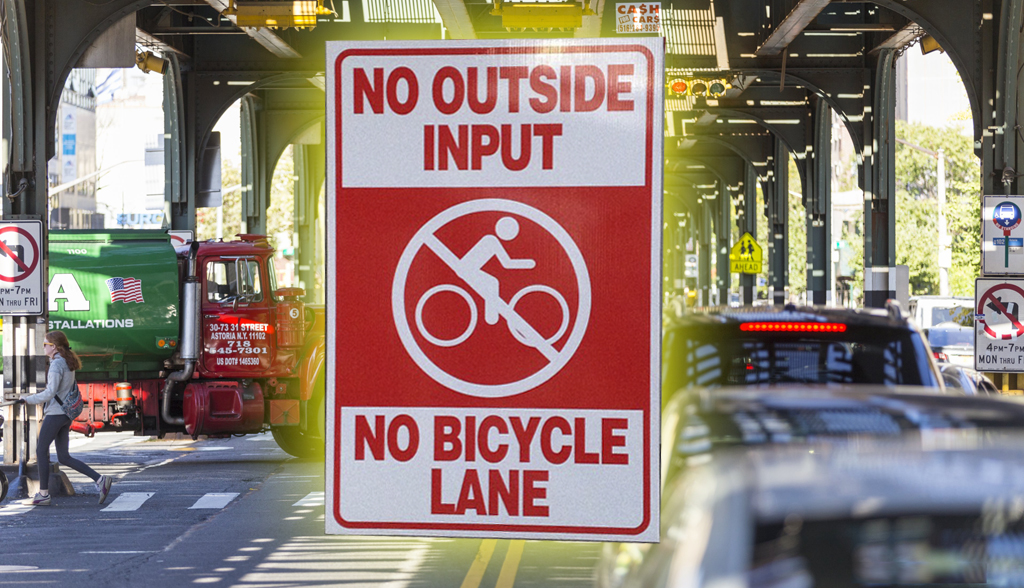
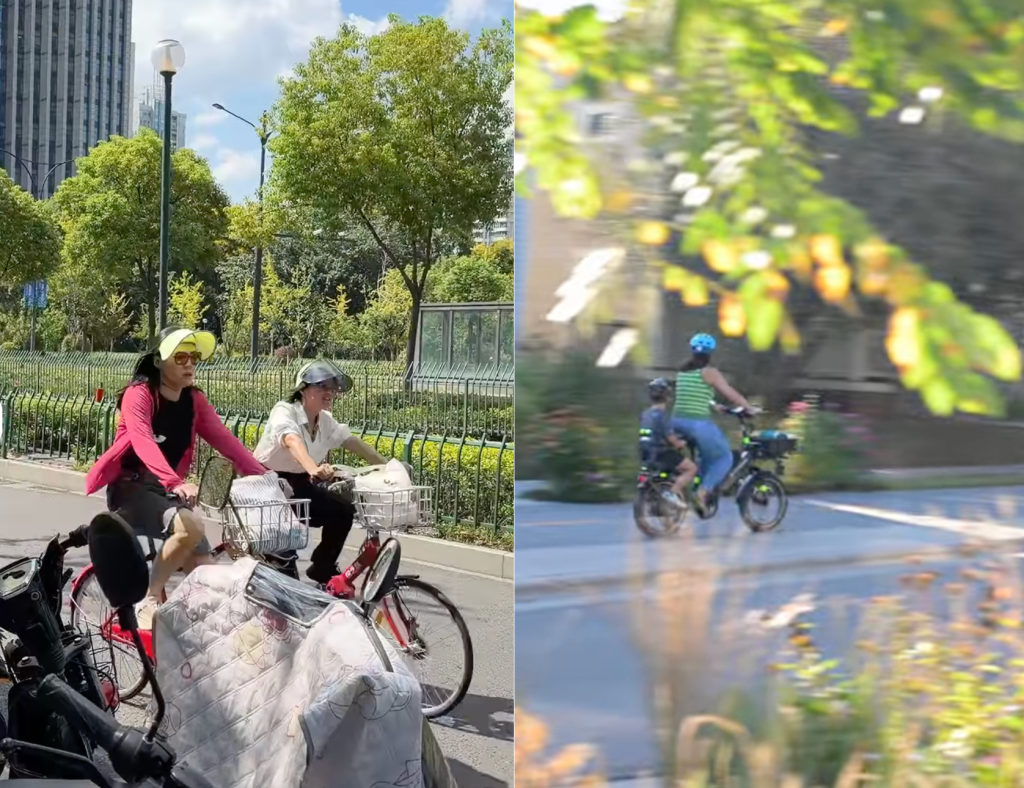
A new study argues that the notorious anti-development figure known as the NIMBY, for Not In My Backyard, has an equally toxic cousin in the transportation realm: the NOMS, or Not On My Street. And the researcher who coined the new term warns that U.S. communities will struggle to achieve lasting change until they reckon with the outsized influence of NOMS and their disturbing car-first ideology.
In a recent analysis of hundreds of public comments given at community meetings in Washington, D.C. across four years, researcher Ashton Rohmer found several troubling trends in the rhetoric of residents who resisted new livable streets infrastructure and policies, and what she calls the “car supremacist” attitudes that seem to underlie them.
For instance, many testimonies incorrectly characterized street space as a scarce, non-renewable resource with little room to spare for things like curb extensions — a phenomenon she calls “static scarcity,” which ignores the ancient history of streets evolving along with society. Other testifiers, meanwhile, participated in “blame inversion,” or raging against non-drivers for problems that are objectively caused by motorists, like traffic jams backed up alongside new bike lanes.
Research shows that congestion typically shrinks or remains flat when governments add cycling infrastructure to their roads — even if that infrastructure subtracts a little bit of lane space from drivers, many of whom hop on their bikes when they have a safe network to ride on. But that doesn’t stop the NOMS — whose ranks include USDOT Secretary of Transportation Sean Duffy — from claiming the exact opposite, without any evidence beyond their personal bias.
Even more alarmingly, Rohmer says those sorts of arguments seem to flow from unexamined beliefs that the harms perpetrated by drivers don’t really count — and conversely, that the people who endure them don’t really deserve justice or proactive measures to prevent other people from getting hurt.
And some testifiers heavily implied that non-drivers don’t deserve a say in how streets are built, whether because they “don’t pay for the roads” (when they absolutely do), or because “no one uses the bike lanes we already have” (when they absolutely do that, too). Some neighbors even alleged that cyclists are illegitimately “corrupting” city agencies to get their way. If that were actually true, drivers would probably not be killing so many people.
More than a century after the dawn of the automobile, Rohmer says these kinds of “car supremacist” ideas have become so deeply rooted that merely building new bus rapid transit lines will not be enough to heal the lasting damage to our broken culture.
“The issues posed by our mobility status quo are not engineering problems to be modeled or long range plans to be strategized, but constitute a moral project to be scrutinized, a social construct to be challenged and a system of power to be dismantled,” she wrote.
Of course, Rohmer isn’t the first scholar to argue that concepts like “motonormativity,” “windshield bias,” and “car-brain” have pervaded American life — and she isn’t the first to point out how powerful interests in the oil, road, and auto industries have systematically ingrained that perspective into our everyday lives.
Still, she argues that until we closely examine how everyday Americans perpetuate autocentrism from the bottom up — and how policymakers allow them to do so — we will never fully shift our transportation status quo, even if we do confront car culture’s top-down causes.
“I haven’t seen much theoretical work to explain the process by which a grumpy neighbor can complain about a speed bump, and then two days later, it gets removed,” she added. “There isn’t just a global political economy at work in that situation. It’s powered by individuals at the hyper-local level, within a bureaucratic process that enables that power to continue.”
Rohmer says community meetings, where motorists often disparage and intimidate their non-driving neighbors, provide a startling illustration of car culture’s corrosive impact.
In the D.C. testimonies she studied, many residents pointed to low bike ridership as evidence that cyclists constituted a “nefarious minority” hellbent on making life harder for their neighbors — rather than average people who just want to survive their ride home. Some even accused bikers, without evidence, of being paid actors or bribing politicians to enact their unwanted “agenda.”
“There’s no recognition that people who ride bikes or busses or [who use] sidewalks could possibly be members of the community,” Rohmer continued. “They’re always cast as outsiders … What these arguments are saying is that [non-drivers] shouldn’t have access to safe streets — like your life matters less.”
While her sample focused on D.C., Rohmer says car-supremacist arguments and attitudes turn up in conservative and liberal places alike because they’re fundamentally about power, not partisan politics. She recalls a recent conversation with a colleague about Copenhagen, where debate over a proposed bus lane fell prey to similar dynamics.
“It’s not that Copenhagen suddenly hate buses,” she added. “It’s that a new bus lane announced that car driver’s privileged position was contestable, and that’s what activated the opposition.”
While she stops short of offering a full-scale de-radicalization program for the NOMS, Rohmer says that decision-makers must recognize that car supremacy is a moral wrong just like any other dehumanizing ideology – and it’s past time for policymakers to check its influence on civic society.
That might look like disempowering tiny groups of unelected, unrepresentative community members who want to publicly debate whether things like bike and bus lanes should exist at all — while engaging the larger community even more deeply on the details of how those projects are rolled out, without compromising on the need for life-saving projects.
“If we use our community engagement practices to enable someone who thinks that it is okay not to make our streets safe for everyone who uses them, that is a failure of community engagement,” she said. “When we relegate decision-making to people who have these ideas about whose lives are worth valuing, I don’t think that that should count as ‘consulting the community.'”

Read More:
Streetsblog has migrated to a new comment system. New commenters can register directly in the comments section of any article. Returning commenters: your previous comments and display name have been preserved, but you'll need to reclaim your account by clicking "Forgot your password?" on the sign-in form, entering your email, and following the verification link to set a new password — this is required because passwords could not be carried over during the migration. For questions, contact tips@streetsblog.org.