Opinion: The Conservative Case for the REPAIR Infrastructure Act
For decades, conservatives have championed straightforward principles for infrastructure policy: correct past mistakes, spend taxpayer dollars wisely, and stop creating liabilities we cannot afford to maintain.
The REPAIR Infrastructure Act represents a rare legislative opportunity where these principles align with practical policy to address one of America’s most expensive self-inflicted wounds — communities divided and economically weakened by highways that were built without regard for the neighborhoods they destroyed.
What REPAIR Actually Does
REPAIR would reauthorize and expand the Reconnecting Communities program, authorizing $3 billion annually from the Highway Trust Fund between fiscal years 2027 and 2031. The bill authorizes $3 billion per year (FY 2027–2031), including $100 mllion for planning grants and $2.9 billion for capital construction to help communities remove, retrofit, or mitigate divisive transportation infrastructure that creates barriers to economic opportunity.
To provide scale, the fiscal year 2025 federal-aid highway program obligation limitation totaled approximately $61.3 billion. REPAIR represents roughly five percent of existing annual surface transportation expenditures. This is not revolutionary spending, but rather a strategic intervention that could demonstrate superior approaches for allocating the remaining ninety-five percent.
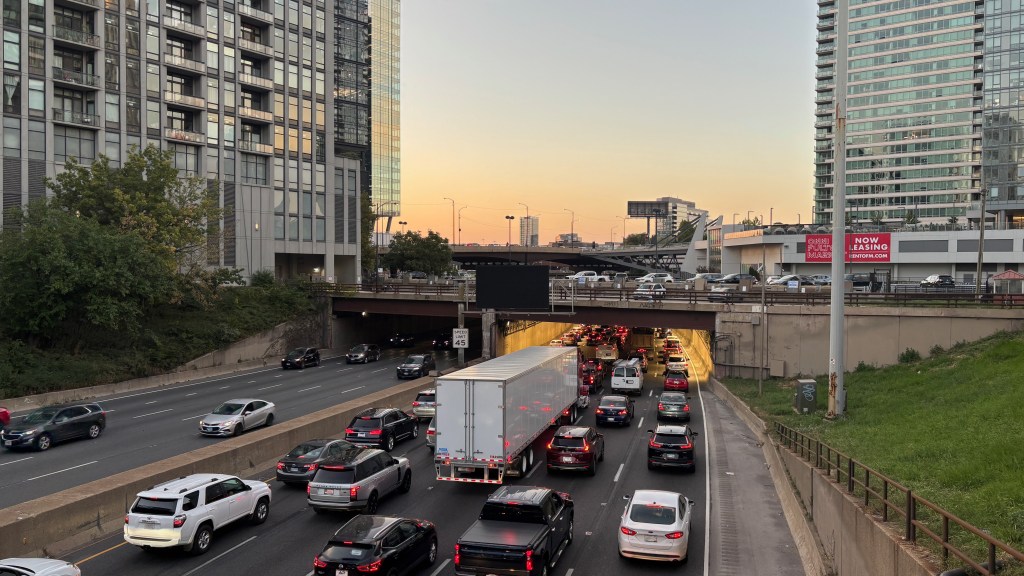
The legislation includes a provision conservatives should recognize as fiscal discipline codified into law. REPAIR funds cannot be used to increase the number of travel lanes on existing highways. This restriction acknowledges what many Republican mayors and county commissioners understand from direct experience: highway widening creates expensive long-term maintenance obligations while typically failing to deliver promised congestion relief due to induced demand.
The Economic Development Argument
REPAIR is fundamentally about correcting planning mistakes that impose ongoing economic costs on communities. The bill prioritizes projects that improve access to employment centers, workforce housing, healthcare facilities, schools, and essential services. This represents a pro-growth strategy focused on economic productivity rather than the illusion that more asphalt automatically generates prosperity.
Between 2009 and 2014, states spent $21.4 billion annually on road repair and $21.3 billion annually on road expansion, treating these as equivalent priorities despite growing maintenance backlogs. This spending pattern resembles a homeowner who builds additions while ignoring a deteriorating foundation.
REPAIR redirects federal policy toward investments that strengthen existing assets and reconnect isolated neighborhoods to regional economic opportunities. The conservative case for this legislation emphasizes stewardship and return on investment.
When highway projects from the mid-twentieth century severed neighborhoods from job centers and commercial districts, they did not simply create social problems. They created ongoing economic inefficiencies that reduce regional productivity, limit labor market access, and decrease property values in affected communities. REPAIR allows states and localities to address these efficiency losses.
Federalism and Program Flexibility
REPAIR does not replace existing highway programs but complements them while creating pathways for eligible projects to receive funding through traditional formula programs including the National Highway Performance Program, Surface Transportation Block Grant Program, Highway Safety Improvement Program, and Congestion Mitigation and Air Quality Improvement Program.
The legislation essentially builds mechanisms for states to solve genuine local problems using programs they already administer, while establishing a national standard that federal dollars should not perpetuate the infrastructure mistakes of previous generations.
This represents the federal role conservatives historically supported: establishing parameters that protect taxpayer interests, funding genuine priorities, and allowing local leaders to execute solutions appropriate for their communities. The program requires robust community participation and formal partnerships with organizations in affected neighborhoods, ensuring that solutions reflect local knowledge rather than distant bureaucratic preferences.
The Anti-Waste Argument
Conservatives often discuss government waste in abstract terms. REPAIR addresses concrete waste: federal dollars spent building infrastructure that damages local economies, federal dollars spent maintaining infrastructure that serves no productive purpose, and federal dollars spent widening highways that induce additional traffic and create still more maintenance obligations.
The legislation’s prohibition on using REPAIR funds for lane expansion represents exactly the kind of restriction conservatives claim to favor: preventing federal programs from subsidizing locally popular but nationally counterproductive projects. Highway widening consistently fails to deliver promised congestion relief while creating permanent maintenance liabilities that exceed the original construction costs over the infrastructure’s lifespan.
REPAIR also requires applicants to demonstrate approaches that prevent displacement of existing residents, preserve affordability, and include mechanisms such as community land trusts or community benefit agreements. Conservatives who express concern about eminent domain abuse and property rights should recognize these provisions as protection against government infrastructure projects that destroy community wealth.
Why This Needs Republican Leadership
Despite all of this, the REPAIR Infrastructure Act currently has zero Republican co-sponsors. Senate sponsors include Lisa Blunt Rochester of Delaware, Jeff Merkley of Oregon, and Raphael Warnock of Georgia. House sponsors are Pat Ryan of New York and Shomari Figures of Alabama.
But that doesn’t mean that conservative districts don’t want this program to exist. Between fiscal years 2022 and 2024, communities submitted nearly 1,500 applications from all fifty states for Reconnecting Communities funding, with average annual unmet demand of $4.6 billion, demonstrating nationwide interest that crosses traditional partisan boundaries.
If Republicans want credibility as the party of infrastructure competence and fiscal responsibility, several committee leaders are positioned to advance this legislation without transforming it into partisan theater.
In the House, Transportation and Infrastructure Committee Chairman Sam Graves of Missouri oversees precisely the jurisdiction where federal surface transportation policy takes shape. Representative David Rouzer of North Carolina chairs the Highways and Transit Subcommittee, while Representative Daniel Webster of Florida chairs the Coast Guard and Maritime Transportation Subcommittee and represents a state where storm evacuation routes, port connections, and neighborhood access are ongoing policy challenges rather than theoretical concerns.
In the Senate, Environment and Public Works Committee Chair Shelley Moore Capito of West Virginia could advocate for REPAIR as investment in the durable infrastructure that Appalachian communities require. Senator Kevin Cramer of North Dakota chairs the EPW Transportation and Infrastructure Subcommittee with direct jurisdiction over highways, bridges, and regional economic development. Senator Roger Wicker of Mississippi serves on EPW and brings experience from a Gulf Coast state managing freight, ports, and disaster recovery.
These members represent the kind of practical governance that could advance REPAIR without ideological posturing. The question is whether congressional Republicans want to demonstrate they can address real infrastructure challenges or whether they prefer to cede the entire issue space to Democratic colleagues.
A Strategic Investment, Not a Silver Bullet
REPAIR authorizes modest funding to demonstrate superior approaches to infrastructure investment. The program will not solve every transportation challenge, repair every deteriorated bridge, or reverse every planning mistake from the Interstate Highway era.
That is precisely the point. REPAIR represents a strategic bet that targeted investments in reconnecting divided communities can generate economic returns that justify reorienting broader federal transportation policy.
The conservative opportunity is straightforward: co-sponsor REPAIR, claim the position of fiscal stewardship, and begin measuring infrastructure success through outcomes such as access to opportunity, economic productivity, and return on investment rather than through lane-miles constructed.
The alternative is allowing Democrats to own the entire policy space of correcting past infrastructure mistakes while Republicans defend an expensive status quo that fails to deliver either economic growth or fiscal responsibility.
The legislation is modest by design, targeted in scope, and focused on correcting identifiable planning errors that impose ongoing economic costs. These characteristics should make REPAIR exactly the kind of infrastructure investment conservatives claim to prefer. Whether Republican leaders recognize this opportunity remains to be seen.

Streetsblog has migrated to a new comment system. New commenters can register directly in the comments section of any article. Returning commenters: your previous comments and display name have been preserved, but you'll need to reclaim your account by clicking "Forgot your password?" on the sign-in form, entering your email, and following the verification link to set a new password — this is required because passwords could not be carried over during the migration. For questions, contact tips@streetsblog.org.