Why US Roads Are Full of SUVs and Trucks, Part I
This is the first in a two-part series. Check back tomorrow for part two.
The Trump administration just quietly re-classified every SUV and pick-up on the road as a passenger car rather than a “light truck” — but how did US roads get so dominated by huge vehicles in the first place, and what will it take to actually get them off the road, rather than just renaming them?
In case you missed it – and amidst all the outrage over slashed emissions standards announced in the same press release, you probably did – the White House announced late last month that it was “resetting” federal vehicle classification standards to redefine what kinds of cars legally qualify as a “light truck,” starting with model year 2030.
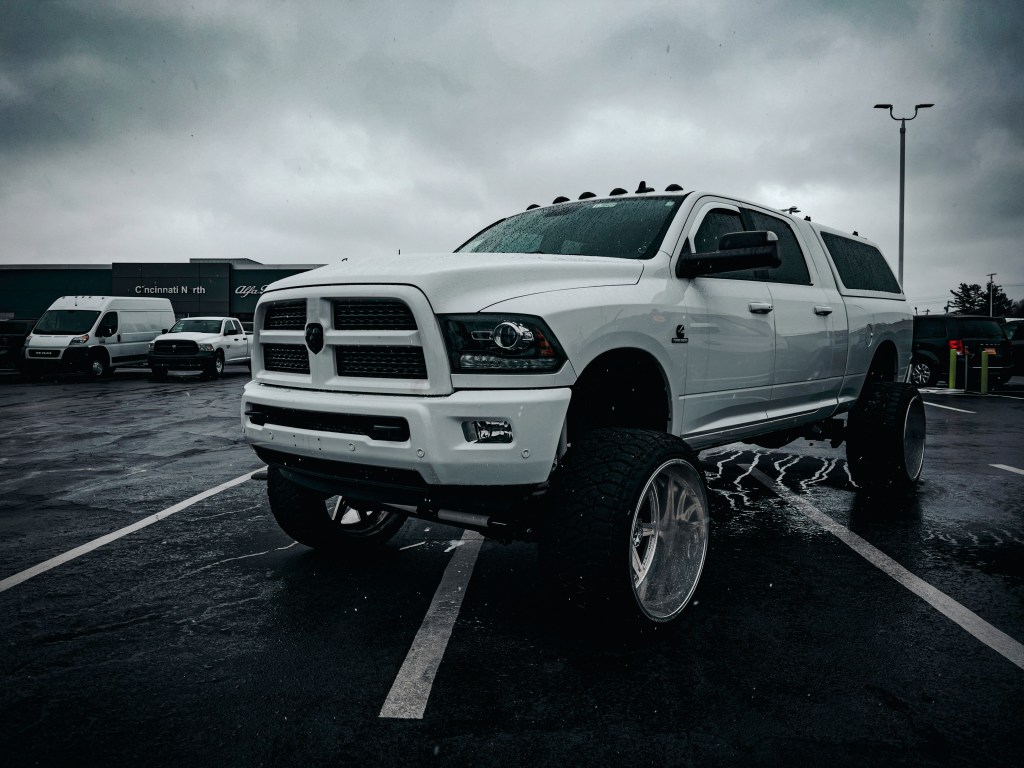
That one wonky move will instantly transform 70 percent of the vehicles on the road right now into “passenger cars,” up from the measly 30 percent that currently qualify for the label. That means legally reclassifying millions of hulking monster-SUVs and pick-ups that currently qualify as “light trucks” — and that many Vision Zero advocates argue have no place on US roads at all because they’re so dangerous to anyone outside a mega-car.
Before all those “light trucks” vanish into the statistical sea of mere “passenger vehicles,” though, let’s take a look at the structural reasons why we have so damn many of them — and no, it’s not just because Americans just so happen to love driving living-rooms-on-wheels.
1. The ‘Light Truck’ Loophole
Before we dive into all the other reasons why American roads look like a monster truck rally, let’s look a little deeper into the light truck loophole the Trump administration is set to close — and why the way they’re closing it isn’t necessarily good news.
Originally intended as a special carveout for the kinds of off-road and heavy-duty work vehicles used by farmers and tradespeople, “light trucks” have been subject to lower fuel emissions standards than “passenger cars” since the federal government started cracking down on vehicle emissions in the 1970s.
Because of the insanely complicated “footprint”-based formulas the government uses to calculate the average fuel economy for each automaker’s fleet, though, manufacturers today are functionally incentivized to produce more vehicles that fit into the gas-guzzling category — and to produce fewer of the clean, small cars that are less likely to kill a pedestrian.
Put another way: Vision Zero advocates and the Trump administration alike argue that the light truck loophole has “disincentivized [manufacturers] from making hatchbacks, wagons, and smaller footprint vehicles in general,” as written in U.S, DOT’s latest press release.
For years, livable streets activists have fought to close (or at least narrow) the infamous light truck loophole by re-doing those byzantine fleet emissions formulas to incentivize automakers to produce smaller vehicles instead of bigger ones, raising fuel efficiency standards across the board, and turning the “work vehicle” label back into a meaningful distinction — essentially, making light trucks trucks Again.
Under Trump’s new rule, though, all types of vehicles will be allowed to emit a lot more — and automakers will face zero financial penalties for failing the lax standards that do exist. Manufacturers also will no longer have to spend more on design tricks to cram their vehicles into the light truck category, like adding removable rear seats on SUVs so they technically qualify as “cargo vans,” or designing weird front ends onto luxury crossovers so they could theoretically clear a massive boulder, and thus get classed as an off-road vehicle.
Time will tell whether this bizarre way of “closing” the Light Truck Loophole will result in more “hatchbacks, wagons, and smaller footprint vehicles in general” as the Trump administration claims — or if we’ll get hit with a whole new wave of massive pick-ups and SUVs, now completely unencumbered by the low regulatory hurdles that automakers have been vaulting over for decades anyway.
To understand why a lot of people are putting money on the second option … well, just read the next section.
2. Automakers make more profits on big cars
Of course, there’s one really simple reason why so few Americans buy anything besides an SUV or a pick-up, at least in the new car market — automakers basically aren’t selling anything else.
At least as of April 2026, just four domestic automakers were selling any type of sedan — and they were selling just eight, out of an estimated 117 total new car models that have final assembly on US soil.
Moreover, nearly all of those eight sedans were electric — which could make them particularly unpopular in a country where chargers are scarce and funding to build more of them has been federally rescinded.
In a (not at all) shocking twist, there’s a pretty big profit motive behind why.
Earlier this year, journalists at the New York Times reported that light trucks are “the source of virtually all of the U.S. auto industry’s profits,” because “the cost of making bigger vehicles is usually not much higher than it is for cars, because they are often built in automakers’ most efficient factories and the extra raw materials are relatively cheap.”
The Weekly Driver, meanwhile, claimed that “a full-size truck can throw off $15,000 or more in profit per unit; a stripped economy hatchback might clear $1,500 if the stars align.”
Car buyers meanwhile, can at least pretend they can afford that difference — even when they can’t. That’s because US purchasers are increasingly being offered longer (and more extortionate) auto loans. A record one in four new-car buyers are now signing onto seven year terms — which means they’re paying significantly more interest before they actually own their vehicles, boosting dealers’ profits even more.
Put another way: there was a good reason why US manufacturers contorted themselves to cram as many vehicles as possible through the “light truck” loophole — and good reason to suspect they won’t stop anytime soon.
Of course, it’s possible that some automakers will see an opportunity to make up the hefty lost profit margin on each behemoth pick-up by selling a larger volume of tiny cars … except that 91 percent of US households already own at least one vehicle, and aren’t exactly eager to pick up another.
But sure, maybe the Fords and GMs of the world will take a gamble on selling a mess of kei-style mini trucks — or actual kei trucks and other small, imported vehicles will fill the gap.
Well, except for this…
3. The ‘Chicken Tax’, and a whole flock of Trump-era tariffs
Trump might have drawn approximately one zillion headlines for his use of tariffs during this time in office, but America has a much longer history of using taxes on foreign governments as a cudgel to shape the US vehicle market.
The most infamous is the “chicken tax,” which started as a dispute between Europe and the US over agricultural imports like poultry. That fight soon spiraled into a serious international beef when several countries imposed tariffs and trade controls on US products they claimed were crowding out local producers, prompting Eisenhower to slap a steep 25 percent tariff on several foreign imports in retaliation – including light trucks.
More than sixty years later, all of the tariffs prompted by that fowl fight have fallen away — except for light trucks, which has insulated US auto manufacturers from foreign competitors and provided them with a powerful incentive to focus their energies on the mammoth end of the market.
And in the meantime, Trump’s trade wars with just about every country on earth have made it even harder to buy not just a small, foreign-made cars, too, but any car with foreign-made components. As recently as April, the Wall Street Journal reported that foreign car makers were threatening to pull small cars out of US markets without a better trade deal; by July, some of them had already started to do it.
But everything we’ve talked about so far only impacts the new car market. Tomorrow we’ll look at the structural factors pushing Americans into used cars, too — and talk about what it will take to get them out of it.

Read More:
Streetsblog has migrated to a new comment system. New commenters can register directly in the comments section of any article. Returning commenters: your previous comments and display name have been preserved, but you'll need to reclaim your account by clicking "Forgot your password?" on the sign-in form, entering your email, and following the verification link to set a new password — this is required because passwords could not be carried over during the migration. For questions, contact tips@streetsblog.org.