Why US Roads Are Full of SUVs and Trucks, Part II
This is the second article in a two-part series. Read part one here.
We’ve all heard it before: Americans “just love” the kind of big SUVs and pick-ups that are way more likely to kill people outside them.
But what are the structural reasons why so many massive vehicles are on the road, and how can we ever begin to unravel them?
Yesterday, we explored three reasons why the new car market has come to be all but synonymous with mega-cars — and not just because of the magical power of “consumer demand.”
Today, we dig into why so many people buy SUVs and pick-ups on the used market, too, and how to finally get that demand to soften.
4. The ‘SUV Arms Race’
If you’re a street safety advocate, you’ve probably seen one of those news segments where long lines of elementary schoolers disappear into the front blind zone of an SUV.
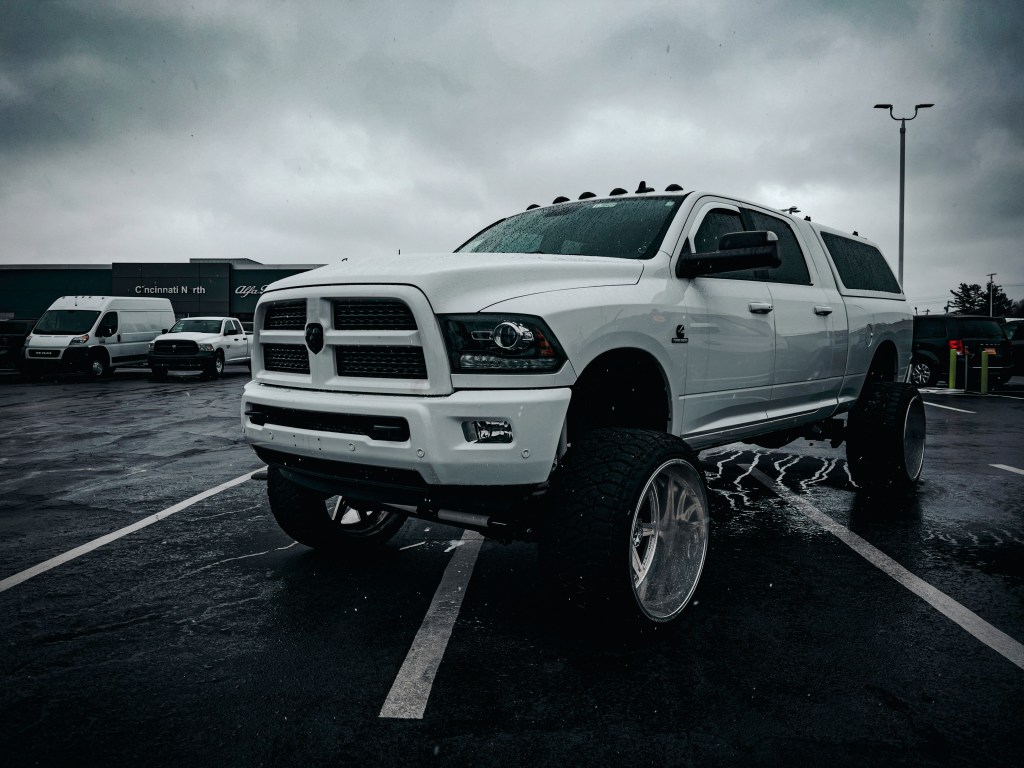
Nowadays, though, entire sedans are invisible from the driver’s seat of some pick-ups — and it’s steering car buyers to choose the biggest vehicle they can get in hopes that they won’t get mowed down.
Coined by economics professor Michelle J. White, this “SUV Arms Race” has sowed the seeds of mutually assured destruction on US roads for years — even though advancements in vehicle safety technology mean that choosing a taller SUV actually doesn’t make you significantly more likely to survive a crash than a choosing smaller car, at least above an average weight threshold.
Since the average American isn’t reading research briefs from the Insurance Institute for Highway Safety, though, the perception that a bigger car means better chance of surviving a crash remains.
That helps explain why car shoppers keep picking gas guzzlers, even when pump prices soar.
A survey of people looking to purchase non-luxury cars in the first half of 2026 ranked fuel efficiency as only the seventh most important factor driving their selection, despite the fact that was right about when the war on Iran first sent prices through the roof; safety, by contrast, was ranked number two, behind only “durability and reliability.
Put another way: a lot of Americans would rather vote people into office who say they will somehow magically get them dirt-cheap gas prices, rather than buy a car that they know will cost them less money to fuel up because it’s more efficient.
But if a buyer is somehow still on the fence between a sensible used sedan and an SUV that incinerates half your paycheck when you go around the block… Uncle Sam might just nudge them over the line.
5. Sometimes, the government pays you to buy them
…though TikTok influencers often overstate how much.
Back in 2024, we wrote about a viral social media trend where influencers were encouraging Americans to use “tax hacks” to write-off the costs of light trucks on their taxes, thanks to a tax code provision known as Section 179.
As of 2026, that trend is still going strong. And Section 179 was even recently expanded under the One Big Beautiful Bill Act to allow business owners to write off up to $32,000 of the purchase price of a “work” vehicle — but only if it weighs between 6,000 and 14,000 pounds.
Under another provision of the bill known as Section 168(k), those same car buyers can also take advantage of “bonus depreciation” to deduct even more of the vehicle’s cost from their tax bill in its very first year in service — even if they finance it and put little to no money down.
Smaller work vehicles, by contrast, have their first-year write-off value capped.
Much like the “light truck loophole” we learned about yesterday, this so-called “G-Wagon Loophole” was theoretically meant to be used for people who really need to haul things like lumber and farm equipment to buy heavy-duty work vehicles. The people who take advantage of it are also subject to requirements like mileage logs to prove their cars are used for business most of the time.
But those logs are super easy to fudge — and business owners who don’t really need a big car to, say, pull a trailer are often all too happy to do so. That helps explain why your friendly neighborhood luxury realtor will probably run out and buy a massive Escalade after he has a good year, rather than an equally expensive but tinier sports car.
When enough luxury realtors (and pop stars, and professional athletes, and every other rich person looking for an easy tax break) are firmly planted behind the wheel of a huge vehicle, though, mega-cars can become a symbol of wealth and status — and that may have more power to shape what Americans drive than any regulatory loophole or tax code around.
6. Mega-car culture
We write a lot about “car culture” here at Streetsblog. But it’s worth considering mega-car culture as its own unique force that must be confronted and dismantled, especially if we want to undo larger patterns of car dependency.
For decades now, auto manufacturers have marketed large pick-ups and SUVs not as a functional work vehicles with unfortunately low gas mileage, but as tantalizing symbols of wealth, mastery over nature, and dominance over the weak.
More to the point, they promise the kind of power that most Americans can’t get anywhere else; even if you can’t get an influential job, buy a big house, or afford good healthcare, you can probably get extortionate 7-year financing on a massive truck that can temporarily make you look like the kind of person who can do those things.
In a fascinating essay for Classic Car Arena, writer Patrick Walsh traced the shift to the 1950s, when post-war pick up truck manufacturers ditched dry, utilitarian ads about “tonnage” meant to attract farmers, and started speaking straight to the egos of returning soldiers and the boomtime everyman:
“The utilitarian pitch never fully disappeared, and it still hasn’t, but it stopped being the whole message,” Walsh wrote. “Advertising began to suggest that owning a truck said something about you. Not yet a full mythology, but the seed of one. The ad was no longer only answering ‘will it work?’ It was starting to answer ‘what kind of man drives this?'”
And some advocates argue that the word “man” is not incidental, here, even if plenty of women drive pick-ups, too.
Political researcher Cara Daggett coined the term “petro-masculinity” in 2018 to describe what writer Kathrin Meyer explained as a “socially constructed male identity … tied to a fossil fuel economic order: related, for example, to what is perceived as a ‘performative masculine’ climate-damaging lifestyle, featuring high meat consumption or the use of oversized cars, such as SUVs.”
Put another way: our preponderance of huge cars isn’t just the product of regulatory loopholes, an exploitable tax code, market manipulation by profit-hungry automakers, and ever-escalating safety fears. It’s also a symbol of many Americans’ subconscious allegiance to a version of our country built on a bedrock of limitless consumption and ruthless individualism.
How’s that for “consumer demand”?
That’s not to say that American roads are lost forever to the scourge of the mega-car.
Future administrations could close the “light truck loophole” the right way, by rewriting federal formulas to incentivize smaller vehicles across the fleet instead of huge ones, and instituting strong fleetwide emissions standards that reflect the fact that climate change threatens our species.
We could rethink trade policies that make importing smaller, safer, cleaner cars less cumbersome, or at least stop distorting our mega-car market to give US automakers such a significant edge only in that arena.
We could close the wonky tax loopholes, ban the dangerous SUV ads, abolish the after-market lift kits, and — if we really want to shoot for the moon — cap the maximum size of passenger vehicles and require special licenses for bigger cars, or at least make their drivers pay more for the dangers and damage they cause.
And of course, we must invest heavily in alternatives to all kinds of driving — and do the much harder work of resetting our cultural values around collaboration instead of dominance, access instead of speed, conservation instead of the endless, senseless consumption of all of our resources no matter what it costs the world.
Or: we could keep pretending that every American parking lot is carpeted with gas-guzzling, pedestrian-slaughtering mega-cars because people “just like them better.”

Read More:
Streetsblog has migrated to a new comment system. New commenters can register directly in the comments section of any article. Returning commenters: your previous comments and display name have been preserved, but you'll need to reclaim your account by clicking "Forgot your password?" on the sign-in form, entering your email, and following the verification link to set a new password — this is required because passwords could not be carried over during the migration. For questions, contact tips@streetsblog.org.