Does the ‘Week Without Driving’ Give Car-Free Living A Bad Rap?
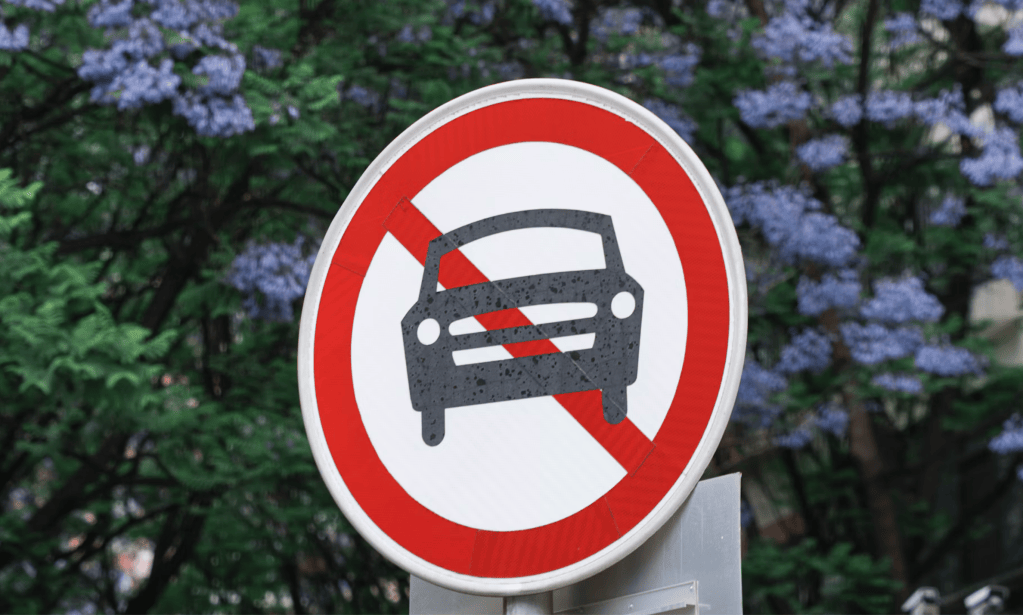
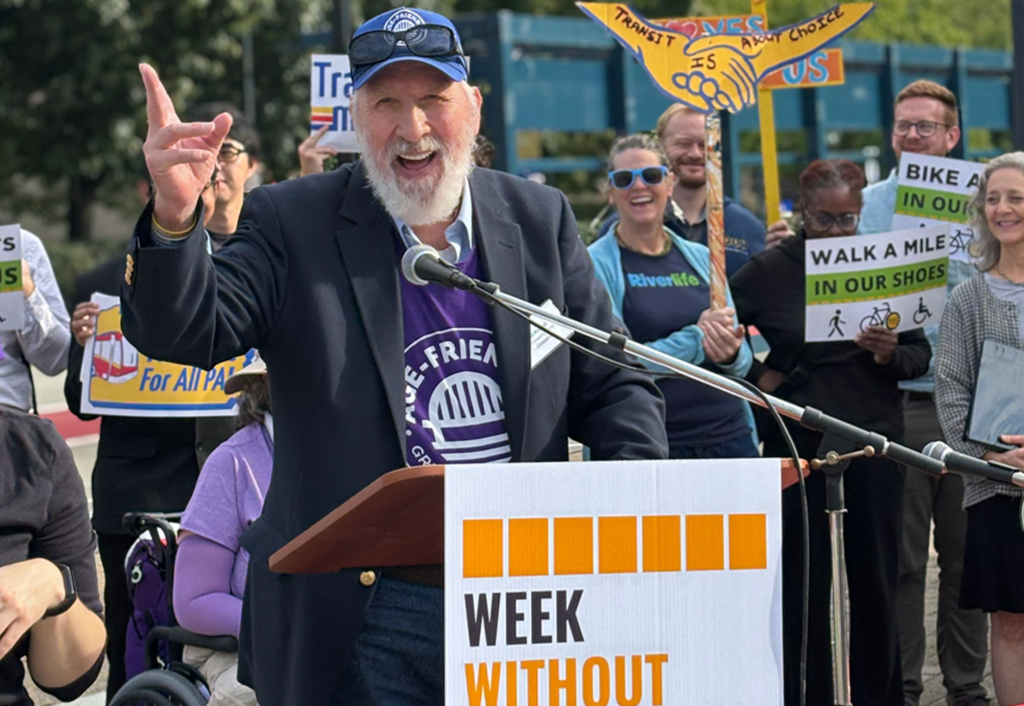
Every year, the Week Without Driving floods social media with stories of how punishing life without a car can be in America. And every year, I wonder whether that gives motorists the wrong message about how good life can be without driving at its center.
Don’t get me wrong: since advocates in Washington state first challenged their neighbors to hang up their keys in 2021, the Seattle-born event has become one of my favorite national advocacy campaign. I love the way it pushes motorists to undertake a radical act of empathy that’s far harder to ignore than a policy brief; when those motorists are also public officials, the initiative can be even more transformative. If I had my way, every mayor, councilperson and transportation leader in the country would have to do it, ideally for at least seven days out of every month.
Now that this year’s Week Without Driving is coming to a close, though, I’ve found myself reflecting on what should come next — and what it will take for the Week Without Driving to become a celebration of the benefits of car-free transportation, rather than the challenges, and a call to action to demand more of them. Because as important as it is to condemn the conditions that put those advantages out of reach, our advocacy cannot stop there.
Here’s the thing: most U.S. residents have been undertaking an involuntary “week without active or shared transportation” challenge every week for their entire adult lives, give or take the walk to and from the parking lot. And while a recent study found that 53 percent of them want more mobility options than policymakers are delivering, a staggering 47 percent are apparently happy with the status quo.
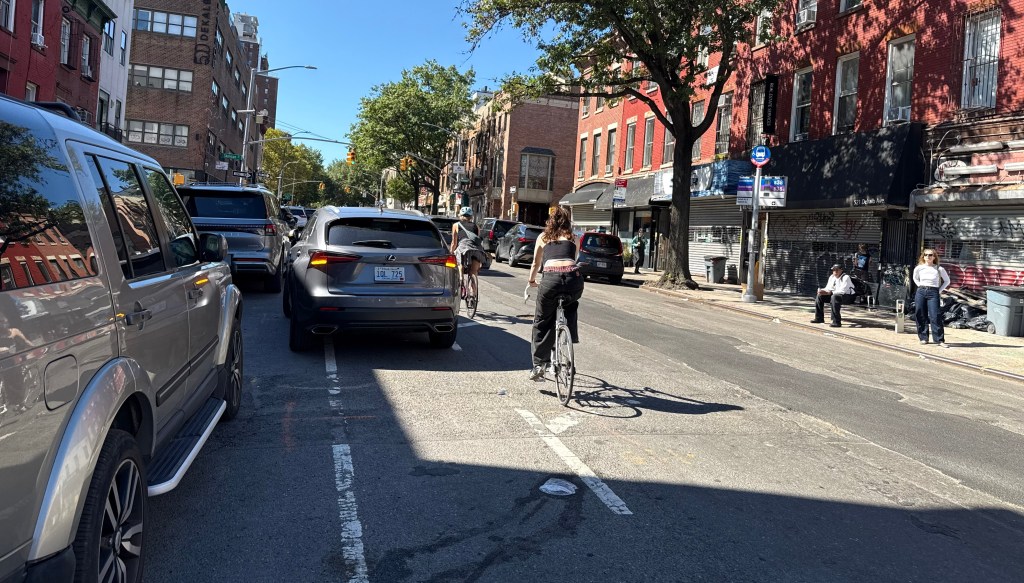
To understand why, just look at the more negative entries from the Week Without Driving challenge. Missing sidewalks, near-miss bike crashes, buses that never come; it can all make getting around without a car look like nothing more than a gauntlet of dangers and indignities that only a masochist would willingly undertake.
Without an understanding of the universe of solvable, structural reasons why non-automotive transportation in America can suck so much — a universe that doesn’t fit neatly into a social media post — the campaign isn’t a particularly good advertisement for car-free living, or even skipping a single trip behind the wheel.
But what if it were?
Invariably, my favorite Week Without Driving posts are those that name what’s wonderful about walking, biking and transit — and those that demand policymakers give us even more of the good stuff.
The specific amount of money saved on gas in just seven days. The extra chapters of the novel read on the train, instead of dodging road-raging drivers in the rush hour crawl. The precious memories made biking a kid to a neighborhood school, instead of plunking them in the back seat with an iPad. The subtle health benefits that start to accumulate with just a week of walking to work, but can snowball until they literally add years to your life.
These are the kind of stories that I love seeing during this campaign, and I wish I saw more of them.
What if next year, a whole flank of the Week Without Driving effort focused exclusively on places where forgoing driving isn’t a challenge, or on people who have happily done it for years? How can we reach people who are skeptical that joyful, car-free living is possible — and not just in the Netherlands or New York City, but in Tempe, Arizona, suburban Houston and other neighborhoods across America?
And if it’s truly not possible to enjoy life without driving in your specific town, how can we give you a glimmer of how wonderful things could be — after a few achievable policy and infrastructure shifts that give you other options?
Look, I won’t pretend that this type of positive framing would work for everyone, and the research on this stuff is incredibly mixed. If we’d prefer to go negative, though, why not aim that negativity at the mode of transportation that’s killing our neighbors, our budgets, our natural environment, and so much more?
After all, as soon as the Week Without Driving challenge ends, many US residents will begin the 51 Weeks of Forced Driving challenge that’s functionally become our national default. That means an average of $1,025 month just to own, insure, and maintain a vehicle, plus the long list of other financial, social, emotional, planetary, and public health costs of near-compulsory mass car dependency.
It would not be hard to log a social media post every day documenting the downsides of constant driving that so many of us have no choice but to experience every day — and to start doing the hard work of denormalizing them.
The Week Without Driving should expose not just the injustices endured by people outside cars, but the joys they experience, too. But the real challenge is to help our neighbors imagine what else is possible for our transportation system – and to build the collective power necessary to bring it to life.

Read More:
Streetsblog has migrated to a new comment system. New commenters can register directly in the comments section of any article. Returning commenters: your previous comments and display name have been preserved, but you'll need to reclaim your account by clicking "Forgot your password?" on the sign-in form, entering your email, and following the verification link to set a new password — this is required because passwords could not be carried over during the migration. For questions, contact tips@streetsblog.org.