Steal This Idea: ‘Emergency Streets’ Strategy Gets First Real-World Pilot
A city in Washington state is taking rapid action to calm streets almost immediately after people are killed in crashes — debuting a novel new approach to traffic violence response that they think other cities should try, too.
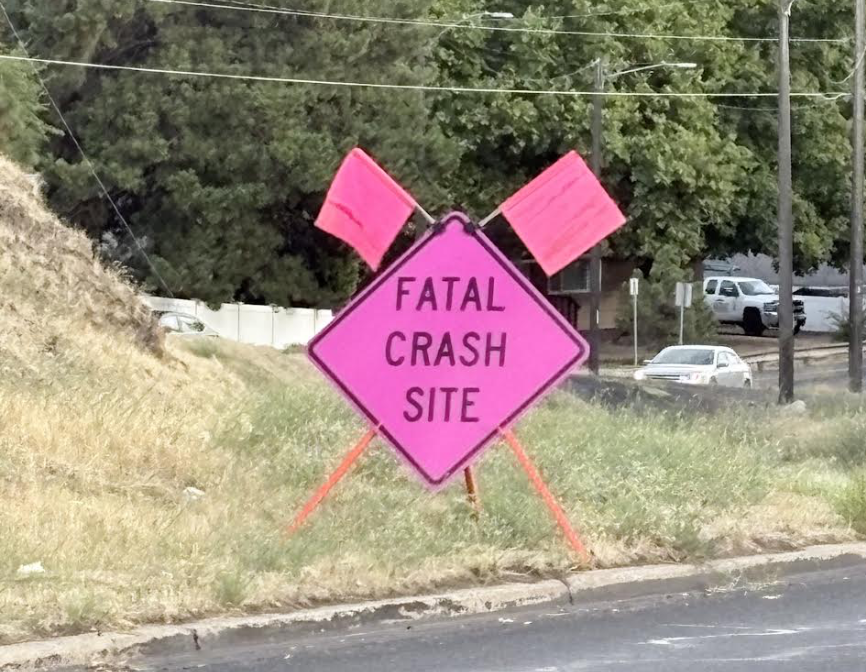
In what its creators say is the first real-world deployment of the “Emergency Streets” concept — which calls on communities to implement temporary traffic calming measures within 72 hours of a fatal crash — the city of Spokane, Washington recently closed a lane at the site where 18-year-old motorcyclist Kiril Herlazhyi was killed in a single-vehicle collision just a few days prior.
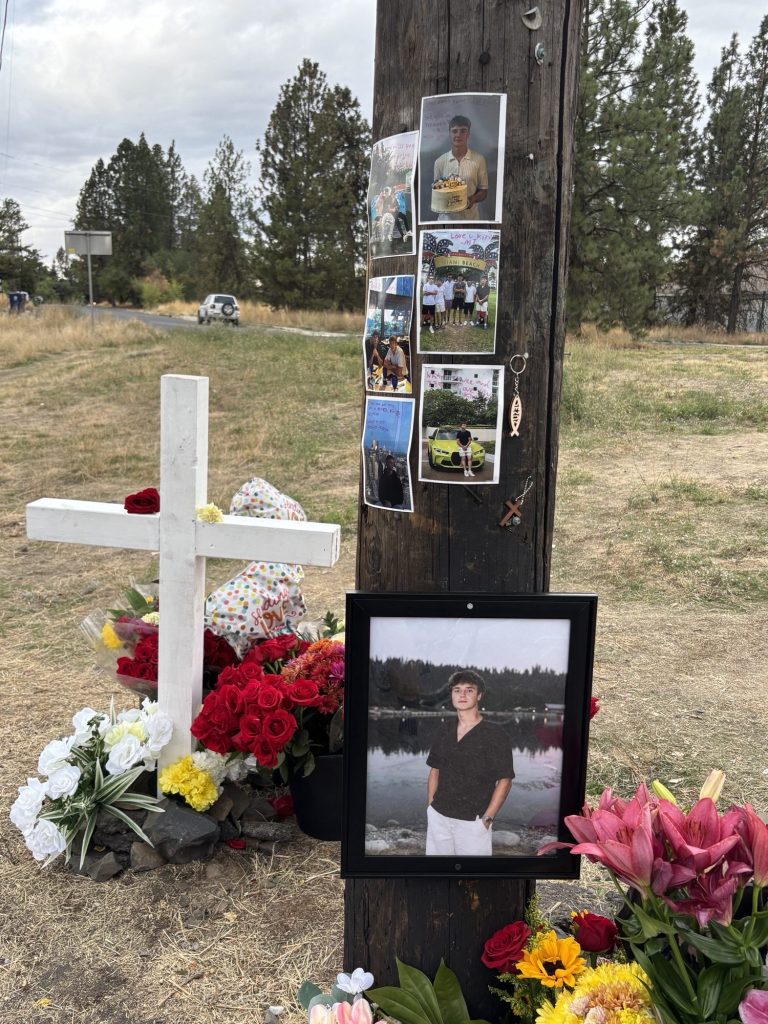
In many communities, transportation authorities might have treated Herlazhyi’s death as an unavoidable “accident” for which the teenager himself was to blame, since he lost control of his vehicle at a high rate of speed and crashed into a pole. The city of Spokane, though, chose to treat the tragedy as part of a systemic traffic violence emergency, and take action to compel everyone to hit the brakes along a road where going too fast is all too common — thanks in part to road design that encourages speed.
“I’m hoping this opens up a community conversation, where we don’t focus exclusively on what happened and who’s to blame,” said Jon Snyder, the city’s director of transportation and sustainability. “It’s more like: okay, this is preventable. What can we do to prevent it? Because whatever happened, somebody died … There’s always something that could have been done.”
The experiment is part of Spokane’s first-in-the-nation “Emergency Streets” pilot, which will provide the city with grant funding for six post-crash deployments between now and June. But Snyder says the program was initially sparked by local advocates at Spokane Reimagined, who installed roadside “Ghost Bikes” at the sites where cyclists lost their lives.
That effort, Snyder says, helped humanize the cost of the traffic violence crisis, and memorialize its victims long after all other evidence of the crash had been swept away to keep the flow of traffic moving.
Over time, though, Spokane Reimagined found they wanted to do more than just remember victims: they wanted real infrastructure to keep drivers from creating new ones. And they didn’t want to wait the months or years it often takes for permanent traffic calming plans to be debated, approved, and installed — particularly along high injury networks where crashes happen over and over again.
“They came to me [to ask]: ‘Can we do something more?'” Snyder added. “‘How can we treat those fatality sites [differently]?”
Snyder found his answer at a presentation by Kevin Krizek to Spokane’s “Cooper Jones Bicyclist Safety Advisory Council,” the name of which itself memorializes a 13 year-old boy who was killed by a driver while riding. An environmental design professor, Krizek co-created of the Emergency Streets framework with advocate Tila Duhaime and went on to launch an organization of the same name.
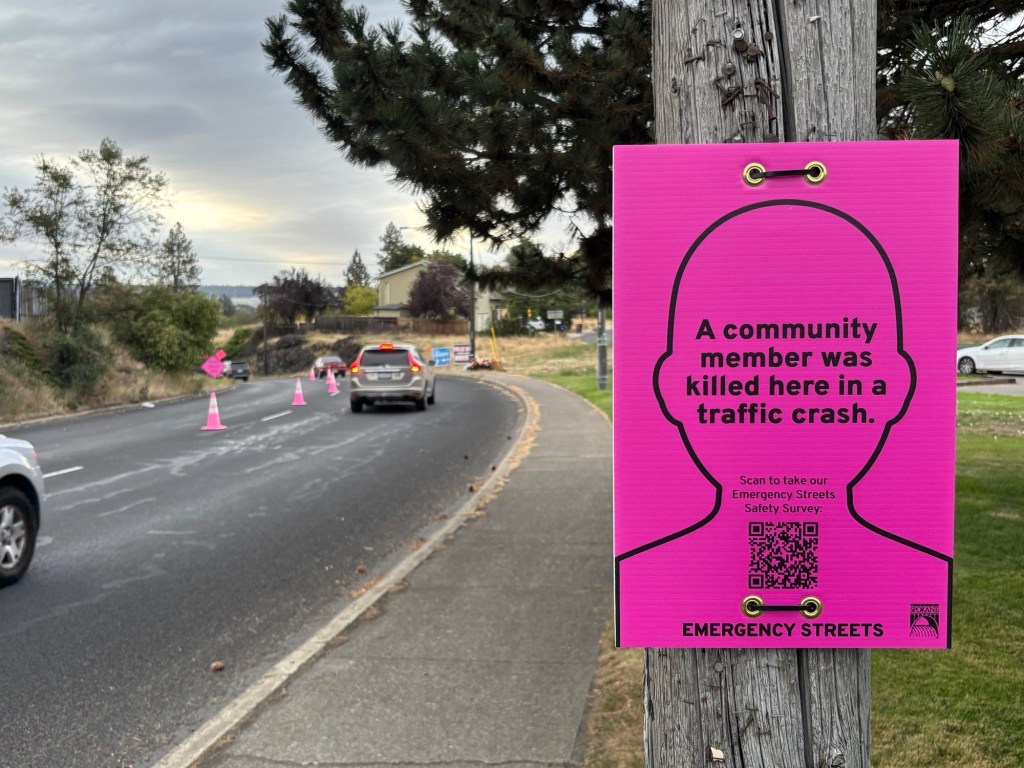
Snyder says Krizek led a design class that helped hammer out the nuts and bolts of how Spokane’s program would work, down to the (MUTCD-compliant) pink traffic cones and door hangers for surrounding residences with QR links to a survey. He and his collaborator, though, credit the Washington city with having the courage to actually use those tools to test a bold and unfamiliar idea.
“Spokane’s leadership deserves high praise for this initiative, which speaks to a fundamental truth: having community members hurt or killed on their own streets is unacceptable,” said Duhaime in a statement to Streetsblog. “The victims cannot go back to their regular lives, so an appropriate civic response must stress the urgency of using our roads differently.”
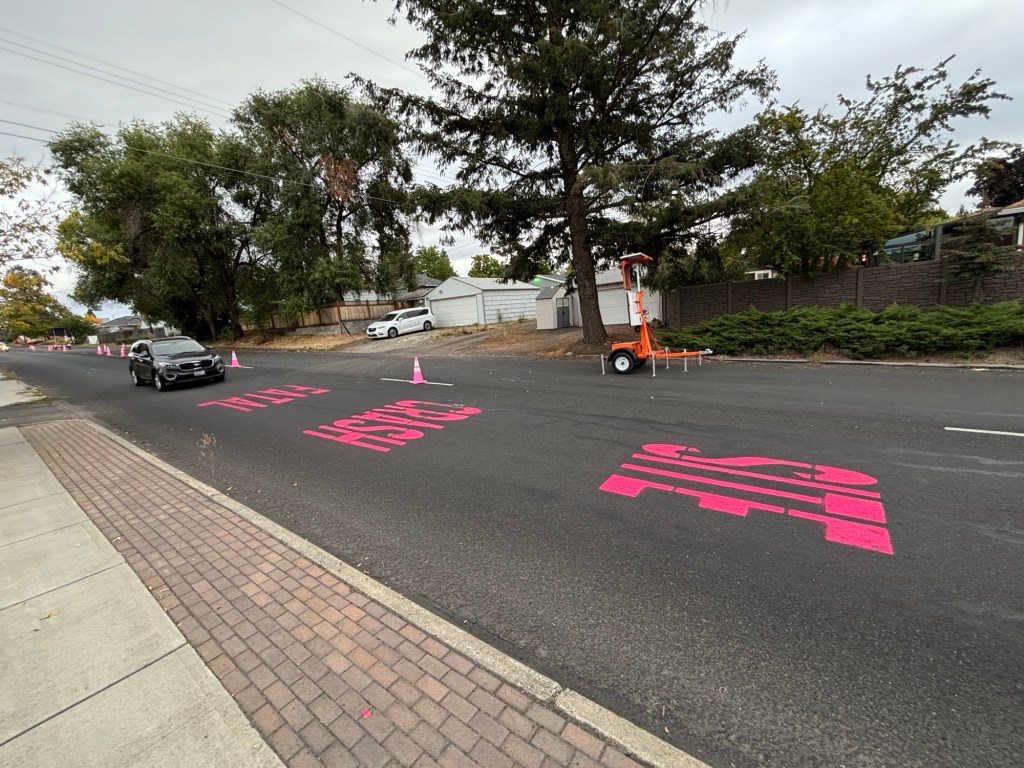
Despite months of community outreach, though, Snyder was surprised by how many neighbors were still caught off guard by the city’s first Emergency Streets installation — and how resistant to even temporary change some of them could be.
Prior to the installation, they’d warned Spokanites that “Emergency Streets” were coming soon with notices on streaming services, utility bills, emails and more. Less than a week after the lane first closed, they’d already received more than 300 responses to their survey — which ranged from appreciative to outraged.
“It’s really sad to me to see how callous some people can be,” Snyder added. “Even if [the victim] made a bad choice, most of us probably made bad choices when we were 18. We just were fortunate enough to not make ones that had fatal consequences.”
Snyder looks forward to answering those responses with data, which Spokane is collecting as part of the pilot. At the time of his interview with Streetsblog, he says the lane closure hadn’t resulted in increased crashes, as some neighbors feared; even slowdowns had been minimal, according to comparisons of anonymized cell phone data to comparable periods.
“The inconvenience is so small it’s hard to measure,” he said. “We’re just pinching off the lane for a series of blocks, and then it opens back up again … We’re talking seconds, not even minutes. [But] for some people, that’s just too much.”
Of course, one of the beauties of the Emergency Streets initiative is that the road design changes it creates aren’t permanent — at least for now. And in some ways, the pilot may help the city develop skills to better weather driver backlash, and bring communities more meaningfully into the design process as they seek solutions to save lives.
Snyder argues, though, that grumbling motorists can no longer be an excuse for total inaction — especially when people are dying.
“How much driver discomfort are we willing to absorb in order to do something positive that could have an impact on lower than fatalities and serious injuries?” Snyder asked. “I’m constantly shocked by how much we consign these deaths to acceptable collateral.”
“[Crashes] also act as a kind of terrorism against everyone who uses our transportation system,” he continued. “Even if you are not experiencing one of these crashes [personally], you may pull yourself back from walking, from biking, from taking the bus, or maybe even just driving a smaller car — all because you feel so concerned about safety.”
Snyder hopes that other cities can learn from their efforts and launch Emergency Streets pilots of their own, especially as his program continues to share lessons on how to use the strategy to the best effect. On the other hand, though, he’d be just as happy if Spokane didn’t have any lessons to share — because traffic deaths had stopped, and the Emergency Streets program was no longer necessary.
“I hope we don’t have to do any at all,” he said.

Read More:
Streetsblog has migrated to a new comment system. New commenters can register directly in the comments section of any article. Returning commenters: your previous comments and display name have been preserved, but you'll need to reclaim your account by clicking "Forgot your password?" on the sign-in form, entering your email, and following the verification link to set a new password — this is required because passwords could not be carried over during the migration. For questions, contact tips@streetsblog.org.