Op-Ed: The Problem with Trump’s DC Golf Course Takeover Isn’t What You Think
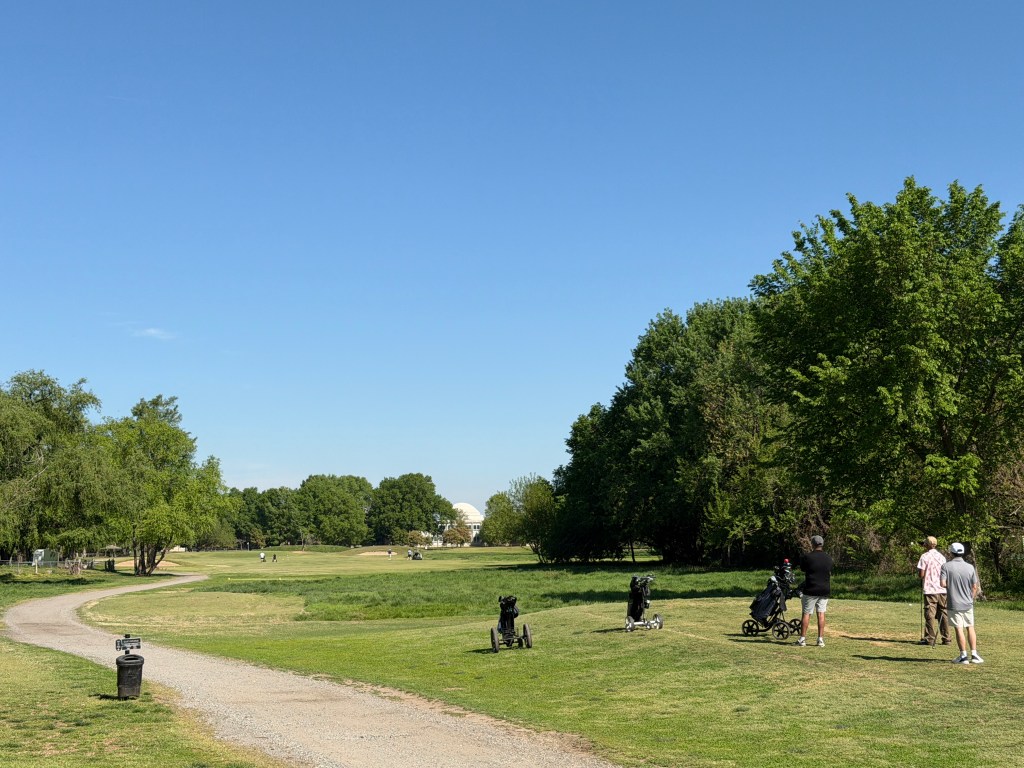
The Trump Administration’s takeover of East Potomac Park is devastating for the residents of DC. East Potomac Park is home to some of the city’s best green space. Trump wants to redevelop the entirety of East Potomac into a single, PGA-caliber golf course, likely to be financially inaccessible to the majority of the course’s current demographic.
Trump’s approach reinforces elitism and promotes poor land use — the exact opposite of what an urbanist approach to green space should be.
As an urbanist, one of the most ironic qualities about me is I love golf. There’s nothing like the feeling of spending your weekend mornings outside and chasing the high of hitting a perfect shot. Yet at the same time, I often struggle with the moral conundrum of whether golf is fundamentally antithetical to the urbanist mission. There’s a world in which golf and urbanism can coexist, and DC is the best example of it, making Trump’s takeover uniquely problematic.
Golf is a prime target for urbanists due to inefficient land-use. Other critics argue that golf courses serve a niche population who are typically older, wealthy white men.
While that may be true of many private country clubs in the suburbs, municipal golf looks quite different. It serves a wide variety of socioeconomic backgrounds, races, and age groups. People of color and women are amongst the fastest growing groups of golfers, and the game has been shifting towards younger age groups. Cities also need green spaces, and those parks should come in a variety of shapes and sizes, whether they are traditional parks, gardens, a soccer field, or a golf course.
This shift is only possible when courses aim to grow the game and commit to accessible, affordable golf. The National Links Trust (NLT), a non-profit, 501c3 organization achieves this goal through its mission of “positively impacting our community and changing lives through affordable and accessible municipal golf.” NLT prioritizes sustainability and biodiversity in its core missions, focusing on reducing energy and water usage and ensuring that a variety of species can thrive in its golf courses. NLT currently manages Rock Creek Golf Course, Langston Golf Course, and, for now, East Potomac Golf Links in DC.
The Langston Golf Course in DC is a historic course celebrated as a beacon of African American golf heritage. Today, the course offers free lessons and a caddie internship program for high schoolers to increase access to golf at minimal costs. Langston keeps green fees at an affordable rate.
The East Potomac Golf Course offers a similar blueprint for accessible recreation, with three affordable courses, 36 holes of golf, a driving range, several practice areas, and a mini golf course. The park surrounding the golf course is also filled with cyclists, runners, and fishers, while neighboring West Potomac Park hosts numerous recreational sports such as softball.
Cities need to prioritize these types of courses — easy access, low cost environments where people of all backgrounds can gather together.
Yet in December, the Trump Administration terminated the lease agreement between the National Links Trust and National Parks Service for lease violations, leaving the future of East Potomac in limbo. After several months of uncertainty, NLT reached an agreement with the Department of Interior for new long-term leases at Langston and Rock Creek. NLT will temporarily manage East Potomac until the Trump Administration redevelops it.
Trump’s takeover does not shrink the game of golf. But it does capture publicly-owned land and privatizes it for use by an elite population. A park that serves thousands of DMV residents on a single day will now serve a few hundred, on a good day. On top of that, the reconstruction could cost between $20 and $49 million. Taxpayer money is quite literally subsidizing land-use for the wealthy.
This discrepancy becomes more evident when evaluating the price of a round of golf. Right now, green fees for an 18-hole round at Langston or East Potomac cost anywhere between $34-48, depending on the day of the week. By contrast, green fees for some of the more ‘affordable’ PGA Tour courses start around $80-150 a round, while the most expensive courses can cost over a thousand dollars.
It is extremely likely that Trump’s new course will price out the average East Potomac golfer, at least if the President’s other courses are any indication. Trump’s Los Angeles golf course costs somewhere between $95-$575 a round. Using an average of $335 green fees as a benchmark for Trump’s course, and the high-end of $48 for an NLT course, a golfer would need to spend almost 600% more on green fees alone. This does not account for membership fees, caddy fees, or other expenses typical with private courses.
What the game of golf needs, in DC and around the country, is more organizations like NLT to expand and grow the game. There should be an emphasis on sustainability and affordability, rather than exclusivity.
Within this framework, golf can thrive in an urban environment rather than be a competitor. Pairing this with access to high-quality public transportation options, such as bus routes terminating at course entrances, makes golf an urban amenity that will attract more residents to a city.
Upzoning the land around golf courses can encourage housing and businesses to open, too. The ease of access to a green space will in turn promote social and economic activity, rather than isolating golf from it. None of this is where East Potomac is headed.
The irony is not that an urbanist like me cares about preserving golf. It is that golf is not in competition with cities. The biggest threat to the game is exclusivity — which is all the Trump administration cares for.

Read More:
Streetsblog has migrated to a new comment system. New commenters can register directly in the comments section of any article. Returning commenters: your previous comments and display name have been preserved, but you'll need to reclaim your account by clicking "Forgot your password?" on the sign-in form, entering your email, and following the verification link to set a new password — this is required because passwords could not be carried over during the migration. For questions, contact tips@streetsblog.org.