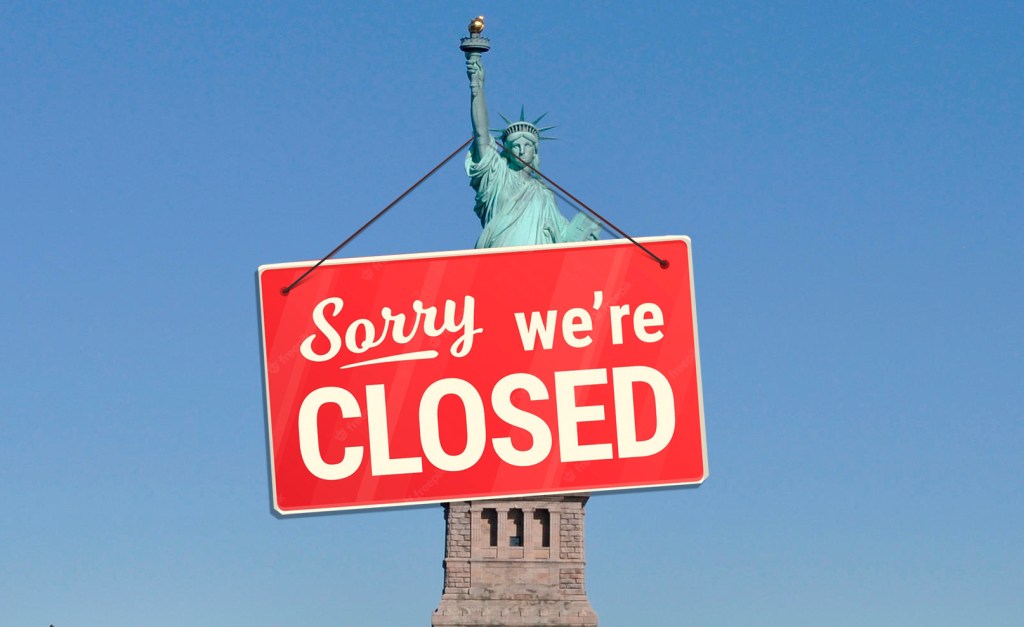
It’s Time For Congress to Connect America’s Active Transportation Networks
Editor’s note: a version of this article originally appeared on the RailsToTrails.org and is republished with permission.
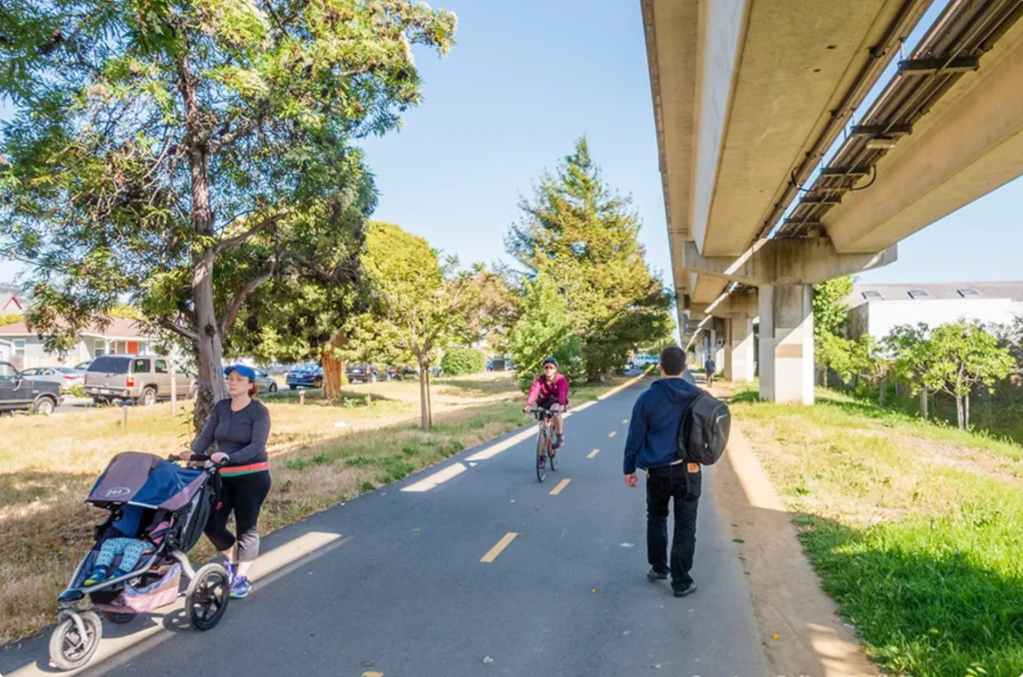
Within a few weeks, we may see the first public text and committee action for the next federal bill that governs the nation’s transportation policies — including the programs that provide the lion’s share of funding for active transportation and set the priorities for states and municipalities across the American landscape.
In the face of recent federal volatility toward trails, walking and biking, this will be a litmus test. While demand for this infrastructure is unprecedented — with hundreds of impressive projects underway that will deliver safe, convenient routes to travel by foot, bike or wheelchair in every single state — the question remains: Will federal legislators prioritize the transformative impacts of active transportation networks?
A leading indicator will be what happens with the Active Transportation Infrastructure Investment Program (ATIIP).
Why is ATIIP So Critical?
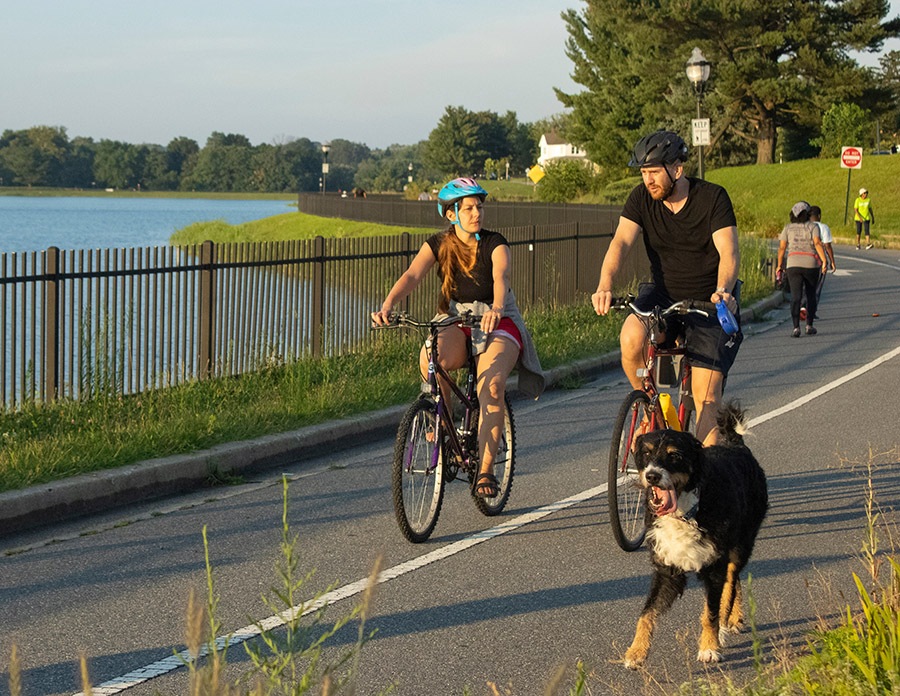
Authorized under the Infrastructure Investment and Jobs Act (IIJA), ATIIP is the only federal program dedicated to making concentrated investments to establish safe, connected routes to walk and bike to the places people need to go—within their communities, to the next town, or even to the next state over. It solves a very specific problem that no other program is equipped to address, delivering the scale of investment needed to close gaps and complete active transportation networks.
With sky-high public demand for this essential community infrastructure equally evident in both Republican and Democratic strongholds, legislators should commit to grow and improve ATIIP in the federal transportation bill currently under development. A fortified ATIIP will improve the connectivity of trails, protected bike lanes and sidewalks into seamless transportation routes, meeting real needs for people walking and biking and increasing use by as much as 80%, according to a study Rails to Trails Conservancy led in partnership with Strava.
In part, that’s because the majority of trips taken in the United States are within a short walk or bike ride; it’s practical to move around our communities without a car. Considering that nearly 1 in 3 Americans lacks access to a motor vehicle — and many more are facing tough choices as gas prices continue to break records — finding accessible, affordable ways to get around is a real need many families face.
The stakes are staggering. When people walk or bike today in America, they’re taking their lives in their hands. As many as 20 people die while walking in the United States every single day.
Powerful Benefits for Communities
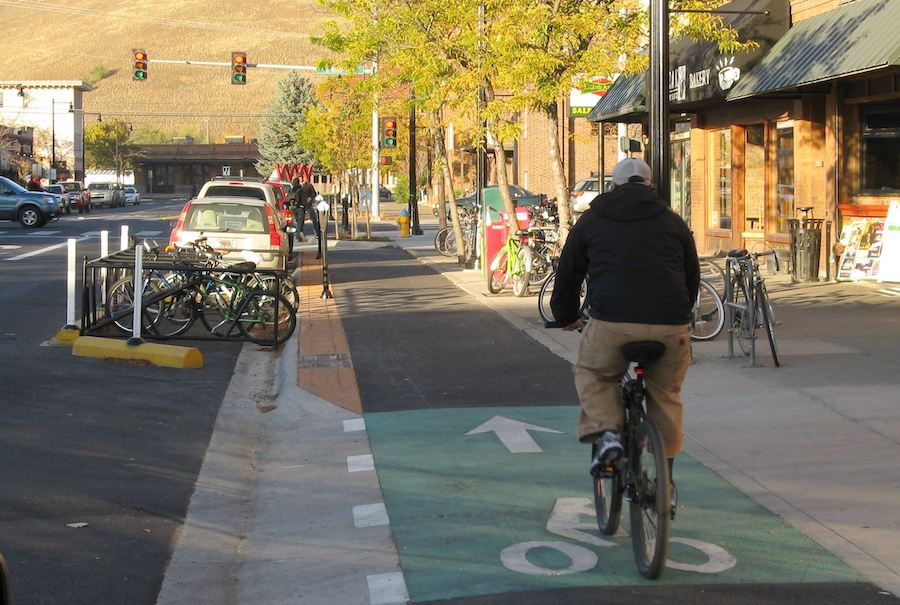
While preventing injury and death should be enough of a motivating factor to accelerate the pace of developing active transportation networks, the return on investment for traffic safety, economic development, health and the environment is also powerful. Research outlined in RTC’s 2019 “Active Transportation Transforms America” study puts the annual benefit of investing in walking and biking infrastructure at $34 billion; that can be quadrupled by building networks of trails and other safe infrastructure.
In many American communities across rural, suburban and urban geographies, residents and leaders alike recognize the urgency and potential to build these networks. But the opportunity to take this progress to scale, and make seamless walking and biking routes a norm, requires leadership and partnership at the federal level — signified by a consistent, dependable source of sizable federal grants that can be used to leverage local and state investments.
As we consider strategies to strengthen America’s transportation options, we must consider the discrepancy in how infrastructure has been built. Roads and rails are built as connected networks as a matter of course. Historically, trails and other walking and biking infrastructure have been built incrementally, relying on opportunism and thinly spread-out resources. But that incremental approach has established the foundation to build the country’s active transportation networks at a discount.
Longstanding foundational federal programs like Transportation Alternatives and the Recreational Trails Program, alongside state and local programs, have contributed to more than 42,500 miles of multiuse trails crisscrossing the American landscape.
ATIIP will leverage these impactful projects to achieve connectivity through gap filling and deliver resources on a scale sufficient to enable functional systems in a reasonable time period. It is the only federal program designed to fill multiple gaps in a network or to address critical but expensive connections, such as bridges.
This approach has already been proven to work.
Proven Impact of Connected Infrastructure
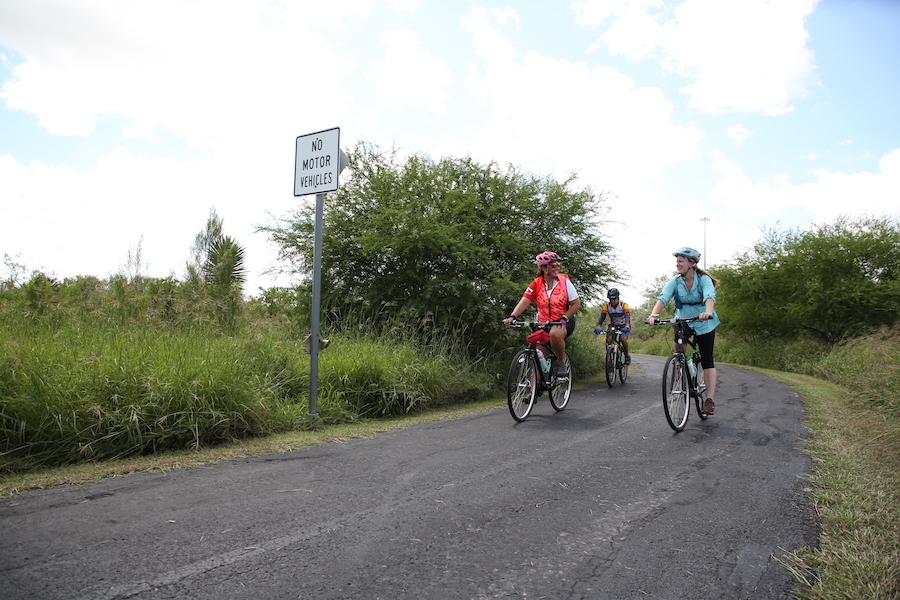
In 2005, Congress funded the Nonmotorized Transportation Pilot Program, designed to test whether increasing the connectivity of walking and biking infrastructure would result in increased use. The program was implemented with great success across four disparate communities in Missouri, Minnesota, California and Wisconsin.
A later study of pre- and post-conditions issued by the Federal Highway Administration found that the connectivity investments made through the program increased walking by 22.8 percent and bicycling by 48.3 percent, with safety improvements across urban, suburban, rural and college town contexts.
Another example can be seen in Texas, which created a wildly successful large-grant category within its Transportation Alternatives program focusing on connectivity investments. Most of the money requested and provided flowed to these highly strategic and impactful projects. By shifting their programmatic approach, the Texas Department of Transportation elevated the striking demand for investment in connectivity and functional networks — illuminating the opportunity the federal government has to multiply its impact.
A Critical Opportunity Is Upon Us

IIJA created and authorized ATIIP for $200 million per year over five years, but it was subject to annual appropriations. That approach proved ineffective. Appropriators only delivered one $45 million infusion to the program—severely insufficient to meet the demand. In the first round of grant funding, the program was oversubscribed with a whopping $40 in applications for every dollar made available.
This next surface transportation bill is the opportunity to unlock ATIIP’s full potential. But it will require the predictability and consistency that comes from contract authority under the Highway Trust Fund.
The House bill passed for the last transportation reauthorization would have provided ATIIP with $250 million per year in contract authority if it were enacted. Matching that is the baseline that Congress should meet to begin to address the immense unmet demand and need for such resources going forward.
ATIIP has bicameral and bipartisan support. Rep. Chris Pappas (D) of New Hampshire just introduced a House bill to make these critical improvements to the program. Sen. Dan Sullivan (R) of Alaska continues to champion ATIIP in the Senate. Both are joined by others of their party and respective legislative bodies.
This breadth of support reflects the reality that this infrastructure delivers for Republicans and Democrats and is valued by voters across the spectrum. We’re counting on bipartisan support in both chambers of Congress to deliver ATIIP — and safe walking and biking routes—to America.

Read More:
Streetsblog has migrated to a new comment system. New commenters can register directly in the comments section of any article. Returning commenters: your previous comments and display name have been preserved, but you'll need to reclaim your account by clicking "Forgot your password?" on the sign-in form, entering your email, and following the verification link to set a new password — this is required because passwords could not be carried over during the migration. For questions, contact tips@streetsblog.org.