Florida Town Gives New Residents Free Golf Carts to Replace Their Cars
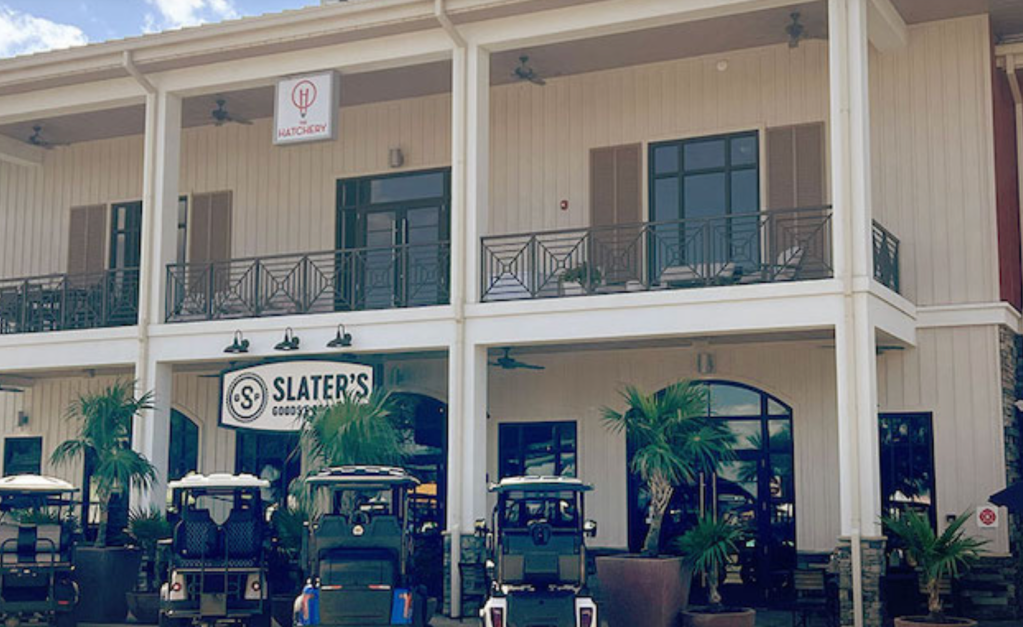
A Florida community has a novel strategy to reduce how much its residents drive: buying them a golf cart instead.
The planned community of Babcock Ranch recently reported its best sales month ever after it offered a free golf cart with the purchase of any new home, besting its previous one-month record by nearly 25 percent.
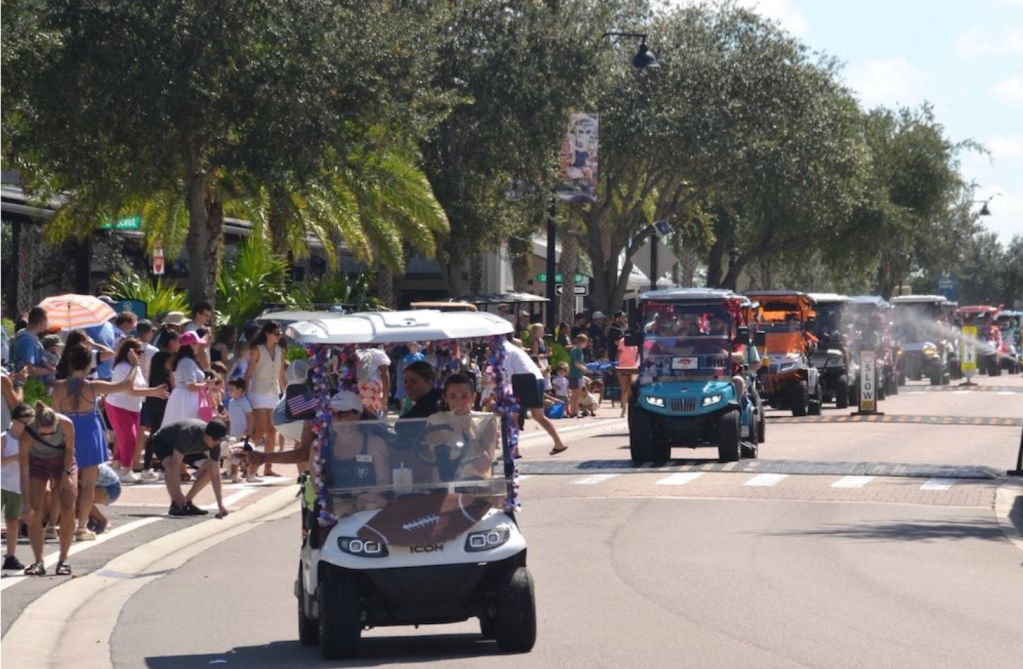
And many of these caddy wagons aren’t zipping around the links — they’re replacing car trips. Long before the golf cart promotion, Babock Ranch set out to create a haven for the “joy of golf cart living,” using Vision Zero tools like low speed limits, dedicated non-automotive paths and dense land use that places everything residents need within the seven-mile radius of the community.
Collectively, those initiatives have made leaving the car at home the sensible choice for all sorts of daily trips — from “Publix to the pool,” the community says, referring to the popular grocery chain.
They also make it easier to get rid of the second family car. Between 2021 and 2023, the share of Babock Ranch households who owned two cars fell from 70 percent just to 43 percent — and that was before the community began to give away golf carts for free.
“This is not a pie in the sky idea; it’s a real town,” said Larry Burns, who serves on the board of Kitson & Partners, the developer behind the community. “And our residents are basically telling us that for a lot of the trips they’re making, they’re preferring to use their golf cart. And we’ve engineered the roads to make that a safe thing to do.”
A former vice president of research and planning for General Motors, Burns is far from skeptical of automobiles; the Kitson board originally brought him on to discuss how autonomous vehicles might someday help shape the Fort Myers suburb.
It’s the low-fi strategies, though, that are helping Babcock Ranch address its transportation challenges today — not the least of which is protecting human lives from car crashes.
The members of the community already enjoy more than 100 miles of bike trails and 10 mile per hour speed limits in school zones reinforced by cameras, Burns noted. And that’s in addition to the relief of knowing that their neighbors’ golf carts are farless likely to kill a pedestrian than a multi-ton SUV.
“We have all the Vision Zero strategies at work,” added Burns. “But [we also have to think] about kinetic energy, and the mass of a car … If we could have more and more of our trips in the lighter golf cart rather than the heavier car, even at 25 miles an hour, that’s a good thing for safety.”
Burns also said that discouraging everyday driving is a big part of Babcock Ranch’s commitment to sustainability, which has won its developers awards and a reputation as the architects of “America’s first solar-powered town.”
Less driving also helps offset the local cost of living. While the community settles around the median home price of the surrounding area, many residents pay a lower share of their income for housing plus transportation, since a lot of suburban Floridians can’t reliably access school, work or basic services without buying a car for every adult under their roof. (To be fair, residents of the urbanized parts of Fort Myers still pay less.)
“With affordability being high on the list of important reasons to live at Babcock ranch, and it turns out a one car lifestyle plays into that quite nicely,” he adds.
Perhaps provocatively, Burns said Babcock Ranch’s other strategy to reduce car trips might eliminate some trips altogether — by increasing e-commerce instead. He’s particularly interested in enhancing residents’ “virtual and physical access” to the goods and services they rely on, whether that’s opening a second grocery store within town borders so more people can walk to buy food, or helping a company like Instacart bring food right to their doors.
Now, he says the community is looking to downsize delivery vehicles so they’re less likely to injure or kill people who are rolling, walking, and golf-carting around.
“We’re looking really hard at alternatives to having bigger e-commerce vehicles running around on our streets,” he added. “With 15,000 residents and e-commerce continuing to grow at 15% a year, you can imagine we’ll have a lot of brown, white and purple vans running around, unless we think about alternatives … If we want to reduce our dependence on cars, I think it’s really important to use virtual access as one of the mechanisms to do that.”
Of course, Babcock Ranch is far from a car-free paradise — and in a car-dependent metro like Fort Myers, Burns is hesitant to commit to the goal of becoming one. Still, he hopes the town’s approach could inspire other suburbs to treat car-light living as a valuable amenity that can help attract residents — whether that’s buying them golf carts to ride through a Floridian winter or other car-cutting strategies.
“It’s not just a matter of saying, hey, trade in your car for a golf cart,” he said. “It’s also promote ways of you getting a trip made without having to own that second car.”

Read More:
Streetsblog has migrated to a new comment system. New commenters can register directly in the comments section of any article. Returning commenters: your previous comments and display name have been preserved, but you'll need to reclaim your account by clicking "Forgot your password?" on the sign-in form, entering your email, and following the verification link to set a new password — this is required because passwords could not be carried over during the migration. For questions, contact tips@streetsblog.org.