Euclid v. Ambler: A Century-Old Lesson for American Urbanism
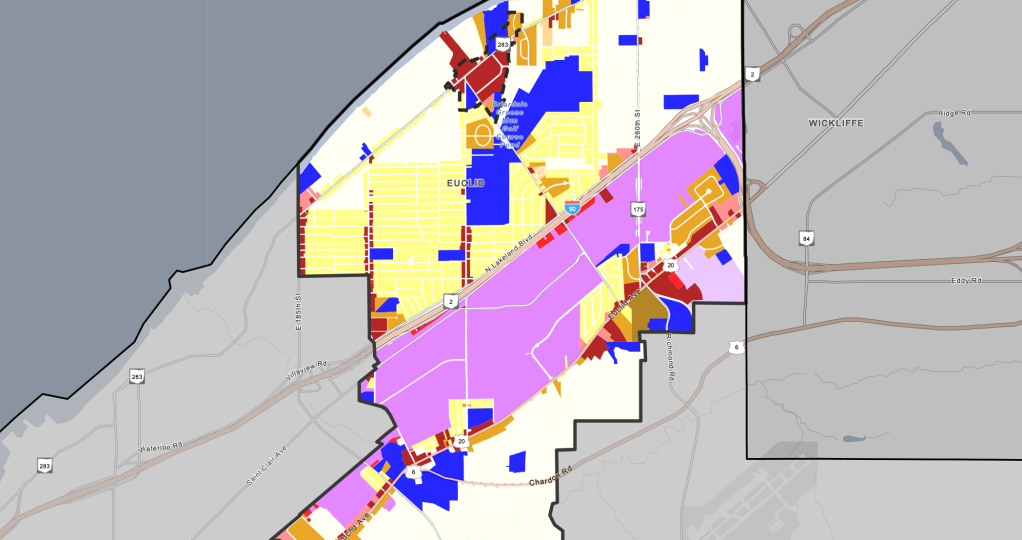
In 1926, the Supreme Court of the United States decided Euclid v. Ambler. It was a seemingly minor case out of the Midwest, between a small municipality and a local developer, over the latter’s right to place industrial buildings on empty land. In a quirk of fate almost 100 years ago, Euclid became a legendary turning point in the history of American urbanism.
By enshrining zoning in law, the Supreme Court entrenched decades of segregation and raised the price of new housing. The justices made no secret of the snobbery and prejudice that guided their decision, which described apartment buildings as “a mere parasite, constructed in order to take advantage of [their] open spaces and attractive surroundings.”
The court’s 32-page opinion has haunted urbanists ever since. But the infamous ruling also illuminated the durable link between zoning policy and transportation policy. Those aforementioned apartment buildings brought “disturbing noises incident to increased traffic and business,” the court wrote, and led to “the occupation, by means of moving and parked automobiles, of larger portions of the streets, thus detracting from their safety and depriving children of the privilege of quiet and open spaces for play.”
Like many planners and politicians of the early 20th century, the Supreme Court subscribed to the idea that zoning might fix problems created by cars. But it only reinforced them. A century after Euclid, advocates and policymakers cannot forget this lesson. Zoning and transportation are the atomic elements of the built environment. Fixing either will require fixing both.
A brief history of American zoning
Over the past decade, scholars have documented how early zoning ordinances perpetuated racial segregation. After the Supreme Court abolished race-based zoning laws in 1916, cities began to adopt single-family zoning to achieve the same result. But early zoning advocates had other objectives, too. Even before Euclid, planners saw zoning as a means to address complaints about crowding and traffic in dense, central neighborhoods.
One planner wrote in 1912 that it was “necessary” to design a zoning ordinance that would “preclude the creation of congestion.” Another circulated a list of five “zoning apothegms,” or aphorisms. “Zoning substitutes method for chance, symmetry for confusion, progression for patch work and order for chaos in city development,” one said.
But zoning never really fulfilled the secondary promise of eliminating congestion. Suburbs could use zoning to prevent themselves from densifying, but zoning by itself could do little to change conditions in urban cores.
Zoning’s failure to decongest cities bred a new type of urban planner: the traffic engineer. The solution to congestion, traffic engineers believed, was merely geometric. Cars simply needed more room in crowded urban environments. In order to tame congestion, cities would need to widen and elevate their roadways.
Starting in the 1930s, traffic engineers began to carve massive freeways through densely developed neighborhoods. The Interstate Highway Act of 1956 turbocharged these efforts by providing generous federal funding for urban interstates. These projects transformed existing urban neighborhoods far more than zoning ever could.
Peter D. Norton, a professor at the University of Virginia, assembled much of this history in his 2011 book, Fighting Traffic. In an interview, he emphasized how zoning, under the guise of protecting the status quo, established a moral framework for far more radical change. “If you’re going to put in a major highway through a city,” Norton told me, “you need ideas and values to support that, and the ideology of zoning offers that.”
Zoning and traffic engineering worked in tandem to deconcentrate the population: Neither project could succeed without the other.
“You can see it all come together in General Motors’ ‘Futurama’ model,” Norton said, referring to the model city exhibition at the 1939 World’s Fair. With its limited-access expressways, bulldozed slums, and sprawling single-family residential neighborhoods, Futurama presented a vision of a “decongested city that combines the ideals of the planners of that era, but also certainly the road builders,” he added.
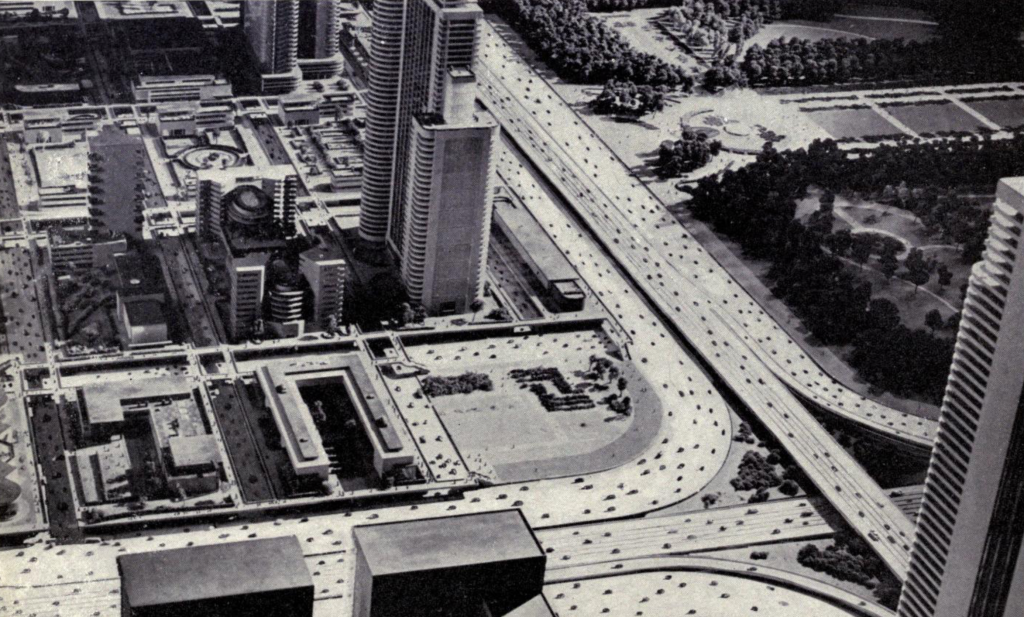
Yet this marriage of zoning and traffic engineering failed, too. New highways provided faster travel times at first, but as developers and residents responded to the new roads, traffic eventually worsened, a phenomenon known as induced demand. Between 1993 and 2017, the largest American metro areas increased their highway capacity by 42 percent — a rate considerably higher than population growth — while time wasted in traffic increased in those metros by 144 percent.
Zoning by another name
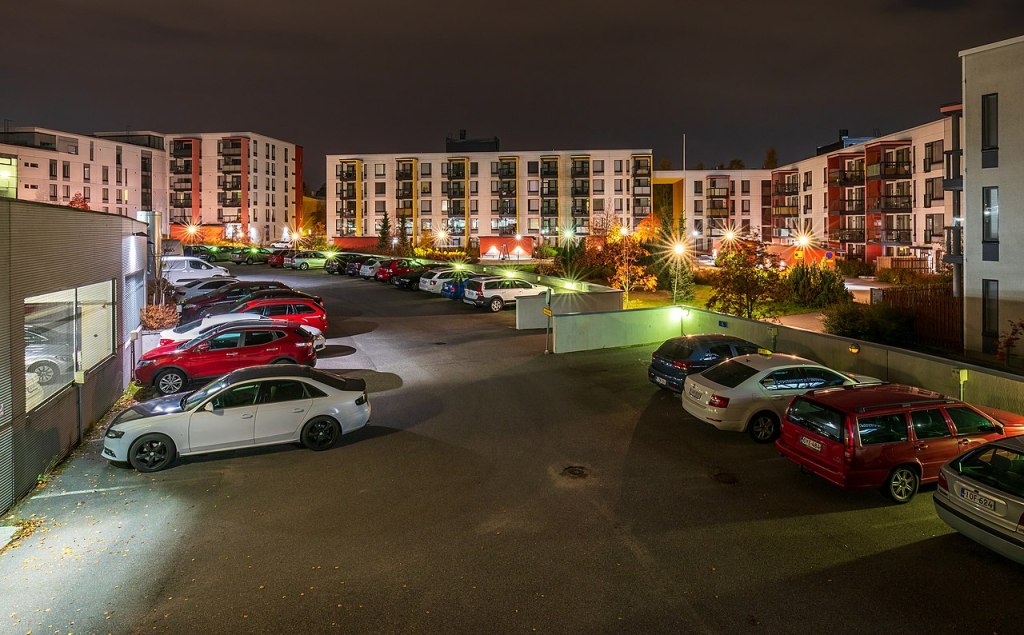
Development patterns encouraged by zoning and highways created an entirely new problem. Drivers needed more and more space to traverse ever more sprawling and disconnected urban environments — and thus required more and more space to store their cars when not in use.
“The consequence of separating land uses is, of course, increasing distances, and therefore more driving, and therefore more demand for parking,” Norton said.
Formal parking requirements for new development first arose in Columbus, Ohio in 1923. They spread slowly across the country, alongside the growth of low-density, single-use environments. As these regulations matured, they began to resemble a de facto form of zoning. Parking requirements became a means of preventing apartments from being constructed at all.
Parking requirements passed in 1935 — not zoning laws — made it illegal to construct iconic apartment complexes, like courtyard apartments and bungalow courts, in Los Angeles. To accommodate these new rules, L.A. developers came up with an entirely new housing typology, the dingbat, by tucking exposed, street-facing parking spots underneath the structure’s second floor. But stricter parking requirements passed in the 1960s made these buildings illegal to construct, too.
A similar story played out in Chicago, whose leaders halted the development of its famous courtyard-style apartments in 1961, when the city began requiring two spaces for every three apartments. Developers immediately pivoted to a new typology called four-over-ones, with enclosed parking on the ground floor. Following local resistance, however, the city once again upped its parking requirements in 1971, thereby making these buildings impossible to construct.
In these cities and elsewhere, politicians employed parking requirements to regulate new apartments out of existence without explicitly banning multifamily housing. They understood that the Supreme Court’s fearmongering nevertheless contained an important truth: housing policy and transportation planning are two sides of the same coin.
We are now in a slightly more enlightened age. Parking requirements and strict zoning rules have fallen like dominoes across the country. Some advocates want to see zoning discarded entirely because of its role in the housing crisis. Legal scholars have made the case for overturning Euclid v. Ambler, looking to both originalist and progressive doctrines. Prominent planners like M. Nolan Gray and Jeff Speck call themselves “zoning abolitionists.”
Housing affordability is a generational emergency, so it makes sense that it has taken center stage in the reckoning over zoning. But transportation cannot be overlooked as part of this history, or as part of a vision of a better urban future. Just as single-family zoning and car-centric transportation planning went hand in hand, so must urbanist zoning and walkable, bikeable, transit-oriented transportation planning.

Read More:
Streetsblog has migrated to a new comment system. New commenters can register directly in the comments section of any article. Returning commenters: your previous comments and display name have been preserved, but you'll need to reclaim your account by clicking "Forgot your password?" on the sign-in form, entering your email, and following the verification link to set a new password — this is required because passwords could not be carried over during the migration. For questions, contact tips@streetsblog.org.