Opinion: Can AI Help Stop Car Crashes Before They Happen?
Traffic fatalities continue to plague cities across the globe. Vision Zero – the ambitious global strategy to eliminate all traffic deaths and severe injuries – has made great strides, yielding meaningful progress through investments in road safety, pedestrian infrastructure, and public awareness campaigns.
But aspirations are starting to outpace the actual capabilities of standard traffic management systems. Most traffic systems take a reactive posture, responding to incidents after they happen. In other words, they can only assess and address the circumstances that lead to traffic issues once a worst-case scenario has already occurred.
Now, thanks to ongoing innovations in AI and sensor technologies, preventative traffic management is finally within reach – replacing static, reactive infrastructure with intelligent digital systems that can put safety first in real time.
You Can’t Protect What You Can’t Measure
Most traffic infrastructure still utilizes legacy devices that were never designed to extract situational data in real time, leaving cities with only a partial picture of what is really happening on their roads. Mobility patterns are also changing, with pedestrian volumes and micromobility usage (i.e., electric bikes and scooters) both growing unpredictably. This forces cities and transportation agencies to operate reactively as they’re only able to discover problem areas after an incident occurs.
Recent technological advancements are changing that paradigm, making it possible to detect patterns and risky behaviors before a catastrophic event takes place. This enables agencies to intervene ahead of time — finding and defusing the “ticking time bombs” before they explode.
Understating High Risk Areas
Crashes are just the visible tip of the road risk iceberg. The perils of today’s roadways include high-risk behaviors such as near misses, last minute braking, and speeding through intersections – the type of road action that leads to accidents but may never be reported if, hopefully, they don’t end in a crash. Cities can’t measure this type of behavior simply because “nothing happened.”
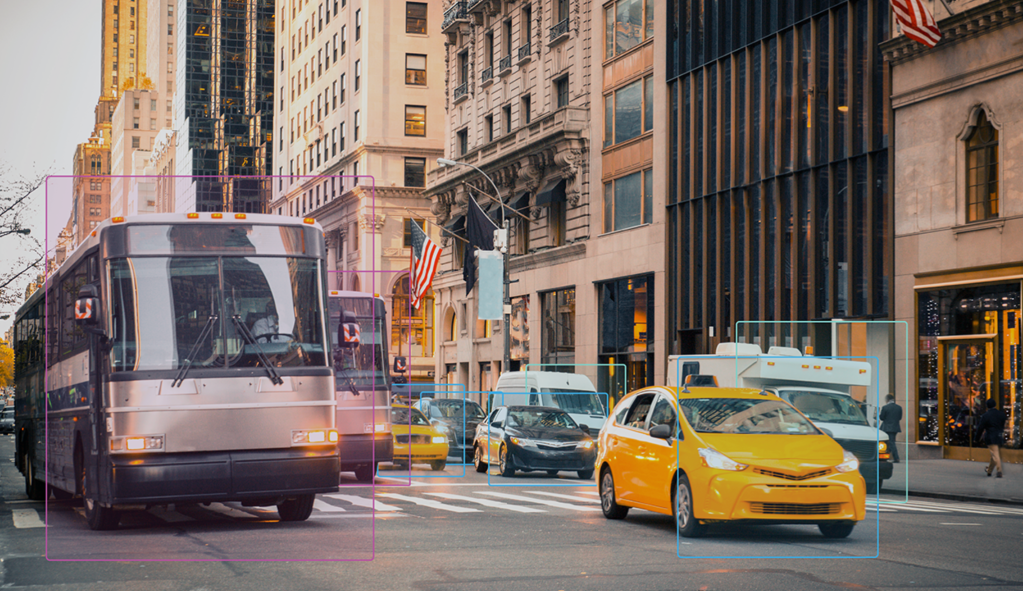
Now, modern sensing and AI technologies enable cities to do just that. Through real-time on-site sensor data and analysis of granular traffic behavior, cities can detect risk patterns early and intervene before an injury or fatality occurs.
For example, AI-powered analysis can detect what time of day the most frequent patterns of running a red light at a specific intersection occur. Traffic engineers could then analyze the root causes of the issues – such as an obscured line-of-sight, intersection geometry problems, or simply incorrect signal timing. Instead of responding to yesterday’s crashes, cities can act on today’s warnings, proactively adjusting traffic features and applying safeguards before tragedy strikes.
Intelligent Intersections
For decades, intersections have been built on static assumptions: fixed signal plans, infrequent audits, and traffic counts that become quickly outdated. But cities are growing and evolving, and human behavior doesn’t always follow a schedule.
AI enables infrastructure to learn and respond as circumstances change in real time.
A data-driven system, for instance, can recognize an influx of children walking home from school and automatically extend pedestrian crossing times. It could also identify abnormal driver behavior at a left-turn lane and pre-emptively adjust signals to reduce conflict.
Intelligent design also improves accessibility and equity, allowing intersections to adapt on a case-by-case basis to wheelchair users, parents with strollers, or blind and elderly residents.
From Insight to Action
Collecting traffic data is only the beginning. True safety improvement comes from turning insight into targeted action.
Take dilemma zones, where drivers often don’t know whether to speed up or slow down during a yellow light. Intelligent AI-powered systems can dynamically adjust signal timing based on traffic speed and volume to reduce the chances of red-light infractions or collisions. In areas with high pedestrian traffic, real-time optimization of signals can give longer crossing times or delay turning vehicles when a pedestrian is detected mid-intersection.
Similarly, entire intersections can be optimized for safety rather than just volume. Rather than relying on fixed cycles, cities can dynamically adjust the length of green lights or left-turn arrows based on shifting risk levels.
These aren’t theoretical solutions. They’re deployable innovations that turn generic planning processes into precision safety engineering, guided by unprecedented foresight.
The Future of Street Safety Is Preventative
Making cities safe with smart infrastructure isn’t just a quality-of-life improvement: it’s a life-saving intervention enabled by continuous learning and contextual awareness.
The tools exist today to shift to a proactive, preventative approach to traffic safety, where data, AI, and real-time optimization infrastructure work together to protect drivers, passengers and pedestrians alike. By embracing intelligence-first infrastructure, cities can reduce risk before it emerges, not after it becomes a statistic.
Proactive safety must become the new baseline for every intersection. Learning from today’s near misses means more lives saved tomorrow.
Note: Opinion submissions do not necessarily reflect the views of of Streetsblog USA.

Read More:
Streetsblog has migrated to a new comment system. New commenters can register directly in the comments section of any article. Returning commenters: your previous comments and display name have been preserved, but you'll need to reclaim your account by clicking "Forgot your password?" on the sign-in form, entering your email, and following the verification link to set a new password — this is required because passwords could not be carried over during the migration. For questions, contact tips@streetsblog.org.