Talking Headways Podcast: Streets are Not Just Pipes

This week we’re joined by Miami of Ohio Geography Professor David Prytherch. Prytherch chats with us about his recent journal article in Urban Geography: “Reimagining the physical/social infrastructure of the American street.” We talk about businesses’ newfound interest in the street, equity and ethical discussions about rights to the street, and the new pandemic paradigm of “open streets.”
For those of you who get your news through your eyes and not your ears, there’s an edited transcript below the audio player. If you want a full, unedited transcript (with some typos!), click here. If you want to listen, here you go:
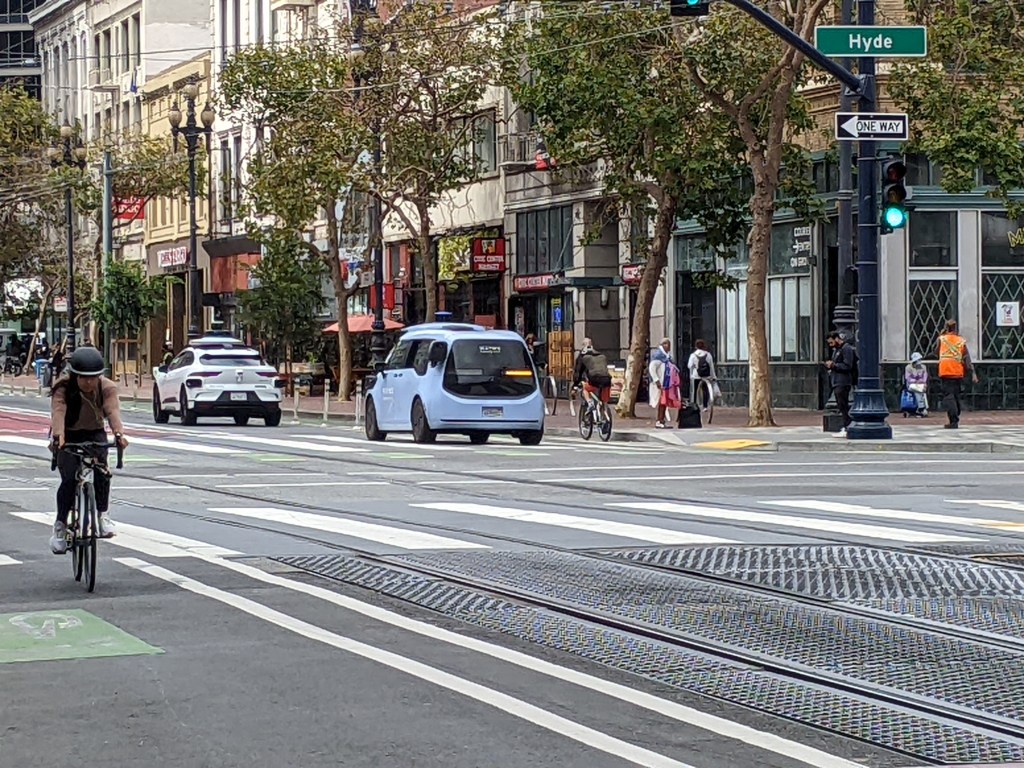
Jeff Wood: I’ve been also thinking about the various and diverse uses we have for streets overall. We start thinking about curb management and access. Our streets often drain water and sewage because the pipes are under the street. They move people; they act as commerce. They are electrical conduit. A lot of times we have our wires above our heads. There are communications for all of our cable companies and the phone companies go through the streets. They provide a number by which we can be found by mail or counted in a census, which is also a way we can be taxed. Streets are so basic and necessary yet frustratingly restrictive in some ways — almost like engineers and some others who are restrictive, like helicopter parents. That’s the way I thought of it in my head.
David Prytherch: I can see why. That to me is [about] having participated in these sessions about thinking about the definition of infrastructure. When the street was a public space, you have certain mechanisms for resolving the problems with public space, but we started treating streets as infrastructure. I think we need engineers who figure out what the capacity of a roadway is, figuring out issues of load bearing, all of that infrastructure that we really do need to engineer to make it work because, when it doesn’t work, it’s not good. We do channel a lot through the streets, but I think engineers look at things a particular way.
The complexities, that to me is the most exciting part of this. I’m on my local city council here in Oxford, Ohio. I’ve had lots of tussles with my city engineers and city service department because they have a certain way of approaching the problem. It’s not a bad way. It’s just, they like to constrain the variables and have a formula that achieves an outcome. And some of these questions are just so messy and political. I think that many of our infrastructures are political questions, like who’s got access to bandwidth….
In so many towns, the planners have dealt with the social issues over here, but they haven’t been allowed to touch the infrastructure [because] they’re in two different divisions. Increasingly in a lot of cities, maybe in San Francisco too, transportation is now viewed as a joint engineering/social challenge. It’s just a different way of looking at it, but then you can apply the processes that you use to any other good to try to achieve some equity and at least have a debate about it.

Read More:
Streetsblog has migrated to a new comment system. New commenters can register directly in the comments section of any article. Returning commenters: your previous comments and display name have been preserved, but you'll need to reclaim your account by clicking "Forgot your password?" on the sign-in form, entering your email, and following the verification link to set a new password — this is required because passwords could not be carried over during the migration. For questions, contact tips@streetsblog.org.