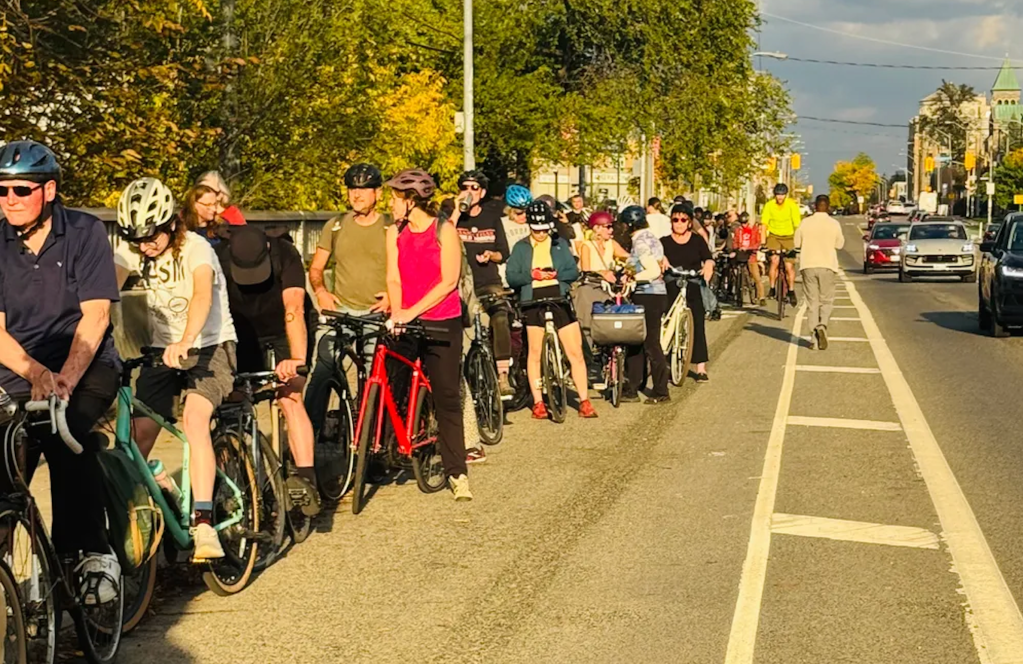
Aggressive Drivers See Cyclists as ‘Less than Human’
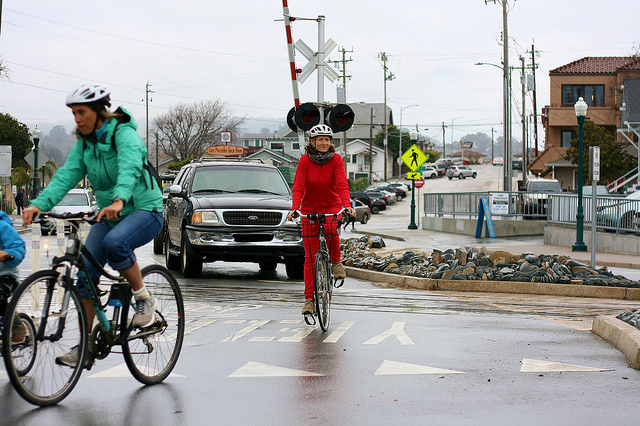
A shocking number of people view cyclists as less than human — even likening them to insects — and that those “dehumanizing” attitudes are connected with aggressive driving targeted at people on bikes, according to a new study.
The Australian researchers asked participants about their attitudes toward cyclists — and 31 percent rated cyclists as less than human. The dehumanization was even worse among non-cyclists: 49 percent viewed people who ride a bike as non-human, according to the study published in the journal Transportation Research.
“Studies have shown that dehumanization is associated with increased antisocial behavior and aggression toward a variety of groups, and that it does so by removing normal inhibitions against harming others,” the author Alexa Delbosc, and her team wrote in their summary.
Delbosc and her team used standard psychological tests of the notion of dehumanization — that is when one group views another group as simply less human than themselves. Such tests have been used previously to show dehumanizing attitudes by one group towards others, for example.
“Dehumanizing” attitudes were measured by asking people to respond with how much they agreed with statements such as “I feel like cyclists are mechanical and cold, like a robot.”
The study also connected the dehumanization to actual aggressive behavior toward cyclists — which was measured by asking respondents if they had ever driven close to a cyclist on purpose, or behaved aggressively in another way.
The more dehumanization that a person admitted to, the more likely that that person behaved aggressively towards a person on a bike, the study found.
“Respondents who rated cyclists as 89 percent human or less showed 1.87 times more direct aggressive behaviors to cyclists compared to the respondents who rated cyclist as more than 90 percent human,” the research team wrote.
Dehumanization studies have measured negative attitudes toward racial minorities, women and other marginalized group, but this is the first study to apply it to people who ride bikes. Some of the negative, dehumanizing attitudes toward cyclists were similar to the animosity experienced by some racial groups, the study found. The average rating for cyclists was 82 out of 100, with 100 being fully human.
To put it in perspective, “this rating is lower (i.e. more dehumanizing) than Americans rating Europeans, Japanese, Australians, Mexican immigrants and East Asians, but higher than Americans rating Arabs and Muslims, British people rating blacks and Muslims or Hungarians rating Jews, Muslims and Roma,” the research team wrote.
To put it in even more perspective, researchers asked respondents to put cyclists on the chart below.
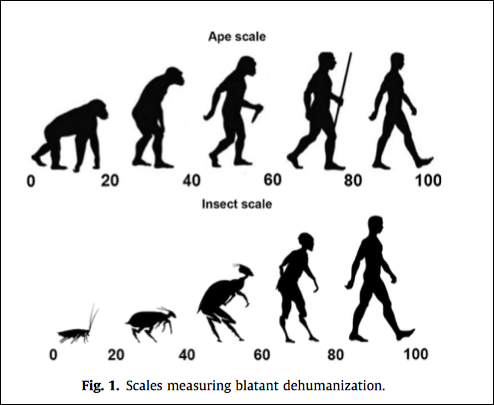
The “ape scale” is a classic “ascent of man” graphic used extensively in prior research. But enough respondents used bug slurs such as “cockroaches” or “mosquitos” to describe cyclists that researchers offered a second scale — the “insect scale” above.
“Some people believe that people can vary in how human-like they seem,” the study said. “According to this view, some people seem highly evolved whereas others seem no different than lower animals.”
Aggressive behavior toward cyclists is fairly widespread, previous research has shown. About 70 percent of cyclists have experienced some sort of harassment from motorists, some research has shown. One study found 15 percent report having had an object thrown at them.
“Public references to violence against cyclists are not uncommon and rarely given the same condemnation as, for example, violence toward women or bullying,” wrote Delbosc.
One word of caution about the findings: the survey was not based on a random sample, so it is hard to generalize the findings to the broader population. The survey, for example, over-sampled high-income males, so it may be overstating or understating dehumanizing attitudes toward cyclists.
The research team did not make specific recommendations about how to improve public attitudes toward cyclists. But they did speculate that Australia’s mandatory helmet law may contribute to the problem by obscuring riders heads and faces. Riding “uniforms,” kits and Spandex, may further contribute to the “othering” of cyclists.

Read More:
Streetsblog has migrated to a new comment system. New commenters can register directly in the comments section of any article. Returning commenters: your previous comments and display name have been preserved, but you'll need to reclaim your account by clicking "Forgot your password?" on the sign-in form, entering your email, and following the verification link to set a new password — this is required because passwords could not be carried over during the migration. For questions, contact tips@streetsblog.org.