The 2017 Streetsies: Best and Worst of the Year
We asked. You voted. Enjoy the Streetsie Awards for the best and worst of 2017.
Biggest Villains
Elon Musk
Did we mention that he thinks transit “sucks” because you have to share space with strangers? And that when he got called out by transit expert Jarrett Walker for promoting unworkable transportation solutions for cities, Musk had no response other than calling Walker an “idiot“? Meanwhile, Tesla can’t even manage the parking problems at its own headquarters.
Can we stop pretending this guy is going to solve all our problems?
GOP state lawmakers who wanted to go soft on vehicular assault against protesters
When neo-Nazi Alex Fields, Jr. rammed a crowd of anti-racism activists in Charlottesville, Virginia, killing Heather Heyer, he wasn’t acting in isolation. The idea of ramming into protesters with a car had become a violent fantasy among a certain cohort, egged on by state lawmakers around the country who introduced bills that would essentially make it legal.
Pat Fallon in Texas, George Gainer in Florida, Justin Burr in North Carolina, and several other state legislators had drafted bills offering legal protections to people who hit protesters with a car. After Heyer was killed, they whined that they weren’t getting a fair shake in the press — their bills wouldn’t have applied to Fields, they said, because he acted with murderous intent. But we can only guess what would have happened if they hadn’t played into the violent fantasies of people like Fields in the first place.
Donald Trump
Too obvious? Maybe, but it’s worth revisiting a few of the ways Trump has been awful for transit and city transportation systems.
Despite endless hype about Trump’s infrastructure plan, his actual budget called for slashing transit funds. Meanwhile, his apparatchiks have been trying to snuff out climate progress at U.S. DOT. And the Trumpnik war against science and facts was terrible news for the data collection that transportation researchers and planners depend on.
Biggest Boondoggle: Shreveport’s I-49 Connector
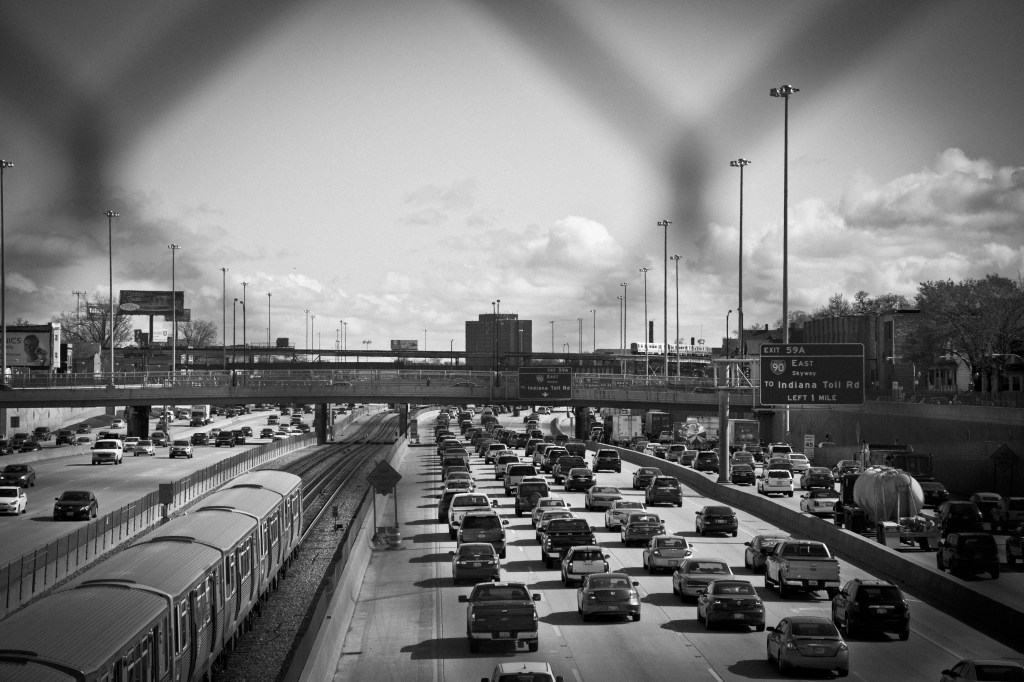
Shreveport’s plan to bulldoze part of a black neighborhood to build a $700 million highway spur is really a testament to magical thinking. Some city leaders have been convinced by slick consultants that the highway, which will only carry 3,600 vehicles a day, will somehow save the local economy.
This retrograde plan was the runaway favorite for 2017’s biggest boondoggle, besting Kentucky and Indiana’s $1 billion highway bridge over the Ohio River.
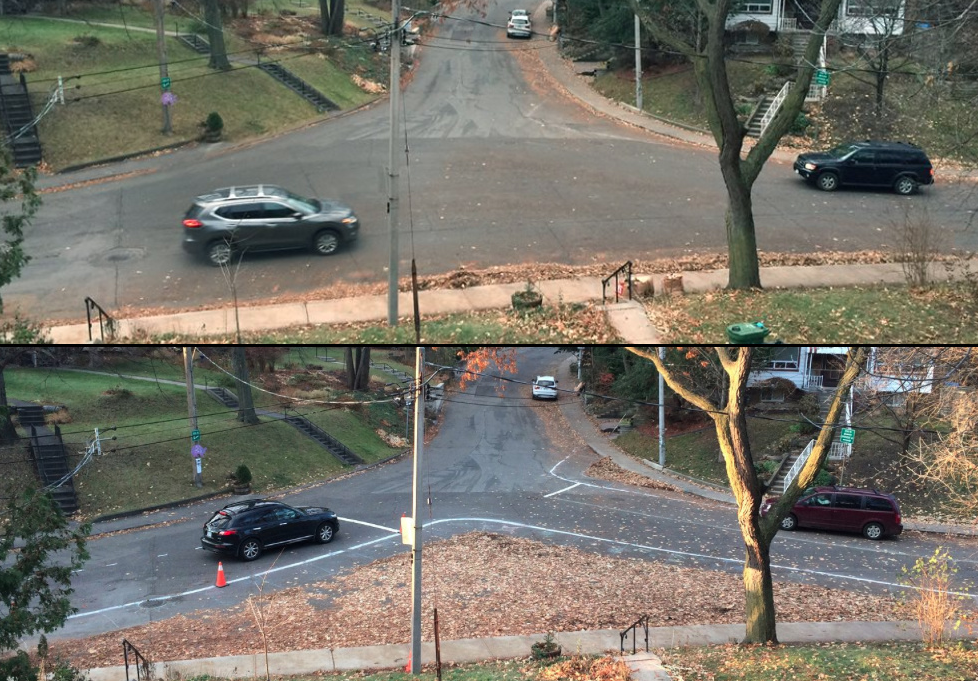
Best Tactical Urbanism Demonstration: Toronto’s “Leafy Neckdown”
Toronto’s “leafy neckdown,” created by Dave Meslin, used leaves and chalk to illustrate all the extraneous asphalt at this intersection. The neckdown went viral in Toronto and beyond, showing how easy it can be to reimagine a street for pedestrian safety.
This project bested plunger-protected bike lanes, people-protected bike lanes, and Boston’s orange-cone bus lane in our reader’s choice poll.
Best Traffic Reduction Policy: Columbus’s Free Bus Passes
When downtown Columbus ran out of parking spaces, business leaders decided they didn’t want the city to subsidize the construction of a parking garage. Instead they embarked on an experiment in transportation demand management by offering some downtown workers free bus passes in a pilot program.
This year, encouraged by the early results, Columbus went bigger. Now all downtown workers are eligible for free bus passes. Still to be revealed is the size of the impact on ridership.
Columbus beat out Hartford and Buffalo, which eliminated minimum parking requirements, and Pittsburgh, which began offering free bike-share to everyone who purchased a transit pass, for this honor.

Read More:
Streetsblog has migrated to a new comment system. New commenters can register directly in the comments section of any article. Returning commenters: your previous comments and display name have been preserved, but you'll need to reclaim your account by clicking "Forgot your password?" on the sign-in form, entering your email, and following the verification link to set a new password — this is required because passwords could not be carried over during the migration. For questions, contact tips@streetsblog.org.