Portland Advocates Won’t Settle for Business-as-Usual Highway Spending
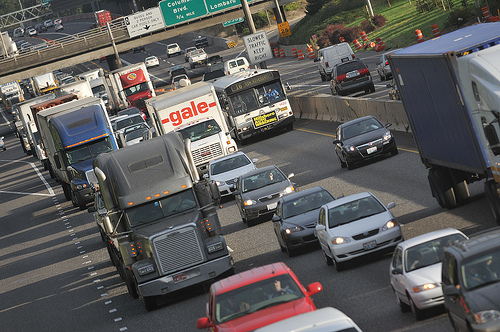
Advocates in Portland are challenging the region’s business-as-usual approach to transportation planning. They’re sick of roads getting most of the funding pie, while transit gets a small slice and biking and walking get crumbs.
The region’s big players — including the state DOT and Portland’s major transit agency, TriMet — are working behind closed doors on a funding measure that would reportedly pay for three highway widening projects and one transit project. But a new, broad-based coalition is not going to settle for table scraps.
They’re demanding “‘dollar-for-dollar’ investment in biking, walking, and transit projects,” reports Jonathan Maus at Bike Portland:
This new letter is a serious ratcheting up of opposition to the mysterious funding proposal. Its signatories include: 1000 Friends of Oregon Deputy Director Mary Kyle McCurdy; AARP Oregon State Director Gerald Cohen; Asian Pacific American Network of Oregon Associate Director Duncan Hwang; Associate Director; Community Cycling Center Communications and Marketing Manager Steph Routh; OPAL Environmental Justice Oregon Deputy Director Vivian Satterfield; Oregon Walks Executive Director Noel Mickelberry; Safe Routes to School National Partnership Regional Policy Manager Kari Schlosshauer; The Street Trust Policy Director Gerik Kranksy; and Welcome Home Coalition Director Jess Larson.
The collaboration of these groups marks a significant step forward in regional advocacy for active transportation.
It’s important to note this coalition doesn’t oppose the freeway expansions. They say they’ll only support a package that also funds biking, walking and transit at commensurate levels with highway projects.
The coalition then highlighted four local funding measures that recently passed in Seattle, San Jose, Los Angeles and Atlanta. The common theme in all of them was significant investment for biking, walking and transit.
“Yet, the Portland Metro region appears,” the letter continued, “to only give serious consideration to spot freeway expansions and one new light rail line that will serve a portion of the region, neglecting a broad focus on our shared climate, livability, equity, and safety goals.”
More recommended reading today: Streets.mn calls on professional planners to make public meetings less awful for the average person. And Darin Givens says Atlanta leaders are failing to deliver walkable development along the streetcar route on historic Auburn Avenue area.

Read More:
Streetsblog has migrated to a new comment system. New commenters can register directly in the comments section of any article. Returning commenters: your previous comments and display name have been preserved, but you'll need to reclaim your account by clicking "Forgot your password?" on the sign-in form, entering your email, and following the verification link to set a new password — this is required because passwords could not be carried over during the migration. For questions, contact tips@streetsblog.org.