If Trump Wants to “Fix It First,” a Big Spending Spree Isn’t the Way to Go
It’s hard to pin Donald Trump down on policy issues. Witness Press Secretary Sean Spicer’s quickly rescinded trial balloon for a 20 percent tariff on Mexican imports yesterday. But let’s take one of Trump’s recent infrastructure pronouncements literally and see where the implications lead.
At the GOP retreat in Philadelphia yesterday, Trump said he wants to fix existing infrastructure before building new infrastructure. Here are his remarks as relayed by Politico:
Our infrastructure is in serious trouble. We will build new roads and highways and tunnels and airports and railways across the nation. We will fix our existing product before we build anything brand new, however. We have to fix what we have. It’s a mess. So we’re going to fix it first. The thing I do best in life is build. We will fix it first ’cause we have a lot of things that are in bad shape.
This is actually a good way to approach the problem of decrepit infrastructure. It’s also completely inconsistent with the infrastructure white paper Trump’s team put out during the campaign, which would favor toll road construction and overlook decrepit infrastructure that can’t generate user fees and profits.
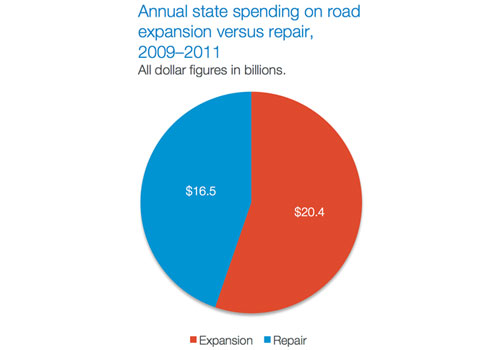
State transportation agencies could get their infrastructure into good condition without much new funding — they just have to stop spending the money they have on road expansions. In total, states spent more on road expansion than maintenance from 2009 to 2011, according to Smart Growth America and Taxpayers for Common Sense [PDF].
A real commitment to fixing transportation infrastructure would have to put a stop to expensive highway expansions, which only increase long-term maintenance obligations. A spending surge won’t get the job done — what’s needed is a campaign to impose fiscal discipline on state DOTs.

Read More:
Streetsblog has migrated to a new comment system. New commenters can register directly in the comments section of any article. Returning commenters: your previous comments and display name have been preserved, but you'll need to reclaim your account by clicking "Forgot your password?" on the sign-in form, entering your email, and following the verification link to set a new password — this is required because passwords could not be carried over during the migration. For questions, contact tips@streetsblog.org.