Wowza: Scale Maps of Barcelona and Atlanta Show the Waste of Sprawl
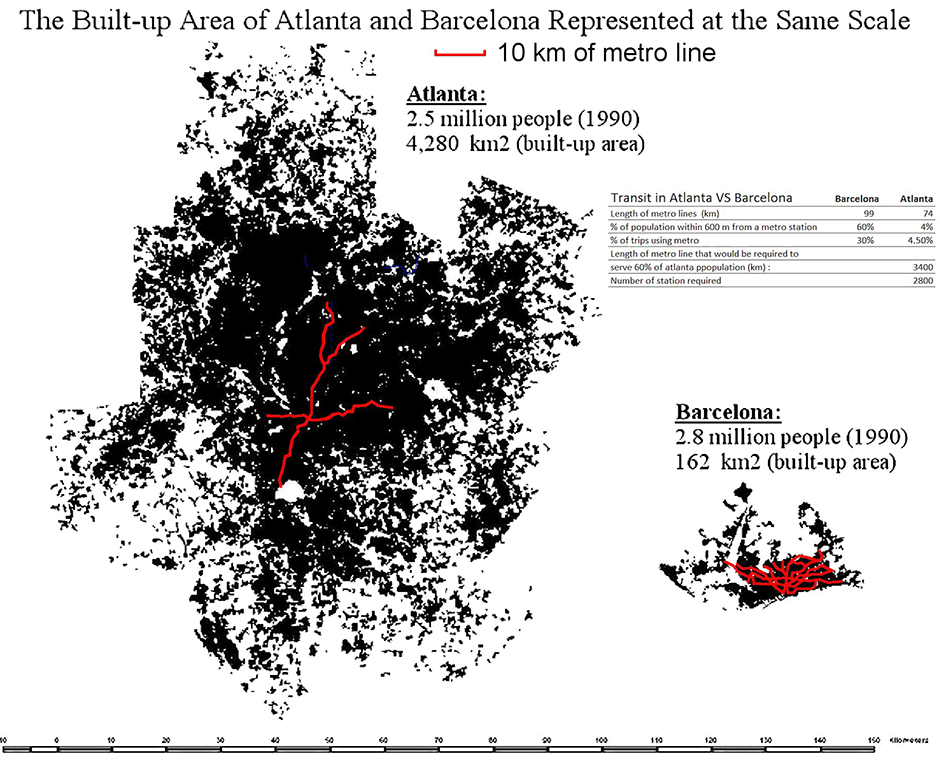
This graphic was created by Alain Bertaud, a senior researcher at NYU’s Stern Urbanization Project. He was formerly principal urban planner for the World Bank. Part of his work has focused on comparing densities of world cities.
In this stunning comparison of metro Atlanta and Barcelona, you can see that the two regions have almost the same population. Barcelona is actually a little bit bigger in that respect. They also have a roughly similar total length of rail transit: Barcelona has 99 miles of rail lines to Atlanta’s 74. But the living patterns couldn’t be more different. Atlantans are just way, way more spread out. In fact, the urbanized area of Atlanta is 26.5 times that of Barcelona. That has an enormous impact on the usefulness of the transit systems, Bertaud explains:
Urban densities are not trivial, they severely limit the transport mode choice and change only very slowly. Because of the large differences in densities between Atlanta and Barcelona about the same length of metro line is accessible to 60% of the population in Barcelona but only 4% in Atlanta. The low density of Atlanta render this city improper for rail transit.
Bertaud counts “accessible” as within one-third of a mile of a rail transit station.
Bertaud’s comparison focuses mainly on how low-density development affects one aspect of city life: the efficiency of transit. But there are many, many other ways Atlanta’s spread out nature produces waste, inefficiency, and high costs. Atlanta’s sprawling scale means it needs roads, utilities, and public services that cover 26.5 times as great an area as Barcelona’s public infrastructure and services do. And it means individual people must travel farther — at great personal and environmental expense — as they go about their daily lives.
h/t @joesarling and @m_clem.

Streetsblog has migrated to a new comment system. New commenters can register directly in the comments section of any article. Returning commenters: your previous comments and display name have been preserved, but you'll need to reclaim your account by clicking "Forgot your password?" on the sign-in form, entering your email, and following the verification link to set a new password — this is required because passwords could not be carried over during the migration. For questions, contact tips@streetsblog.org.