Car-Sharing and the Case for a “Low-Car Diet”
Anyone who makes any effort to live more sustainably has been there — facing the accusation that what you’re doing isn’t enough. That you’re compromising, and that your willingness to deviate from a purist approach invalidates your efforts. Sometimes these accusations come from within. And sometimes they make you want to give up. It’s the old problem of letting the perfect be the enemy of the good.
But the burden of living a sustainable life wholly without blemish, whatever that means, is in itself unsustainable — at least for a person within arm’s reach of mainstream American society. (Take a look at the very funny trailer for the upcoming documentary about the year Colin Beavan and his family spent when he decided to become No Impact Man.)
Which brings us to today’s post from the Streetsblog Network, from member blog BikePGH in Pittsburgh. BikePGH, which is a multifaceted organization promoting bicycling as transportation in that city, is going to have a table at an upcoming “Low-Car Diet” event hosted by Zipcar. The group’s project manager, Lou Fineberg, is already anticipating criticism, based on past experience. But he’s ready to face those who think “that BikePGH should stand on behalf of NO CARS not Low-Cars”:
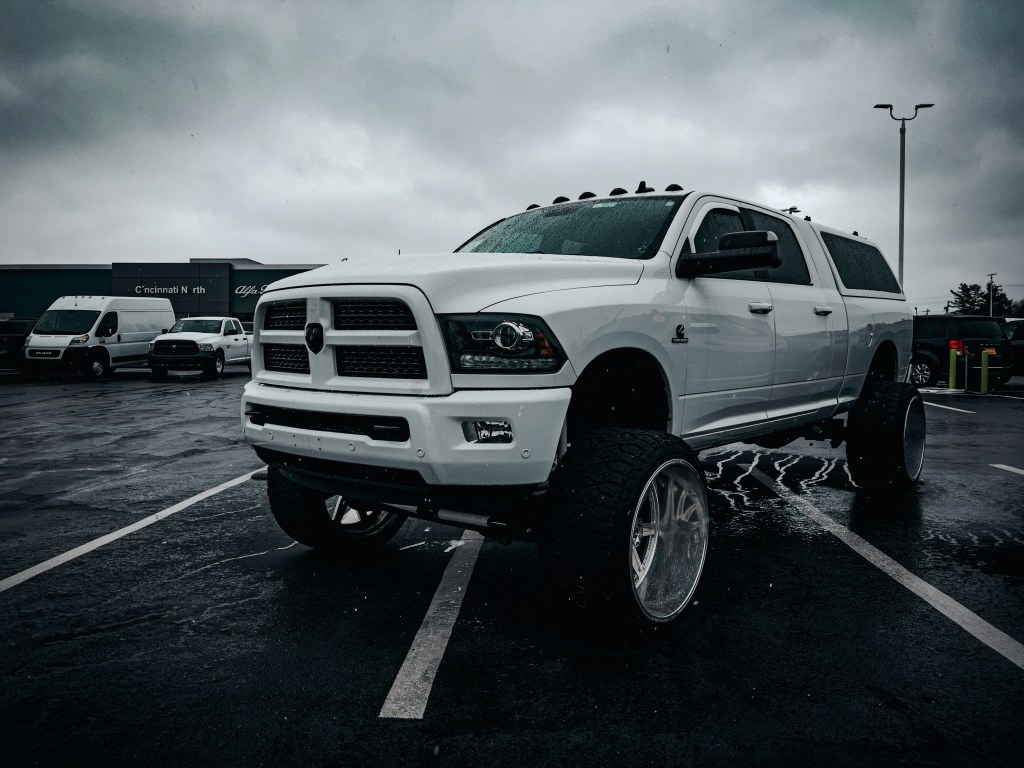
Photo by RcktManIL via Flickr.
Just for the record…advocating for NO CARS is pretty much the equivalent of advocating for NO BIKES. Is it really anyone’s business to demand what mode of transportation others use or don’t use? The U.S. was founded on the principle of freedom. Start taking away people’s freedom — their cars (thank you President Eisenhower and Jack Kerouac!), and people get all revolutionary…. I can just imagine a NO CAR movement forming and the militias that would arise to protect motorists’ rights…this is one battle that can be easily avoided.
One excellent way to avoid a motorist uprising and slowly wean ourselves from oil and cars much larger and faster than we need for urban use is to employ and support Zipcar and other car-share/ride-share options. Zipcar and services like it make the economic impact of driving hit home because each time we choose to drive we’re charged for it, and it makes most of us think two or three times before we decide to use a car, which helps keep more cars PARKED.
The routine, intermittent, often exorbitant car expenses we’ve come to take for granted aren’t so much associated with driving as they are with the car itself; and here in lies an important distinction. Currently car owners pay to keep cars. They do not pay to drive, it’s the rest of us that pay each time one of us chooses to drive in the form a poorer air quality and time lost associated with traffic congestion. Time and clean air are two of the most precious things people have on earth and the automobile has an interesting way of depleting us of both. We should be paying to drive instead of keeping cars because it’s the driving that costs society most.
Car share also provides an amazing opportunity to avoid the “second largest” financial burden the vast majority of Americans will likely come across in our lives — owning a car. That has HUGE implications for local economies because most of the money spent to operate a car goes to distant lands where they manufacture cars and produce oil. Car share is one of the best ways to invite addicted motorists to think differently about transportation without infringing upon people’s freedom to use a car.
The success of bicycle advocacy will be at best limited if we go at it alone, but when we develop strong partnerships with others that promote alternatives to single-passenger owner-occupied vehicles we dramatically increase support for mutual objectives — to make our streets safer and less congested. This is no longer a fringe perspective. In fact thoughts like these echo similar ones being expressed by Transportation Secretary Ray LaHood. In a recent post on his blog LaHood makes clear “we must implement policies and programs that reduce vehicle miles driven.” As bicycle advocates this is an opportunity to squarely put our agenda in the mainstream.
More from around the network: St. Louis Urban Workshop on how investing in transit could save that city millions of dollars; Cycling Solution meets David Byrne in Budapest and talks biking; and Green Wheels has some bad news for bike lanes in Humboldt, CA.

Read More:
Streetsblog has migrated to a new comment system. New commenters can register directly in the comments section of any article. Returning commenters: your previous comments and display name have been preserved, but you'll need to reclaim your account by clicking "Forgot your password?" on the sign-in form, entering your email, and following the verification link to set a new password — this is required because passwords could not be carried over during the migration. For questions, contact tips@streetsblog.org.