Seattle Aims to Turn Vision Zero Dreams Into ‘Durable Law’
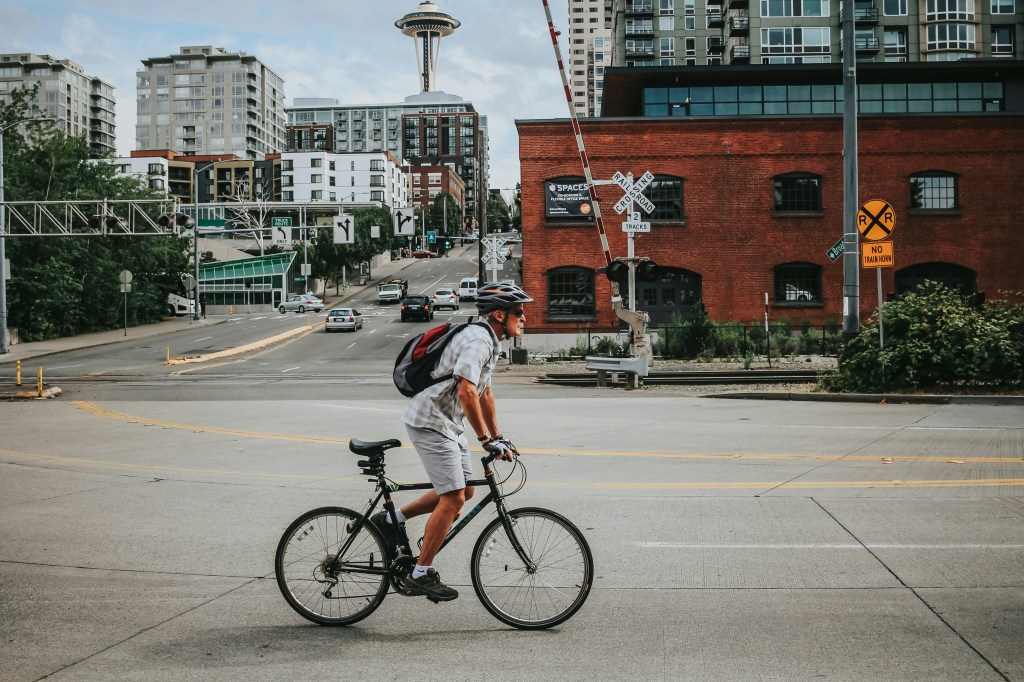
Seattle just passed a pair of bills aimed at giving the city’s theoretical commitment to Vision Zero real teeth— and the pressure is on to pass the third part of the package, which proponents say could really take the Emerald City’s street safety aspirations to the next level.
On Monday, the Seattle City Council unanimously approved two out of three of the policies collectively known as the SAFER Streets package — short for “Safe, Accountable, Flexible, Equitable and Responsive” — which sponsor and transportation committee Chair Rob Saka said could help “move Vision Zero from just an aspirational policy into durable law.”
Those approved policies include a push to get city contractors to install “side guards” that prevent pedestrians and bicyclists from being swept under the wheels of trucks, as well as granting the city’s Traffic Engineer the dual title of “Chief Safety Officer” and new powers to install quick-build safety improvements after a crash.
The third policy — whose vote Seattle Bike Blog’s Tom Fucoloro says was punted until “at least November 10” due to concerns about historic districts — would make even more ambitious changes.
Those include requiring “daylighting” treatments every time certain roads are repaved to make it easier for drivers to see oncoming cyclists and walkers; upping the frequency at which the city updates its Vision Zero action plan from every five years to every three; and enhancing data collection and reporting requirements for traffic safety concerns across the board, among other measures
Taken together, Council Member Saka said those initiatives would represent a leap forward in the city’s fight to end traffic deaths and serious injuries, which critics warn may be stalling out. Pedestrian deaths nearly doubled between 2024 and 2025, despite a groundswell of locals demanding more action to stop the bloodshed.
“At least in Seattle, we know the tools that can save lives,” Saka added. “This is about putting those tools into durable municipal law, empowering people to act faster, and just making safety a part of how Seattle operates every single day.”
Saka said the SAFER Streets package was directly inspired by Seattle advocates, who demanded policy change following a rash of recent road deaths in the cycling and pedestrian communities.
In particular, he cited the killing of Christian Sayler, 30, who died on June 1 at the hands of a turning garbage truck driver, as well as the death of 76-year-old Maridee Bonadea, who a different truck driver killed in Saka’s district just two weeks later. Some advocates say both riders could have been saved if the vehicles had been equipped with side guards.
“We’re reminded all the time that there’s more work to do,” Saka said. “I’ve personally been to a fair amount of tribute rides and ghost bike memorials, and spoken extensively with impacted families and victims of car violence … Local advocates are demanding immediate changes.”
Seattle may be uniquely primed for those sorts of changes since the election of Mayor Katie Wilson, whose background as a transit organizer helped propel her into office last year. Wilson signed a Vision Zero executive order in August, many measures of which heavily overlap with the SAFER Streets package; it’s also bolstered by an eight-year, $1.55 billion transportation levy enacted in 2024, hundreds of millions of which are specifically earmarked for Vision Zero efforts.
Much of the money could sit on the shelf, however, if the council doesn’t take action to spend it, Saka said. And Wilson’s orders could easily be rolled back if they’re not codified into law before she leaves office.
“The truth of the matter is that personnel change … and elected officials change [too],” he added. “Just because the mayor acts or does not act, that doesn’t absolve me as a lawmaker of my responsibility to keep people safe on our roads and our streets.”
In addition to truck side guards — which have been a goal for safety advocates across the country for years, and which other cities such as Boston have required on city-owned at city-contracted vehicles since 2014 — Saka said his package would pave the way for broader change, especially if its stalled elements can find passage. He’s particularly passionate about the bill’s potential to speed the city’s response to installing infrastructure after fatal crashes, which he says often takes far too long.
As the self-proclaimed “unapologetic King of Potholes” — a moniker he even lists on his LinkedIn bio — Saka is proud that his district addresses 80 percent of the reported road defects within 72 hours, and doesn’t accept that the city can’t act with similar urgency when someone dies.
“It could be six-plus months between the time of a fatality and when any actual remediation or safety upgrade is made to address the root causes of that fatality,” he added. “This [bill] puts us on a path to a faster response time.”
Even if every component of the SAFER Streets package passes, Saka said there will still be more work to do to ensure Seattle becomes the first large US city to actually achieve Vision Zero. Considering how local historic boards have opposed the kind of daylighting measures the bill proposes in the past, that’s a big “if.”
“There’s no legislation there’s no piece of single piece of legislation — or legislative package, or executive order — that can guarantee no more traffic deaths or serious injuries,” he said. “But I do know that without [this package], we’re going to continue floundering.”
Still, he said that the time is ripe to pick this low-hanging fruit — and hopefully, inspire other US cities to get more aggressive about saving lives, too.
“At least in Seattle, I think Vision Zero is moving beyond an Ideological constituency and becoming basic municipal public safety governance,” he added. “That’s a good thing. People win; taxpayers win; the residents and visitors of the city of Seattle win.”

Read More:
Streetsblog has migrated to a new comment system. New commenters can register directly in the comments section of any article. Returning commenters: your previous comments and display name have been preserved, but you'll need to reclaim your account by clicking "Forgot your password?" on the sign-in form, entering your email, and following the verification link to set a new password — this is required because passwords could not be carried over during the migration. For questions, contact tips@streetsblog.org.