Op-Ed: Toronto’s Bike Lane Fight Should Be a Wake Up Call for the US, Too
Donate to the fund to support the Toronto bike lane removal protestors here.
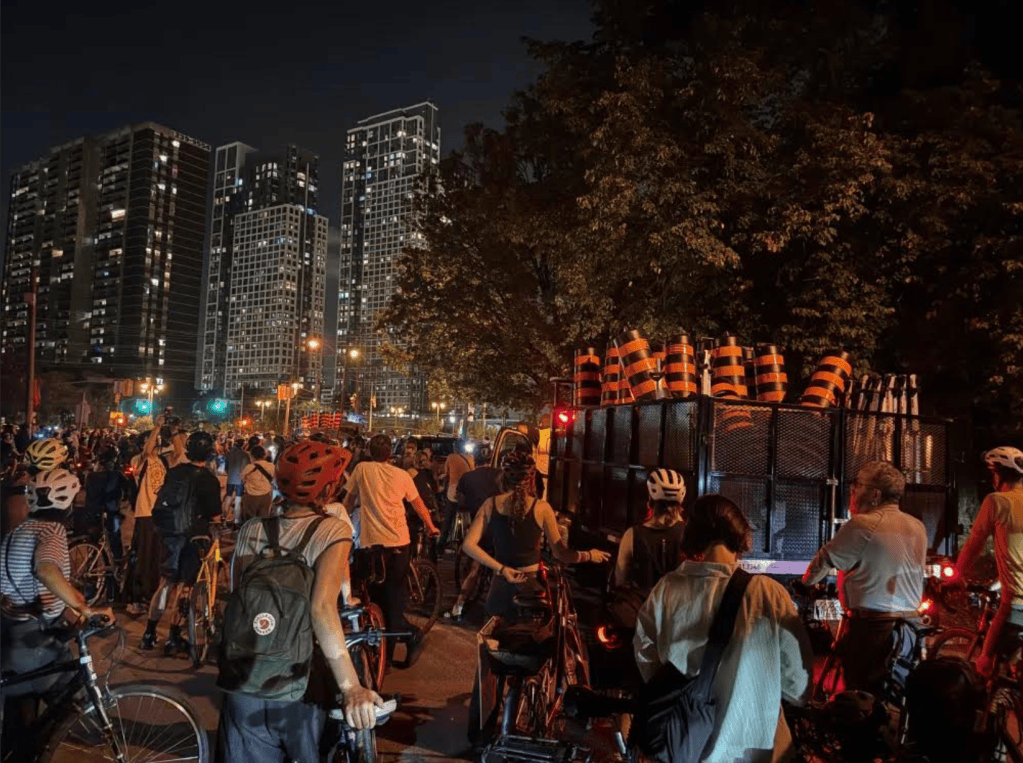
On Tuesday October 13, 2026, at around 8pm, myself and several hundred other people on bikes stood in front of multiple construction vehicles that had been sent to remove lanes in Toronto. After about 45 minutes of Toronto Police officers unsuccessfully trying to cajole cyclists out of the way of the trucks, workers without any animosity advised protestors that if we would allow them to pass, they would go home and not start removing bike lanes that night.
It was a big win in the first on-street battle for safe streets in Ontario Canada’s ongoing bike lane saga.
“Get home safe! Get home safe!” protestors chanted as the workers in their vehicles were escorted out of the crowd and away from the bike lanes they had come to help remove. We weren’t mocking them with our chant. Rather “Get home safe!” strikes to the core of why we were there putting our lives and liberty on the line: road safety, and the benefits separated cycling infrastructure convey to all road users.
How we got here
In Canada’s largest city, Toronto, our bike lanes have been under attack for nearly two years now by Provincial Premier Doug Ford.
While today he holds an office similar in power to the governor of a state in the US, Ford actually lost a mayoral election years ago that has since spawned into a grudge against the city who rebuffed him. He’s also the less famous brother of Toronto Mayor Rob Ford, who famously declared there was a “War on Cars” — which resulted in our first and only bike lane removals in 2011, and inspired the name of the famous Brooklyn-based podcast.
Doug Ford presents himself as ‘Captain Canada,’ standing up against Donald Trump’s trade war. But the two officials have a lot in common politically — including their fixation on removing bike lanes. Both are men who know how to divide and conquer voters, or whip up culture wars as a distraction.
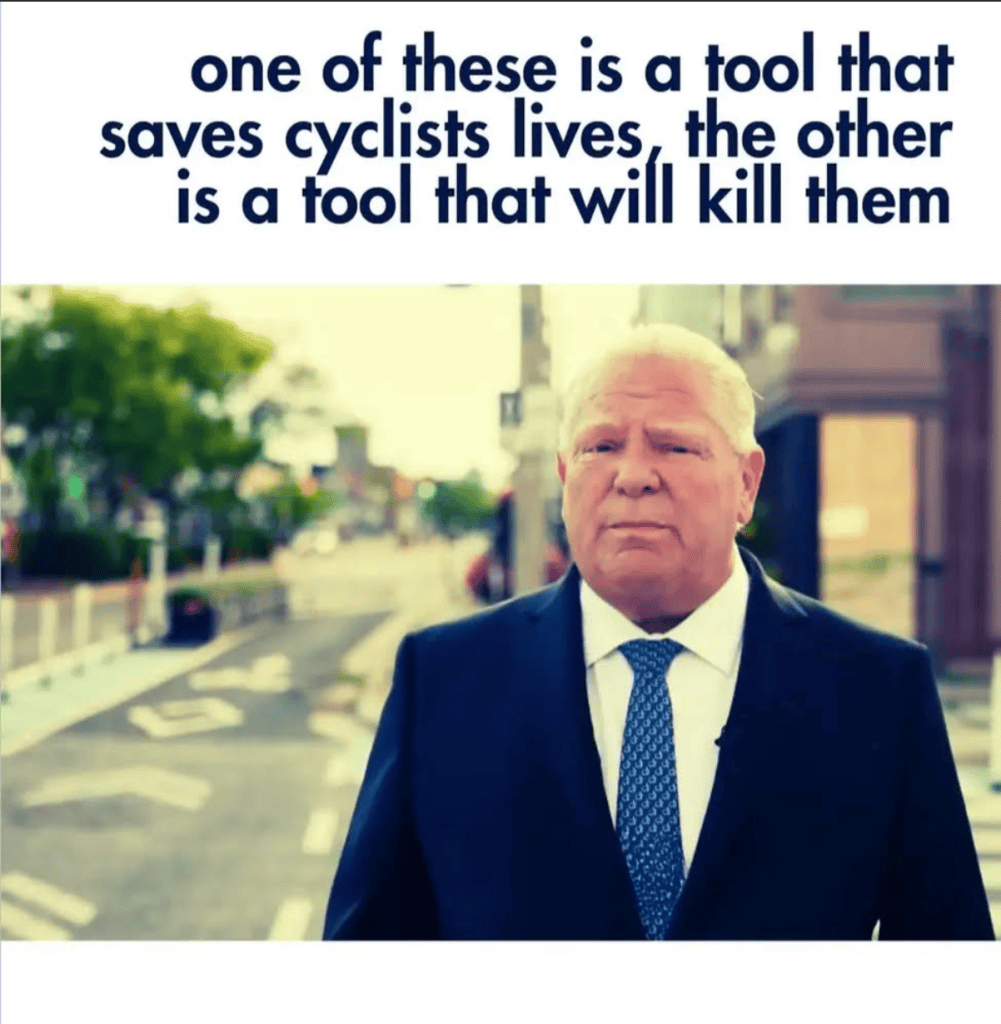
With sagging approval ratings — another similarity with Trump — Doug Ford and his government have distracted the populace from their decline by targeting people on bikes in Toronto. We’ve seen constant threats and media scrums about the congestion caused by bike lanes, all of which are refuted by data and actual evidence.
For months, local advocacy organization Cycle Toronto has been fighting Premier Ford’s Bill 212, which sets out the provincial power to remove specific bike lanes in Toronto, while practically halting the installation of bike lanes elsewhere in the province.
The legal battle has been a long roller coaster, and after the tough loss for advocates in August, Ford saw a window to go after a stretch of bike lanes quite literally in his own backyard. With record low approval numbers and a base that needs satisfying, this far west end of our growing cycling network was seen as an easy initial salvo by the premier.
But advocates haven’t made it easy for him.
A winning formula — and a call to action
In the last weeks, groups of cyclists have shown up to defend their bike lanes from early in the morning to late in the night — even though those lanes are seven miles from the downtown core, which is the traditional hotbed of cycling in Toronto.
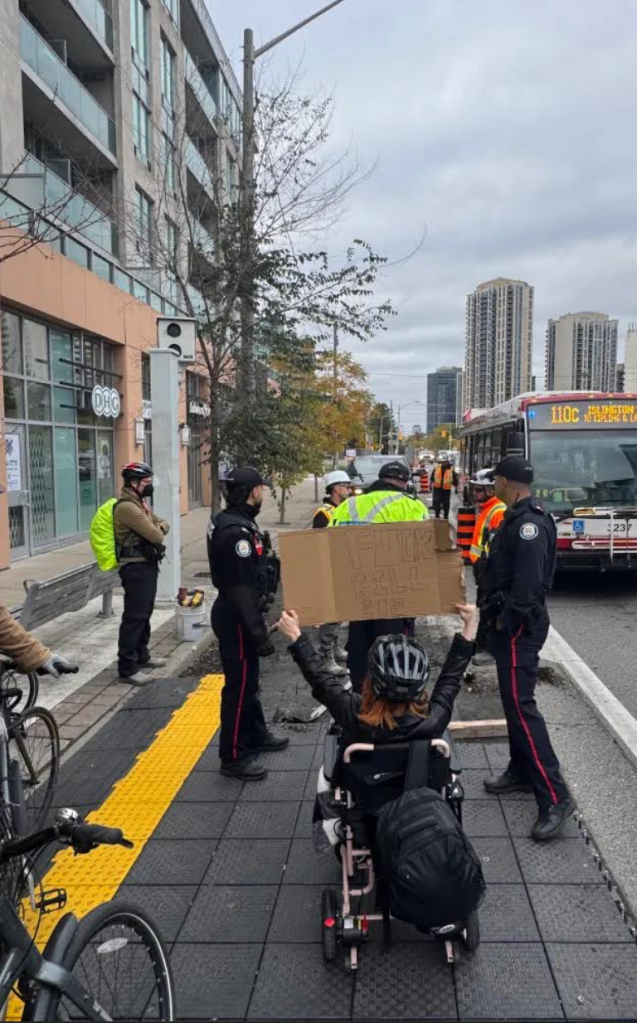
We have blocked construction and peacefully observed bollards, barriers and bus platforms being torn out of the road, all to demonstrate against the taxpayer-funded removal of taxpayer-funded infrastructure. Throughout, the removals have been guarded by taxpayer-funded police forces that have included riot cop battalions, mounted officers, drones, unmarked vehicles, and dozens of cruisers. Protestors have been threatened and charged criminally under draconian terms of release, which we will be fighting in court.
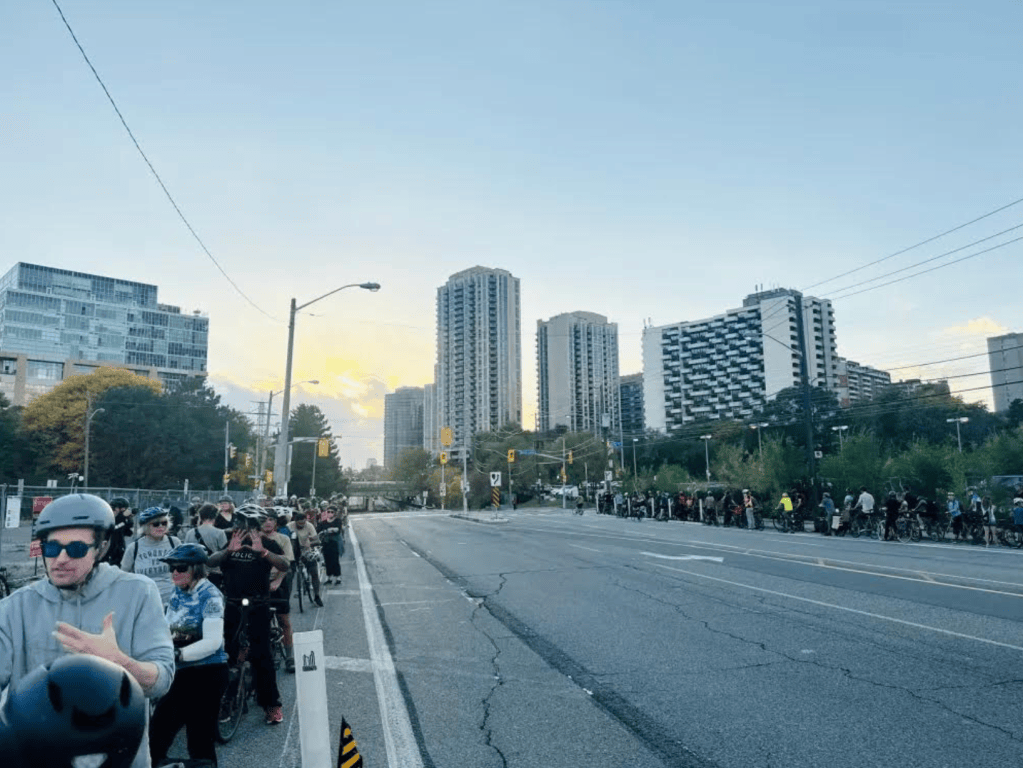
These protests have been large, like the one that shut down work completely on October 13 or slowed it down markedly on October 14, 15, 16, 19 and 20. Smaller groups, meanwhile, have staged “die-ins” or “critical mass”-style rides down the middle of the roadway to demonstrate what sharing the lanes is going to be like once the bike paths are gone.
The people of Toronto have shown up. And we believe this initial struggle sets the tone for what will be required to remove the remaining proposed 18 kms of bikes lanes, in terms of time, costs, political capital, and police resources.
We hope this community response on the ground — alongside legal and political strategies behind the scenes — will prove to be a winning formula. But even if not, it’s our obligation.
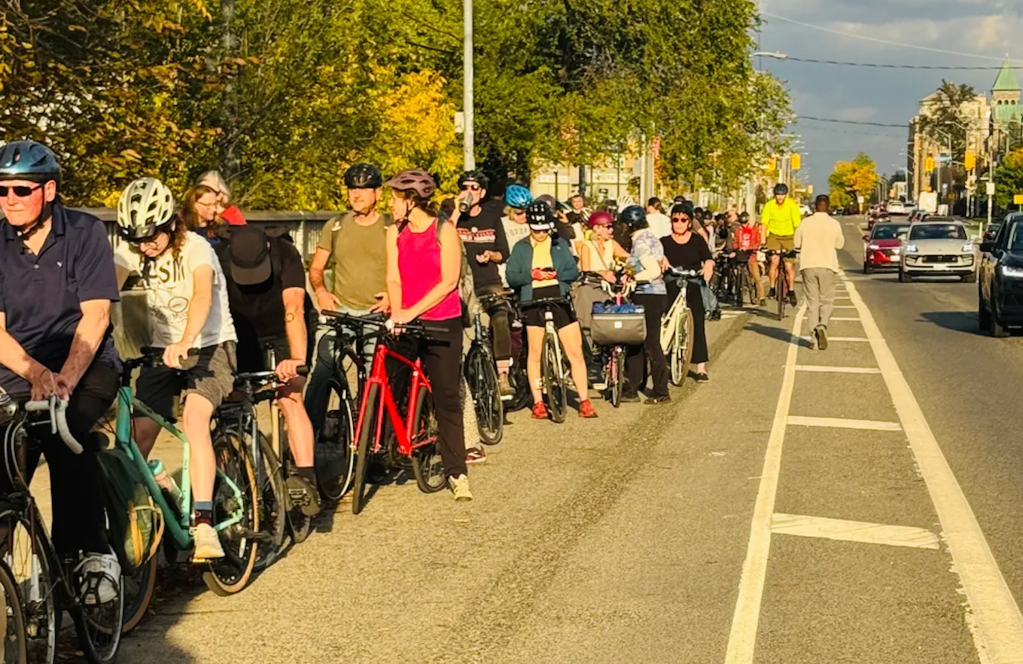
Bike lanes are a matter of life and death. The people of Toronto are amongst the first to wage this scale of a fight, not just across Canada but also in the U.S. Our response, tactics and community-driven solidarity can and should be mirrored in similar fights. We know people on bikes in Minnesota ride in the thousands in deep winter for their murdered community members, Alex Pretti and Renee Good; pedal power is there.
We hope to see solidarity rides or displays in U.S. cities — and when your bike lanes come under attack, you can expect the same from us.

Streetsblog has migrated to a new comment system. New commenters can register directly in the comments section of any article. Returning commenters: your previous comments and display name have been preserved, but you'll need to reclaim your account by clicking "Forgot your password?" on the sign-in form, entering your email, and following the verification link to set a new password — this is required because passwords could not be carried over during the migration. For questions, contact tips@streetsblog.org.