Op-Ed: How Urban Planning Can Succeed in America

How should planners identify and emulate success?
The best advice on this topic dates back to 1932, when Louis Brandeis described U.S. states as laboratories of democracy. The Supreme Court Justice meant that America’s unique brand of federalism helped its citizens identify and understand how to best organize every level of government. The country’s huge number of smaller democracies — 50 states, 3,000 counties and more than 19,000 cities, towns and villages — offered real-world feedback on how Americans might rule themselves.
In a recent report published by the University of Pennsylvania’s Institute for Urban Research, I decided to take Brandeis’s advice and compare state and metropolitan area performance over the last quarter-century on a series of metrics: sprawl, driving activity and public transit use, among others.
To do so, I constructed a set of statistical models that linked various state and community characteristics to specific performance outcomes. I then closely examined communities that performed better than the models predicted. Some results were expected; others surprised me.
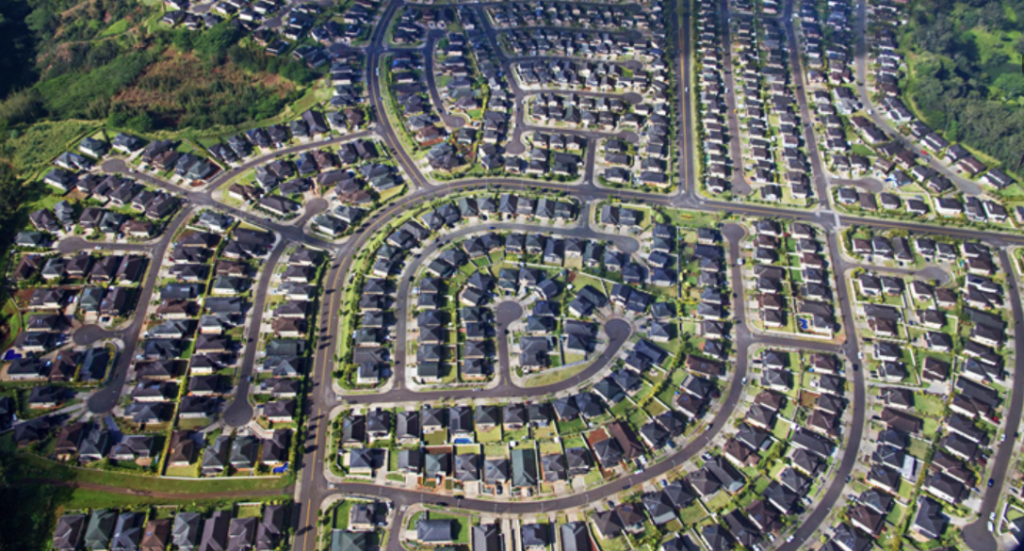
Take excessive urban land consumption, also known as sprawl. I measured this as the amount of farm, forest and range acreage that communities converted to urban uses in each state between 2000 and 2024, divided by the state’s population growth during the same period. Smaller ratios indicate that less land is needed to accommodate a given amount of population growth; larger ratios mean that more land is needed.
Maryland stood out as one of the states that minimized excess urban land consumption more than my model expected. The Old Line State saw each of its more than 1 million new residents since 2000 consume just 0.11 acres of previously undeveloped land.
Maryland boasts a long history of successful leadership in managing growth. In 1992, the state legislature enacted the Economic Growth, Resource Protection and Planning Act, which required every local government to incorporate anti-sprawl goals into its comprehensive plan. Five years later, Annapolis passed an even more ambitious growth initiative that directed state infrastructure funds to cities whose plans and development policies expressly favored infill over greenfield development.
California, by contrast, performed worse than expected. Although the Golden State does a decent job of containing sprawl overall, the California Environmental Quality Act has armed opponents of infill construction with several legal strategies to block development. This dynamic has shifted newer housing from denser, central neighborhoods to outlying suburbs that require a car to navigate.
I also found significant differences between metro areas within the same state. Consider transportation in Florida. The Sunshine State’s four largest metro areas — Miami, Tampa, Orlando and Jacksonville — record very different amounts of average daily vehicle miles traveled, a reliable measure of private automobile usage known as ADVMT.
Jacksonville and the surrounding Duval County have neglected to create a viable transit system, despite enjoying a consolidated city-county government that makes it easier to do so. In 2024, the area recorded a 2024 ADVMT of 20.2 miles per capita. Tampa was a similar story: After a pronounced effort in the 1990s to build highways, the area saw its ADVMT per capita rise by 17 percent since 2000.
The greater Miami area, by contrast, has capitalized on its elevated residential densities and spatial arrangement — all of its major cities mostly fall within a single, straight line — to promote investments in rail and bus transit. This development strategy has driven down household auto ownership rates. In 2024, the metro area posted an ADVMT of just 17.3 miles per capita, the lowest of the state’s four largest metro areas. Orlando followed the same pattern: The area grew by more than 50 percent since 2000, but its ADVMT fell by two percent.
I found another success story on the West Coast in San Diego’s Metropolitan Transit System. Only one other transit network — New York City’s Metropolitan Transit Authority — recorded better-than-expected ridership performance between 2000 and 2019 and between 2020 and 2024. How did the MTS cope with the loss of ridership during the COVID-19 pandemic? It carefully controlled capital costs, focused on service reliability and safety, met the service needs of key market niches, and sited new housing developments near light-rail stations.
The states and metro areas that most exceeded their expected performance share a few common characteristics. All of them routinely monitor how their policies work in practice and modify them if they fail to work as intended. They use material incentives to reward good behavior and discourage bad behavior. They enthusiastically promote the expertise and competence of government agencies. And they emphasize public-private partnerships and intergovernmental cooperation.
Our dysfunctional federal government has given up on promoting sustainable urban development, leaving a vacuum for states, counties and cities to fill. These governments demonstrate the wisdom and foresight of Justice Brandeis’s profound affection for America’s smaller democracies. We ought to pay closer attention to their results.

Read More:
Streetsblog has migrated to a new comment system. New commenters can register directly in the comments section of any article. Returning commenters: your previous comments and display name have been preserved, but you'll need to reclaim your account by clicking "Forgot your password?" on the sign-in form, entering your email, and following the verification link to set a new password — this is required because passwords could not be carried over during the migration. For questions, contact tips@streetsblog.org.