Transgender Americans Harassed on Transit at High Rate, But Problem Goes Unrecognized: Study
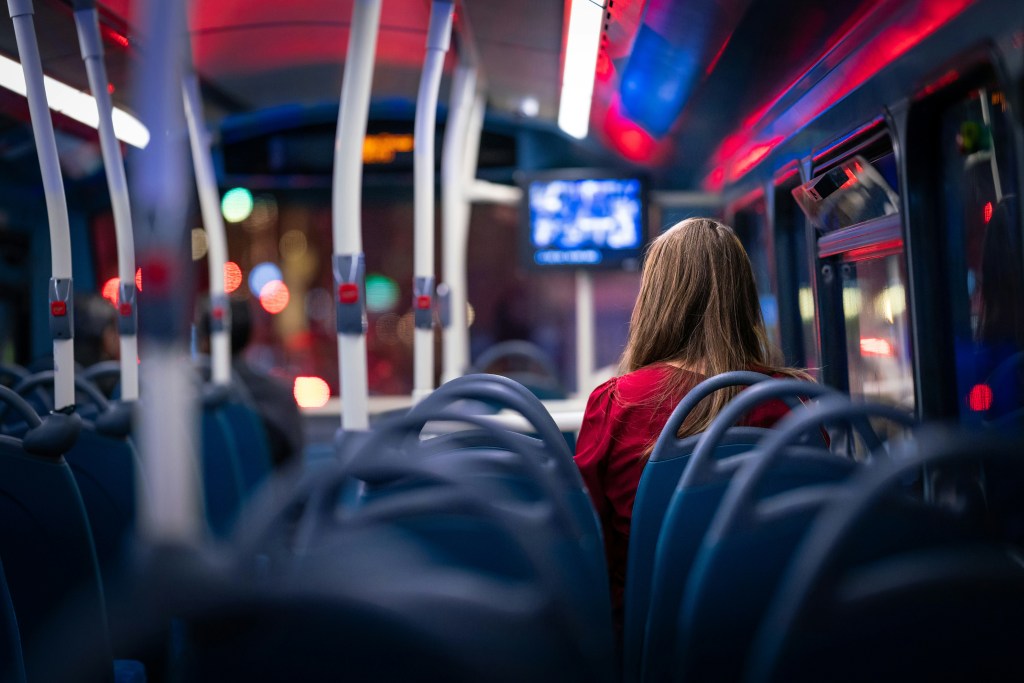
Transgender transit riders experience harassment far more often than their cisgender peers, according to a recent report. And that means public transit may be a major focal point of a larger anti-trans crisis — and that without intervention, ridership could take a hit.
Of the more than 350 trans and nonbinary riders surveyed by researchers from the University of California, Los Angeles, nearly 60 percent reported at least one instance of being targeted on a bus or train.
Even compared to other vulnerable groups, the rate is alarmingly high. A staggering one in four cisgender women who ride transit have experienced harassment onboard, but that’s still less than half the rate of their transgender peers.
Even so, the crisis is hardly noticed at all.
“We still know very little about the mobility experiences, challenges, and associated harassment faced by transgender people,” lead researcher Tam J. Guy wrote in the report.
Previous studies on gender-based harassment have exposed the treatment of women onboard transit, but fail to explore the unique experiences of trans and non-binary passengers.
Unsurprisingly, many of the survey’s respondents reported taking public transportation less than they wanted to — and fear of harassment played a major role in that decision. Nearly one in four respondents named it a primary reason, and slightly more said that fearing violence onboard altered their travel behaviors, even if doing so limited their mobility.
The researchers were careful to note that safety concerns weren’t the biggest reason why respondents shifted their travel behaviors. The lack of frequent, fast trains and buses often played a bigger role in motivating trans riders to take car trips instead.
Sometimes, though, slow service made experiences of harassment worse.
“Nothing makes you feel more like a sitting duck for harassment like being at the stop for 15 minutes waiting,” said Cedar, one of the trans respondents in the study.
Not all transgender riders are treated equal: the report notes that Black and women transgender individuals may be particularly vulnerable, due to the heightened levels of harassment against other groups that they identify with.
Guy emphasized that more research is necessary to draw definitive conclusions about the extent of the trans rider harassment crisis, the types of harassment experienced and what factors may heighten one’s risk of being targeted. That begins with changing how the issue is studied.
“Researchers need to change our approach to using gender assumptions,” they say in the report.
The alarming findings come as federal policymakers wage a war on minority Americans and transit.
Since the start of President Trump’s second term last January, the White House has pillaged federal funding for any research it says supports diversity, equity, and inclusion. One non-profit, the National Science Foundation, had more than 10,000 of its grants flagged for review, according to Nature. Any grant that includes a wide-range of common keywords — not limited to “gender”, “LGBT”, and “women” — appears to be flagged for cancellation.
Even without federal support, public transit agencies and their riders can do more to promote safety for trans riders onboard.
Participants in the study named improved lighting at transit stops, real-time service information, and non-police station attendants amongst potentially helpful interventions. More than half of respondents stated that increasing police presence would not increase their feeling of safety.
“I can tell you that the answer is not more police,” said Nandina, one of the respondents.
Of course, transit is only one extension of the broader societal issue of anti-trans discrimination — even if transit reform can be the part of the solution, the report authors argue. Agencies can implement systemwide anti-harassment and education campaigns and train employees to intervene. Members of the public can challenge discriminatory treatment where they see it, too.
For public transit to become a safe, desirable alternative nationwide, the US needs a “general shift in the perception of trans people,” added Mahogany, a survey respondent. “The transit is fine. It’s the social aspect that’s scary.”

Read More:
Streetsblog has migrated to a new comment system. New commenters can register directly in the comments section of any article. Returning commenters: your previous comments and display name have been preserved, but you'll need to reclaim your account by clicking "Forgot your password?" on the sign-in form, entering your email, and following the verification link to set a new password — this is required because passwords could not be carried over during the migration. For questions, contact tips@streetsblog.org.