What Would It Take to Get ‘Fast, Free Buses’ Nationwide?
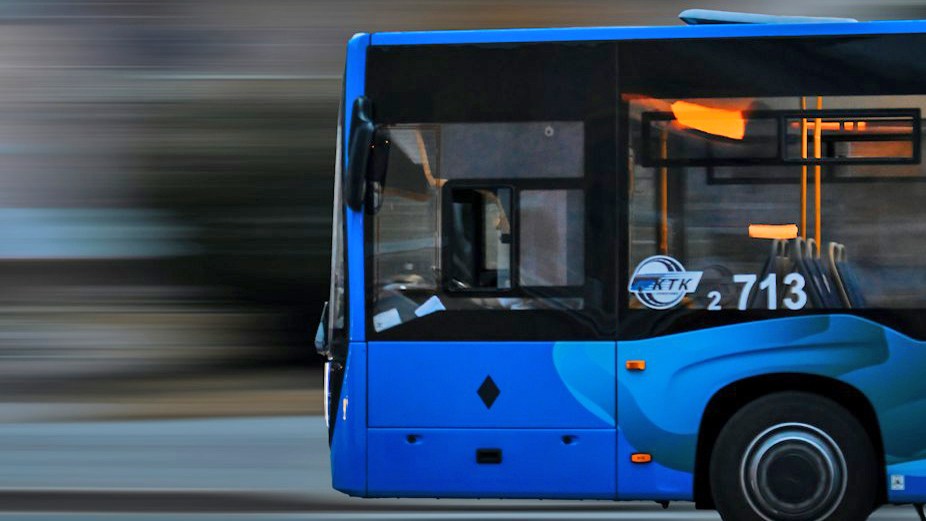
Are “fast, free buses” a pie-in-the-sky New York City campaign promise, or an urgent policy prerogative for cities across America?
Results are still pending on Mayor Zohran Mamdani’s pledge to free NYC transit riders from gridlock and the farebox. Advocates at the Climate and Community Institute argued last spring, though, that other cities can and should aspire to the same goal — even in an era of sharp federal transit cuts that have only escalated since their report was initially released.
“When we zoomed out from New York — which to many people seems like an outlier in the United States — we started finding so many examples of smaller cities that were implementing these kinds of changes, both to speed buses up and to reduce or eliminate fares,” said John Stehlin, a professor at University of North Carolina, Greensboro and co-author of the report. “Sometimes, [they’re even doing both] at the same time. It seemed like way more of a national story, despite the fact that New York was getting the biggest headlines.”
Why fast and free?
Stehlin notes that transit agencies across the country are already working to speed up routes or zero out the price of a ride — even if most do neither, and few have done both.
On the “fast” side of the equation, Pittsburgh has been building dedicated bus corridors since the 1970s; meanwhile, true bus rapid transit has been operational in places like Los Angeles, Cleveland, and Eugene, Oregon, since the late 2000s. Countless others have explored lower-lift strategies, too, like giving buses first priority at traffic signals.
When it comes to free transit, dozens of cities have gone zero-fare on at least a few of their routes for decades, especially in downtown business districts or tourist areas. Many small communities like ski towns have even stopped collecting cash system-wide — and more could probably afford to, since US transit agencies recovered just 13 percent of their operating expenses on average from ticket sales in 2024.
In some communities like Olympia, Washington, agencies found that enforcing fare collection actually cost them more than the amount their riders were paying.
“A lot of places looked at the cost of collecting fares and found that the juice wasn’t worth the squeeze,” added Stehlin.
And the societal payoff for giving folks a free ride could be huge. One study cited by the researchers found that ridership shoots up an average of 56 percent after fares are eliminated.
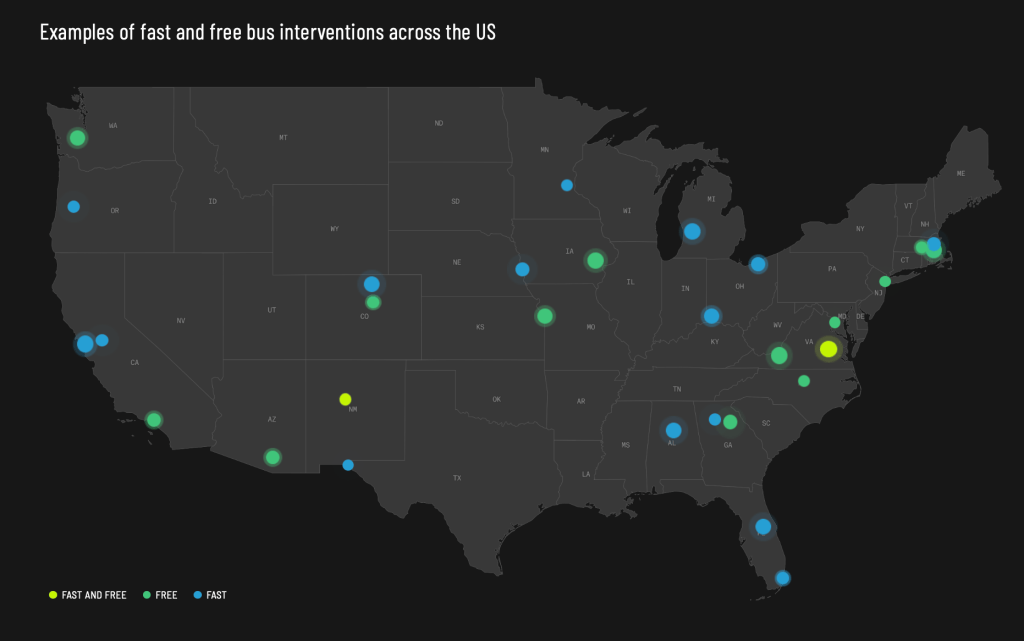
When policies that make buses fast and free are implemented together, though, Stehlin says both priorities are often easier to achieve.
Eliminating fares, for instance, can get buses out of the stop and back on the road faster, since drivers don’t have to wait extra time for passengers to fumble with fare cards and loose change.
Speeding up routes, meanwhile, can attract new riders, which helps make whole systems more efficient – and helps make the case for what Stehlin calls “collecting fares on the societal level.” He encourages skeptics to think of it like the taxes and bonds communities currently collect to fund public libraries, where we’d never think of charging for books per check-out.
Still, he acknowledges that some “free” transit programs haven’t translated into steep ridership increases, while cannibalizing scarce revenues that agencies sorely need to speed buses up. But he says that’s all the more reason to think of the two policies as two sides of the same positive feedback loop — and fund both robustly.
“This is evidence that we should really look at implementing fast and free together, because if you have a bus system that’s not working well enough for people and meeting their needs, then making it free is not going to attract a lot of people,” added Emmett Hopkins, Stehlin’s co-author and the Transportation Policy Manager for the Institute. “But if we can do both together, then it can.”
Perhaps the best reason to do fast and free together, the authors argue, is simply how many lives it would make better.
“We found stories of specific people [whose] buses had been made faster or free, and those people were just better able to stay connected to the things that they needed in their lives — whether it be housing, health care, school, work, groceries, recreation, or their loved ones,” said Hopkins.
As Washington aims for steep federal transit cuts and transit agencies across the country follow suit, both Hopkins and Stehlin acknowledge that achieving the dream of fast and free buses nationwide won’t be easy. Still, they say it is possible — with a few ambitious policies.
First, both co-authors emphasize that forward-thinking state DOTs already have the ability to “flex” capital dollars away from highways and towards transit agencies, freeing up funds to plan and build faster infrastructure like bus rapid transit.
Advocates, meanwhile, can fight for funding explicitly to support fare-free operations, like Virginia already did to eliminate fares in its capital city of Richmond — at the cost of just $5 million, or 0.4 percent of the DOT’s annual budget.
State legislatures can clear the way by abolishing outdated “minimum farebox recovery” mandates that effectively require agencies to charge for a ride, and let localities pass local bond measures, raise taxes, and pursue other revenue streams to amp up transit investment of all kinds.
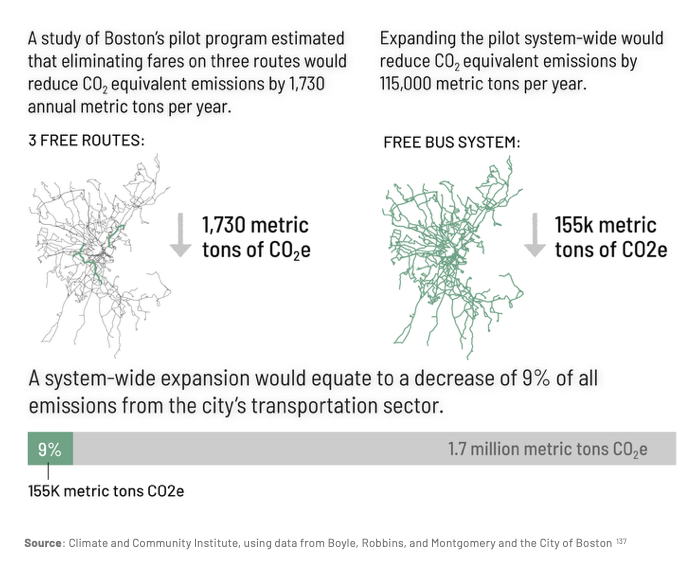
And if full-scale bus rapid transit redesigns and system-wide fare abolition aren’t in the cards, agencies can always start small with interventions like changing signal priority to benefit buses, or making key downtown routes free.
“States and cities have the opportunity to give people those better options on a pretty short time scale,” added Hopkins. “That could happen in a matter of months or within a year — or, in some cases, almost immediately.”
Stehlin adds that there’s hope for faster, free buses even in communities not known for being progressive on transit — because many of them are already doing it, at least at small scale. Perhaps the best example is Birmingham, Alabama, which saw ridership rise sharply after its free, 10-mile rapid transit project, Birmingham Xpress, opened in 2022.
“One of the things that we noticed when we did the research for this report was that we’re already seeing a lot of success in these kinds of initiatives in relatively conservative states,” Stehlin said. “There are aspects of this that are more popular than a car-only agenda.”
An earlier version of this story misstated how much it cost for Virginia to fund free buses in Arlington. It was 0.4 percent, not 0.07 percent.

Read More:
Streetsblog has migrated to a new comment system. New commenters can register directly in the comments section of any article. Returning commenters: your previous comments and display name have been preserved, but you'll need to reclaim your account by clicking "Forgot your password?" on the sign-in form, entering your email, and following the verification link to set a new password — this is required because passwords could not be carried over during the migration. For questions, contact tips@streetsblog.org.