I Survived the Santa Monica Farmer’s Market Crash
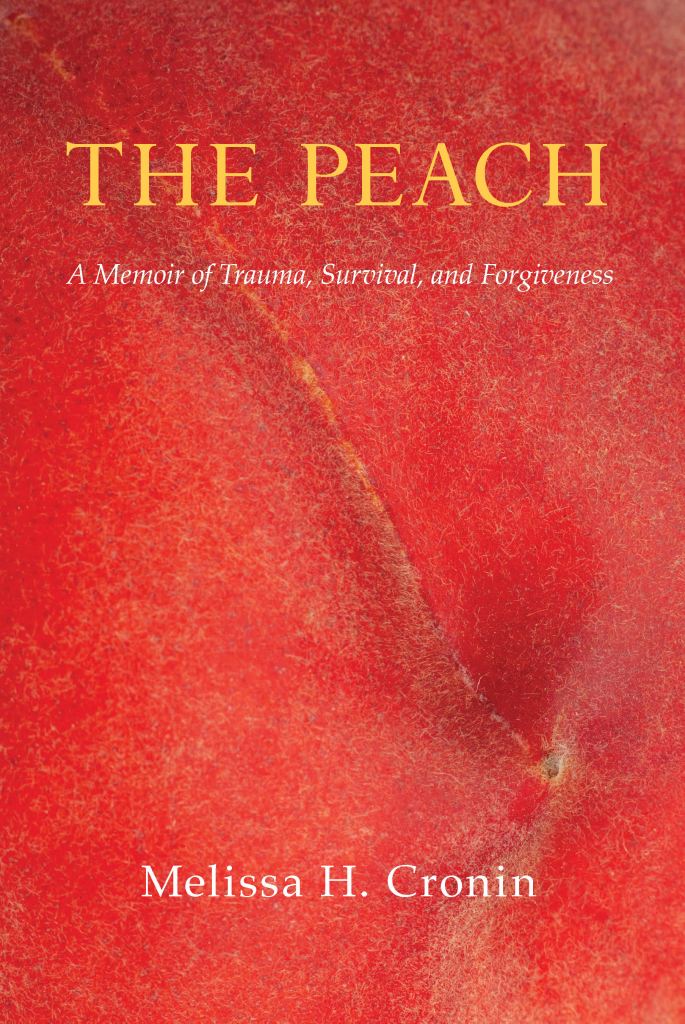
The following is an adapted excerpt from The Peach: A Memoir of Trauma, Survival, and Forgiveness. It explores the author’s experience as a survivor of an infamous 2003 crash which claimed the lives of ten people.
I glance at my wristwatch. It’s 1:43 p.m. The Santa Monica Farmers’ Market closes at two. People scurry past me in search of the last berries, tomatoes, artisan cheeses, and tropical fruits.
Through the crowd of shoppers and maze of reds, greens, and purples, I spot a pyramid of peaches that makes my mouth water. Summertime gifts you with at least one juicy peach that rewards you with peach sweetness. I walk to the other side of Arizona Avenue and carefully pick up a perfect one. I roll it in my hand, its downy fuzz tickling my fingers. I bring the peach to my nose. It smells like orchard sugar. I anticipate the first bite – the squirt, the pulp, the tang.
I hear a pop. The peach flies out of my hand.
I do not remember a Buick sedan heading toward me as its eighty-six-year-old driver pressed his foot to the accelerator, believing he is pressing the brake.
It would take me years to begin to trust the world enough to cross an intersection again. It would take years before I could see an older driver behind the wheel of a car and not shudder.
Our deepest fears can rule our lives. But sometimes we choose to study our fear, to examine its causes and learn how to protect ourselves and others from getting hurt.
Eventually, I’d become a student of the little-understood phenomenon known as “pedal error,” an oddly sanitized and trivializing label for something that begins with a moment of confusion yet ends with blood on concrete. I learned that what had happened to me had happened to so many others, and would continue happening, because little was being done to tackle the root causes or prevent its recurrence.
The coming decades would be marred by a global vehicle-ramming epidemic. Vehicle-ramming incidents have become a disturbing worldwide trend. If you type in “vehicle-ramming” you’ll find a Wikipedia entry listing one attack after the next: Charlottesville, New York City, Ohio State University, Ontario, London and Berlin.
How easy it is, despite intention, age, or experience of the driver, for a vehicle to become a lethal weapon – a means of inflicting mass casualties. “The city is safe,” the Toronto police chief said in response to the deadliest rampage involving a vehicle in Canada in April 2018. Ten people were killed, mostly women, and another sixteen injured. A troubled loner deliberately drove a rental Ryder van along Toronto’s main artery for one-and-a-half miles during a busy lunch hour. The driver – Alek Minassian – intentionally struck one pedestrian after the other, tossing people into the street, crushing others in crosswalks, pinning a woman beneath the van.
How does such pure madness, a gross act of outrage, affect the safety and well-being of Toronto residents? Does the bystander who rushed to help a pedestrian struck while crossing the street feel safe? And what about the injured, or the families of the dead?
I knew they would never feel safe again. Some will forever mistrust walk signals, traffic lights, all cars, all drivers. I imagine their feet coming to a cold stop at the edge of a curb, refusing to move into the crosswalk each time they see a white Ryder van waiting for a traffic light to turn green. Just as my feet freeze solid whenever I see a Buick Le Sabre idling at a stop light.
The escalation of vehicle-ramming attacks forced cities large and small to wake-up to the threat of out-of-control cars, and to consider solutions in the form of strategically placed barriers that would allow pedestrians to go about their business, free from this new threat.
In 2018, the San Luis Obispo Farmers’ Market in California fast-tracked their pedestrian safety project; they approved $1.3 million to erect removable steel bollards. The concern for pedestrian safety gained urgency in New York City after a driver, high on PCP, sped three blocks on a Midtown Manhattan sidewalk, followed by the vehicle-ramming attack along the Hudson River.
In the wake of these incidents, the city allocated $50 million for better, secure high-risk public spaces. Fifteen hundred metal bollards were installed at locations most visited by tourists. Some might gasp at the price tag attached to these barriers, but compare those figures to the collective medical expenses incurred by all sixty-three injured in the Farmers’ Market crash, plus medical damages incurred by the injured in New York City, Charlottesville, Toronto, Berlin, Nice …. Now that’s sticker-shock.
The city of Barcelona has taken the lead and gone beyond erecting bollards to create long-term planning that reimagines the urban future as one in which cars are relegated to the fringes, and pedestrians move freely and safely in an urban landscape that is quieter, greener, and safer. In a big and bold move to stop prioritizing cars, Barcelona is constructing so-called “superblocks.” Traffic will be restricted to a few, large collector arteries, while secondary streets are being converted into citizen spaces designated for cultural activities, community gatherings, and leisure. This ambitious citywide plan will transform Barcelona, and may save thousands of lives.
Other cities should consider similar strategies — and start treating all traffic violence as preventable.
Read More:
Streetsblog has migrated to a new comment system. New commenters can register directly in the comments section of any article. Returning commenters: your previous comments and display name have been preserved, but you'll need to reclaim your account by clicking "Forgot your password?" on the sign-in form, entering your email, and following the verification link to set a new password — this is required because passwords could not be carried over during the migration. For questions, contact tips@streetsblog.org.