I Care About E-Bike Safety 0.02 Percent of The Time
A version of this article originally appeared on Urbanism Speakeasy and is republished with permission.
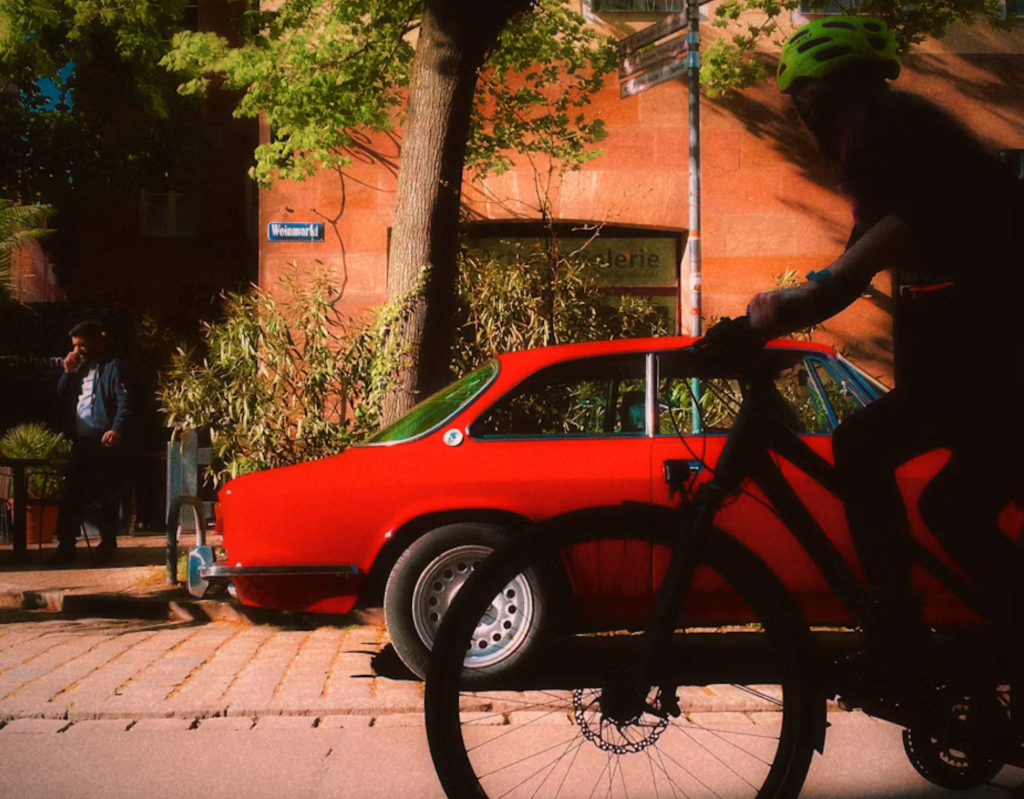
Corporate media outlets have found a new click-bait genre: the terrifying e-bike. A teenager on a sidewalk or a delivery rider weaving through a crosswalk on a machine that blasts through city streets like a rocket. Social media warriors and neighborhood busybodies are all in a tizzy.
In the US, the standard e-bike is a pedal-assist bicycle that tops out around 20 mph. These have become wildly popular because they have just enough juice to flatten hills and make it easier to carry heavy bags (or kids) without breaking a sweat.
A large share of the panic is a labeling problem. The machines doing the most alarming things on sidewalks and in intersections are electric motorcycles. Without moving your feet, you can soar up to 60 mph.
Even though there is a percentage of the population doing dumb things on e-motos, the traffic safety moment is wasted if we let the fearmongers frame e-bikes as something that deserves immediate political intervention. Instead, we have a chance to put the hierarchy of safety controls back on the table.
Learn how to rank hazards if you really want to prevent the most injuries
The hierarchy of safety controls is a ranked list of ways to deal with a hazard. You start at the top and only move down when a stronger option is not available. The most effective are at the top, and the least effective at the bottom. (Since humans are feeling creatures who sometimes think, it’s not surprising that the least effective safety treatments are the ones that get the most attention.)
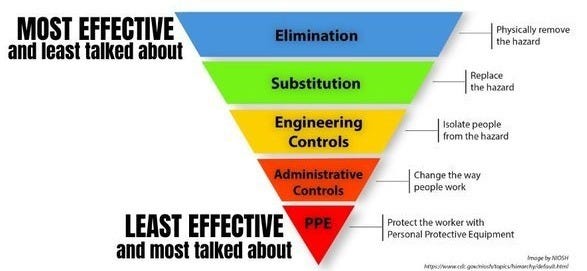
- Elimination. Get rid of the hazard. The dangerous thing is no longer there, so it can’t hurt anyone. Unplug and remove a machine, stop using a toxic chemical, etc.
- Substitution. Change the source of harm. Use a safer chemical instead of a toxic one, use a lower-voltage tool, replace a process that can crush a hand with one that can’t, etc.
- Engineering controls. Leave the hazard in place, but build something that keeps people away from it or limits how bad contact can be. Guards, ventilation, barriers, etc.
- Administrative controls. Change how people work. Training, procedures, warning signs, schedules that limit exposure, “only trained staff may enter,” checklists. These help, but they also fail when someone is rushed, tired, untrained, or unsupervised.
- PPE (personal protective equipment). Put protection on the person who is still exposed. Gloves, goggles, helmets, respirators, earplugs. This is last because it does not remove the hazard and does not separate people from it. It only reduces harm if the gear is the right kind, worn correctly, and still working when something goes wrong.
The further down the pyramid you go, the more you’re asking of people when the system itself should have done more.
The public conversation about e-bikes and e-motos lives almost entirely at the bottom two rungs. Meanwhile, the hazard that actually fills trauma centers and morgues is motor vehicle crashes.
In 2023, the United States recorded about 6.14 million police-reported traffic crashes. Of those, 71.7 percent were property-damage-only, 27.6 percent involved injury, and 0.6 percent were fatal. That same year, 40,901 people were killed and an estimated 2.44 million were injured. The CDC separately counted about 2.8 million ER visits for car crash injuries.
Medical expenses from car crashes cost a whopping $31 billion in 2019. CDC put the 2023 cost of crash deaths alone at more than $457 billion, counting medical care and the value of lives lost. The public pays a share of that bill whether or not it wants to. Taxpayers subsidize about 9% of all economic crash costs.
Cars are associated with roughly 40,000 deaths and 2.4 to 2.8 million injured or ER-treated people every year. E-bike deaths were 91 in 2023 and 97 in 2024, with a total of 310 from 2017 through 2024. Rising e-bike injuries are real. That’s because, thankfully, so many more people are now using e-bikes for many of the short trips that used to be car trips.
If we took the top of the pyramid seriously, we would direct policy energy and advocacy resources at the hazard that has such a high share of the blame for traffic violence.
None of this requires pretending e-motos are harmless. High-power machines on sidewalks are a genuine nuisance and, in some cities, a genuine injury problem. What is not worth doing is treating every battery-assisted bicycle like it’s anywhere near the threat of motor vehicles.
Should we focus at all on e-bikes? Sure. On the topic of traffic safety, I propose 0.2% of our attention focus on e-bikes and 99.8% of our attention focus on cars. That aligns nicely with the real world situation we’re currently faced with.

Read More:
Streetsblog has migrated to a new comment system. New commenters can register directly in the comments section of any article. Returning commenters: your previous comments and display name have been preserved, but you'll need to reclaim your account by clicking "Forgot your password?" on the sign-in form, entering your email, and following the verification link to set a new password — this is required because passwords could not be carried over during the migration. For questions, contact tips@streetsblog.org.