

Never Mind the Bollards, Here Come Thursday’s Headlines
Despite the constraints they place on public spaces, the barriers are necessary to protect people from weaponized vehicles.
By
Blake Aued
12:01 AM EDT on September 3, 2026

- Cities first started installing bollards after 9/11. Since then, they’ve been used to stop drivers from using their vehicles to ram into pedestrians on the sidewalk. The New York Times calls them a sign of the militarization of cities that have become just another part of urban life.
- Architecture and urban planning have a role to play in keeping people moving and healthy, rather than just telling everyone to get more exercise (Arch Daily). This has a lot to do with cars, because they take up much more space in limited public right-of-ways than people do (Princeton University Press). Plus, climate change won’t be solved by individual choices, but only by public policy and collective action, according to author Leah C. Stokes (MIT Press Reader).
- Philadelphia Inquirer architecture critic Inga Saffron has some practical tips for going car-free.
- More U.S. cities, including Seattle and St. Louis, are putting up gates at light rail stations to increase their farebox revenue. (Mass Transit)
- Richmond leaders want the state of Virginia to drop the legal limit for DUI from a 0.08 blood alcohol level to 0.05. Drinking was a factor in 37 percent of the city’s crashes. (Axios)
- The Minneapolis Blue Line is still short $224 million. (Minnesota Public Radio)
- U.S. DOT officials spent two days in Atlanta looking into transit agency MARTA’s safety and security. (AJC)
- Nashville is developing a tool to measure how new development affects traffic. (Fox 17)
- After a recent court ruling in its favor, Doug Ford’s Ontario government is already starting to rip out Toronto bike lanes. (CBC)
- A new report frames high-speed rail between Toronto and Quebec City as essential for Canada’s economic development. (The Whig)
- A German company invented a tire that’s made out of 43 percent recycled materials and allows electric vehicles to get more out of their batteries. (Auto Next)

Blake Aued has been doing Streetsblog's daily national news digest for years. He's also an Atlanta Braves fan, which enrages his editor in New York.
Read More:
Streetsblog has migrated to a new comment system. New commenters can register directly in the comments section of any article. Returning commenters: your previous comments and display name have been preserved, but you'll need to reclaim your account by clicking "Forgot your password?" on the sign-in form, entering your email, and following the verification link to set a new password — this is required because passwords could not be carried over during the migration. For questions, contact tips@streetsblog.org.
More from Streetsblog USA
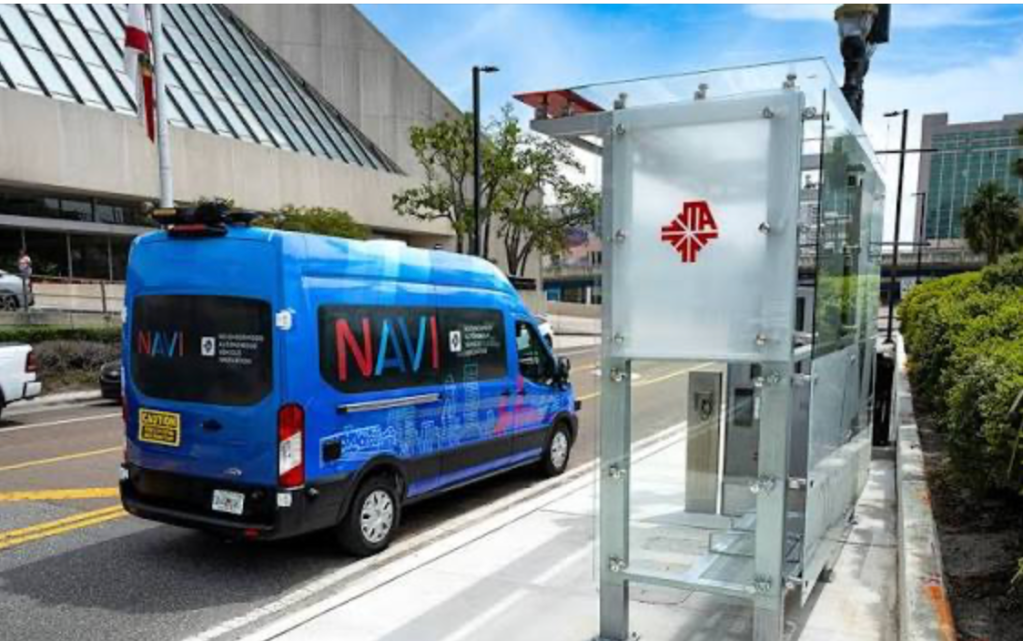
Is America’s ‘First Autonomous Transit System’ Really Dead?
And what should Jacksonville teach us all about the role of technology in our transit future?

October 13, 2026
Why Progressives Don’t Deliver on Federal Transportation Policy
Democrats don’t take their progressive stances into transportation. Beth Osborne unpacks why in the first of this two-part series.

October 13, 2026
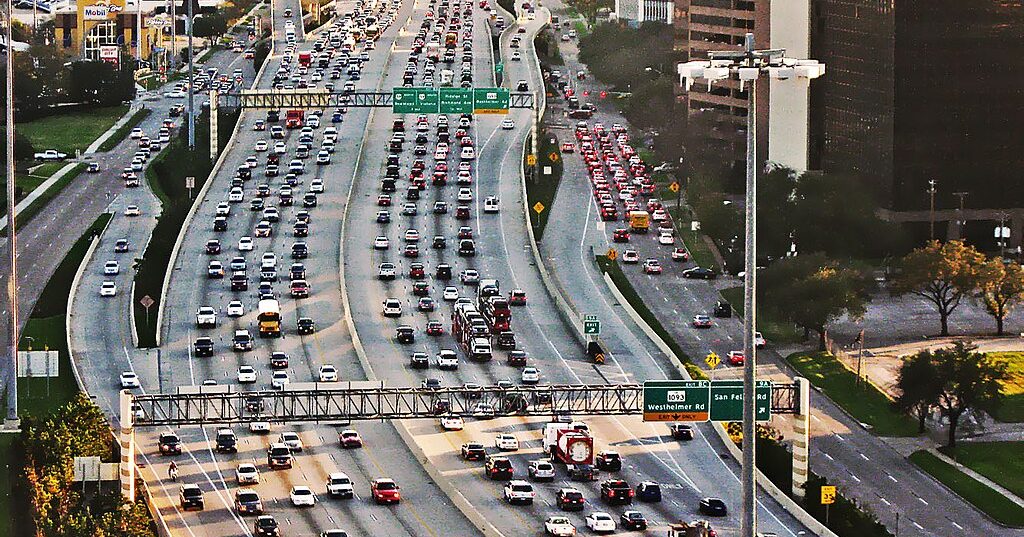
Inducing Demand for Tuesday’s Headlines
Just more one more lane, bro. I promise, one more lane will fix it.
October 13, 2026
Monday’s Headlines Take Matters Into Our Own Hands
Our editor-at-large Gersh Kuntzman isn't the only one getting up to criminal mischief.
October 12, 2026

Inside Baseball: Kuntzman To Step Down At Streetsblog; David Meyer To Take Over
Streetsblog's longtime editor will take on new challenges. And so will his successor.

October 9, 2026
