

Milwaukee Mayor Abandons Highway Teardown To Calm Irrational Fears Of Driver Class
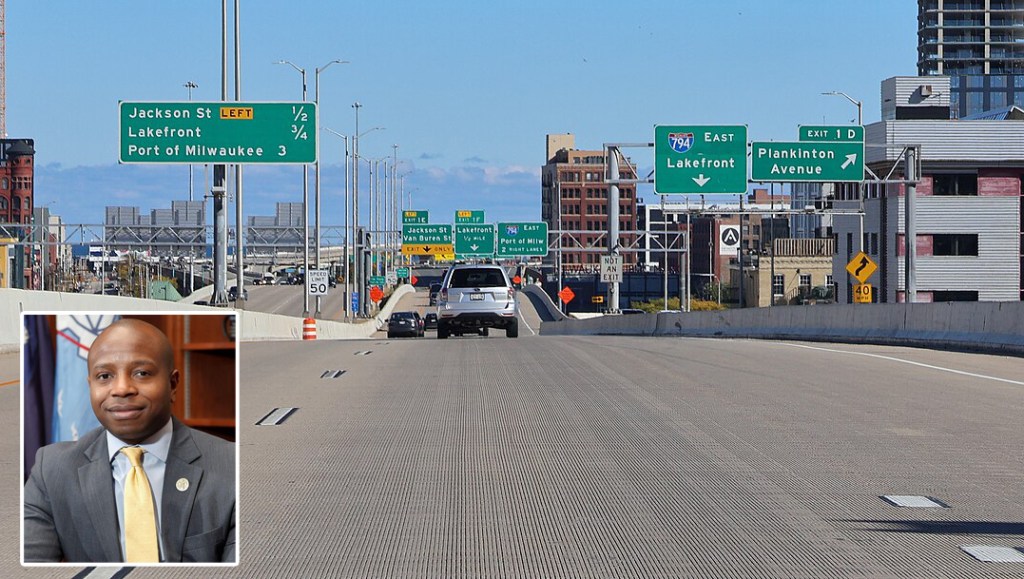
The mayor of Milwaukee is abandoning a proposal to scrap a half-century-old freeway out of fear of upsetting the region’s motorists, setting aside years of findings that highway removals help revitalize Rust Belt downtowns for the 21st century.
Milwaukee Mayor Cavalier Johnson announced on July 8 he wanted to maintain the elevated Interstate 794 known as the Lake Interchange, which stretches between the Marquette Interchange and the Hoan Bridge and is approaching the end of its useful life. State transportation officials have been weighing alternative proposals for fixing or removing the freeway.
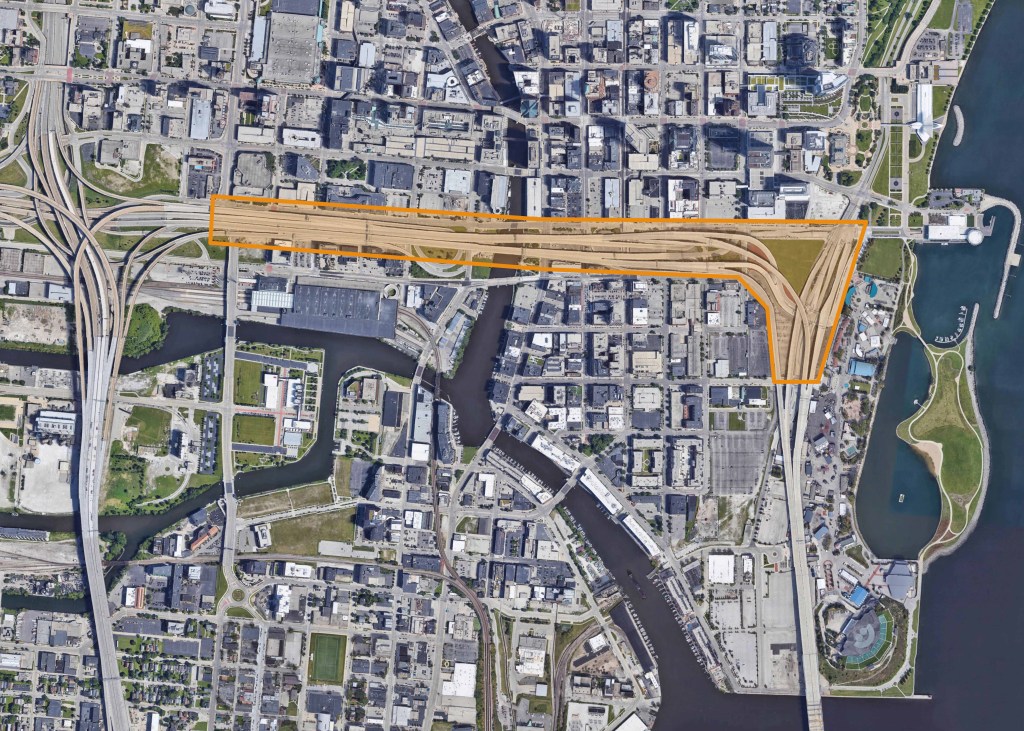
Johnson rejected replacing the highway with at-grade boulevards that connect to the street grid because he worried drivers would get stuck in traffic.
“Any mayor across the country would love to have this same thing,” Johnson said at a press conference. “However, given the challenges that I mentioned, given the decades of established traffic patterns here, I think it makes it a little more difficult for us to be able to accomplish what some have imagined could be accomplished with taking the freeway down.”
But Milwaukee Common Council members Alex Brower, Robert Bauman and Sharlen Moore argued that a highway-to-boulevard option would benefit residents by generating thousands of new homes and increasing city tax revenues.
“This is a generational opportunity for our city, and we should not bristle at the idea of freeway removal simply because it represents the greatest departure from the current status quo,” the officials said in a joint statement released on July 13. “We should embrace the change that will yield the greatest long-term benefit for Milwaukee, rather than settling for less because of established traffic patterns.”
And members of Rethink 794, a volunteer transportation advocacy group, lambasted the mayor for doubling down on congestion that will hamper the city’s ability to grow in the future.
“It seems like the priority for folks who [want] to save five minutes on their commute, but the tradeoff is opportunity for housing development, retail development, public space, economic development,” said Raphie Torralba, lead advocate on the Rethink 794 campaign.
The controversial span has divided Milwaukee since its erection in 1969. Commuters from suburban Waukesha, Racine, and Kenosha counties take I-794 to get to work and access the Brew City’s top attractions. By 2022, roughly 78,000 vehicles per day traveled east of the Marquette Interchange, 73,500 vehicles drove across the Milwaukee River and 42,500 motorists crossed the Hoan Bridge, a Wisconsin DOT traffic study found.
But the interstate served as a barrier separating Milwaukee’s Historic Third Ward from other downtown neighborhoods and discouraged residents in the region from using Milwaukee’s Amtrak station, which transported 555,000 riders last year.
This century, razing an elevated highway is no longer a radical idea. Several cities have successfully ditched elevated interchanges slicing through their downtowns including Boston, San Francisco, Portland, Ore., and Syracuse, NY, which will begin tearing down a stretch of Interstate 81 later this year. Even Milwaukee saw the benefits two decades ago of turning Park East Freeway into a six-lane boulevard that opened up 24 acres to new development.
As I-794 approached its golden anniversary, parts of its spans began to crumble, prompting state officials to develop a long-term plan to fix it. In April, the Wisconsin DOT held open houses on four proposals to rebuild the interchange, slim it down, or replace it entirely, with another option to conduct routine maintenance and put off significant repairs. (Meanwhile, Milwaukee urbanists released their own vision for razing the interchange in order to transform the surrounding neighborhood into thousands of homes with new schools, libraries, and roads.)
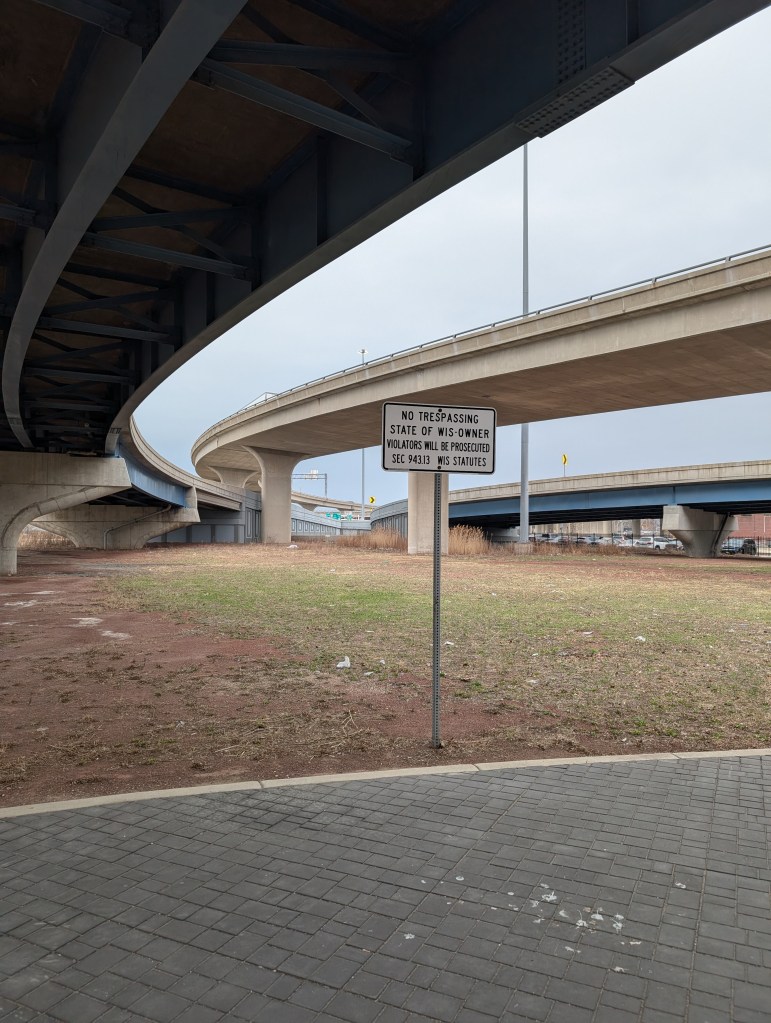
Each alternative came with a different price tag while generating additional land for the city to develop by 2050.
Rebuilding the highway ranged between $425 million and $575 million while the proposal enabled the city to build on a 2.7-acre site created during a reconfiguration. One design would reduce the highway with right-side ramps purported to cost between $725 and $1 billion while another was estimated between $675 and $900 million. Both opened up 5.1 acres of land.
Finally, replacing the span with a boulevard reportedly cost between $850 million and $1.25 billion while freeing up 16 acres of property to be converted into housing and other development, which could produce $16 million in property tax revenue each year, plus ancillary economic benefits to the city and its people.
Advocates argued state officials overestimated the cost of dismantling highways and building new roads, and underestimated the benefit on downtown neighborhoods if boulevards were built instead.
“They are predicting much of the same traffic will end up on city streets, whereas we know that will not be the case in removals in other parts of the country and even our own city,” Torralba said. “One-third of current traffic that uses the stretch of freeway is using it to go across but the majority of it is already ending up downtown.”
State Department of Transportation officials expect to choose a design by 2027, begin construction about three years later, and complete the project by 2038, although funding has not been officially allocated.
Political tea
The issue could become part of Wisconsin’s contentious gubernatorial race since the next governor will choose a new transportation secretary and have an effect on the direction of state infrastructure projects.
Democratic candidates Francesca Hong and David Crowley expressed support for the benefits of replacing the highway with new housing development, according to Rethink 794 advocates. Republican Andy Manske told Streetsblog he wants to see a temporary closure of I-794 to see if it would result in “widespread chaos and delays” and wanted to ensure that new housing would be managed closely and not by an institutional investor (Democratic candidate Mandela Barnes and Republican candidate Tom Tiffany did not respond to emails).
Torralba said the climate advocates have been navigating has been complicated.
“The highway’s removal is a question of political will,” she said. “Candidates understand the benefits of the idea, but the political power [to advance] that decision is another thing entirely.”

Read More:
Streetsblog has migrated to a new comment system. New commenters can register directly in the comments section of any article. Returning commenters: your previous comments and display name have been preserved, but you'll need to reclaim your account by clicking "Forgot your password?" on the sign-in form, entering your email, and following the verification link to set a new password — this is required because passwords could not be carried over during the migration. For questions, contact tips@streetsblog.org.







_06.jpg)