How To Push A Livable Streets Project Forward — Even in the Era of Federal Clawbacks
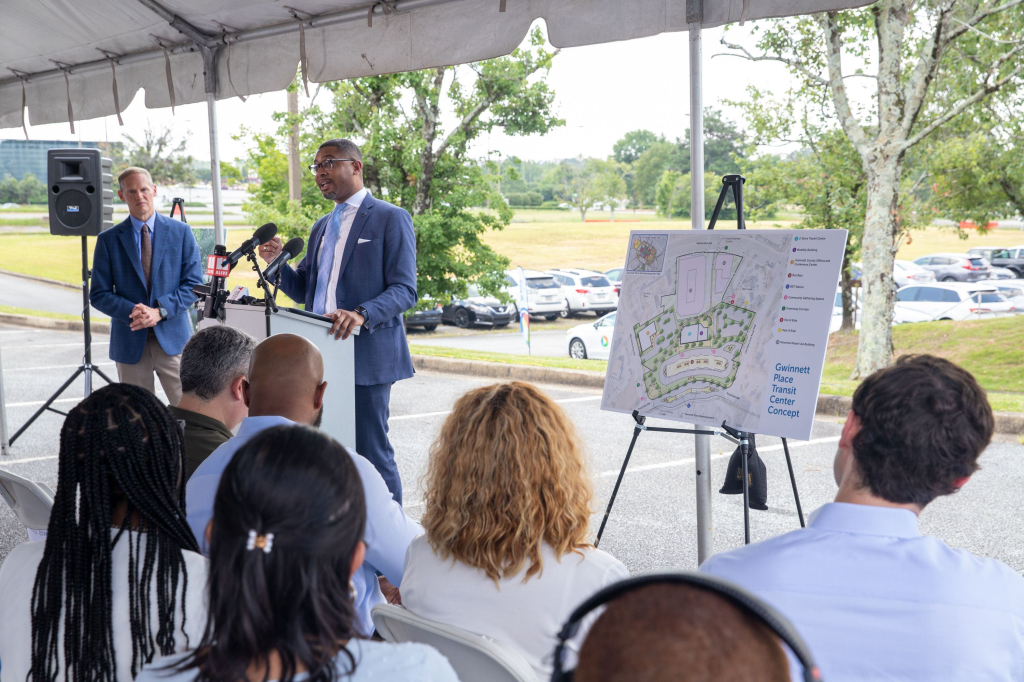
Even before the Trump administration and the current Congress began rescinding federal grants left and right, it was hard to get major sustainable transportation projects across the finish line in America. That’s why one livable streets legend is stepping up to help push those efforts forward — including a few that lost funding since his own time in Washington.
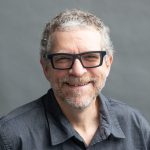
On this episode of The Brake, we’re joined by Christopher Coes — the third-ranking member of USDOT under President Biden and superstar alum of Transportation for America, Smart Growth America, and the Brookings Institution — to talk about his new initiative, AmericaFWD.
With the help of former WashDOT head and guest of the podcast Roger Millar and a deep network of infrastructure experts, they’re helping a select group of U.S. communities push forward major multimodal infrastructure efforts, projects to reconnect communities, and more. And you might even recognize a few of those efforts from the list of projects that had their funding rescinded under Trump.
Give it a listen, then check out AmericaFWD’s State of Play report, apply to be a part of its Project Delivery Accelerator Lab, and explore its Advisory Network.
The following excerpt has been edited for clarity and length. View a full, unedited transcript (with AI typos) here.
Streetsblog: I’m very familiar with your work, but for folks in my audience who may not be, why don’t you start me off with a little bit of an elevator pitch. Tell me about how your work, your career with all of these illustrious organizations like Smart Growth America and USDOT has led you to founding AmericaFWD, and what you hope to do there.
Coes: My story [is about] sitting at the intersection of transportation, economic development, people and power. I actually started when I was 13, when my mom, while waiting at a stoplight, was hit by a drunk driver. For me, living in a really small town in Thomasville, Georgia, I learned very quickly about how the built environment [impacts your] ability to have access to groceries, to be able to go and get prescriptions — not just for my mom, but for my great grandparents, as well as all the other elderly who are in my family.
And so for me, biking on rural streets that didn’t have good sidewalks or clear paths, I understood how, without a car, you just can’t go on certain trips. That’s how I got thrust into this work. Even at a very early age, I became a youth advocate around economic development, infrastructure and the like …
So, fast track to my most recent stint [where] I had the opportunity to serve my country, first as Assistant Secretary for Transportation Policy, and then later as Acting Undersecretary. I had the distinct honor and privilege of working with 54,000 colleagues across the department to not only think about strategize and build up what became the Bipartisan Infrastructure Law [or the Infrastructure Investment and Jobs Act].
But also, [I was] leading some of the major efforts around [questions like]: how do we think about climate in this moment? How do we bring everyone into this, in terms of equity framing? And then also recognizing the biggest challenges we have today, whether it’s around transportation safety, whether it’s around neighborhood resilience, in terms of environmental justice issues — or even, again, going to climate change, as we were just talking about before. There’s a huge intersectionality around that.
We could solve for safety in terms of reducing the level of deaths or injury, while at the same time, we can also reduce emissions. Even if you are not a big climate change person — we all agree that pollution is bad. And not just air pollution, but also the particles and everything else that comes into our communities around our infrastructure system. It was really great for to work with Secretary Buttigieg and so many other colleagues to do that work.
[But] one of the major lessons that we learned when we were putting these dollars out —and actually trying to find ways to try to kill multiple birds with one stone — is [how important it is] when I can pick up the phone and call a mayor. If the mayor had local philanthropy behind the vision, if that mayor was able to have local community groups that were a part of the project, if their own agencies had an alignment with perhaps their state DOTs —those projects were able to move fast. Grant agreements were getting signed. Projects were having great level of meaningful public involvement, and they were doing really some in transformative projects.
But when the inverse [was true] — when I called a mayor and there wasn’t an alignment with the community, no alignment with the private sector, they weren’t aligned with the state DOTs — we saw a lot of projects stalled. Even though those projects were maybe great. And now, in this moment that we’re in today, even those projects that had that alignment are still finding ways to move forward.
That was the lesson I took coming out of the administration. Right now, there’s over $800 billion has been obligated from the various infrastructure packages that were passed. While there’s a lot of attention about what has been taken away, what I am really concerned about is making sure those communities have the chance to make their roads safer, to make their housing be better connected to their jobs, to using transportation, making sure that they have the capacity. Particularly those that have not had a chance to reimagine [themselves] — those [small towns like] Thomasville, Georgias, where I came from.
So we’ve been working as AmericaFWD, standing up the ability of organizers, engineers, finance specialists, public engagement specialists — to deploy their capacity, their know-how, in partnership with local government, with community-based groups and the private sector to help many of these projects move faster.
Read More:
Streetsblog has migrated to a new comment system. New commenters can register directly in the comments section of any article. Returning commenters: your previous comments and display name have been preserved, but you'll need to reclaim your account by clicking "Forgot your password?" on the sign-in form, entering your email, and following the verification link to set a new password — this is required because passwords could not be carried over during the migration. For questions, contact tips@streetsblog.org.