Opinion: Complete Streets Alone Don’t Make Complete Places
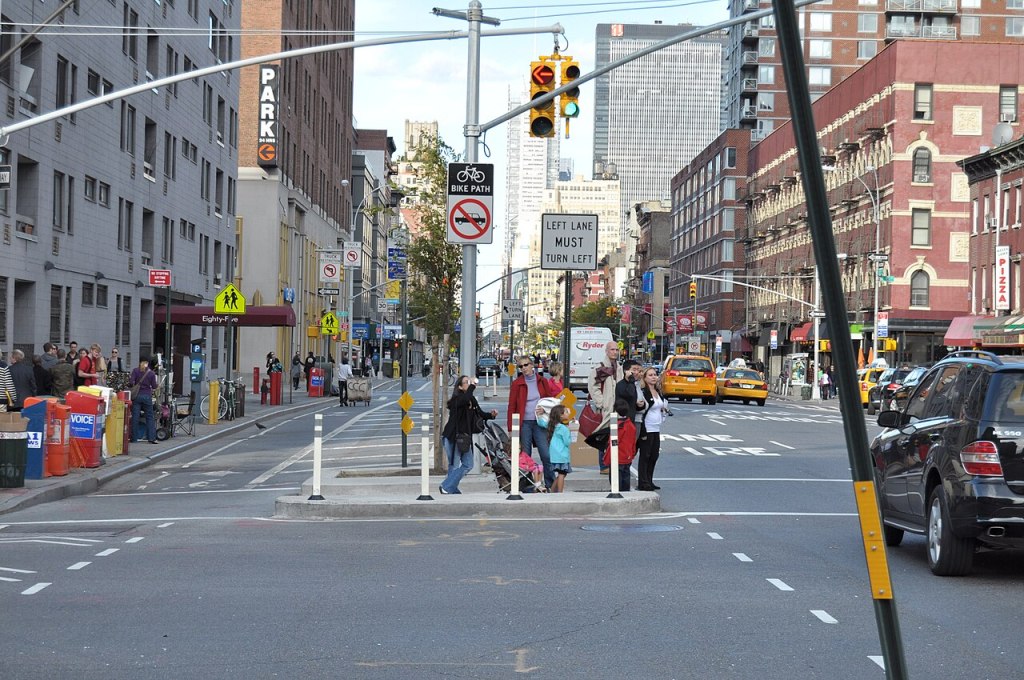
Twenty years after the term “Complete Streets” was first coined, the framework for designing better transportation spaces has improved safety and connectivity in communities across America. But have these efforts supported the creation of places that we want to actually spend time in, rather than just pass through?
Let’s acknowledge upfront that any attempt to combat auto-oriented design is better than maintaining the status quo. We’re not trying to condemn communities that have made a good-faith effort to enact Complete Streets policies and have reduced auto-related injuries or fatalities because of that. Obviously, saving lives should be priority number one!
But are communities getting the best return on their millions when their Complete Streets merely help people move more safely through places where no one wants to be?
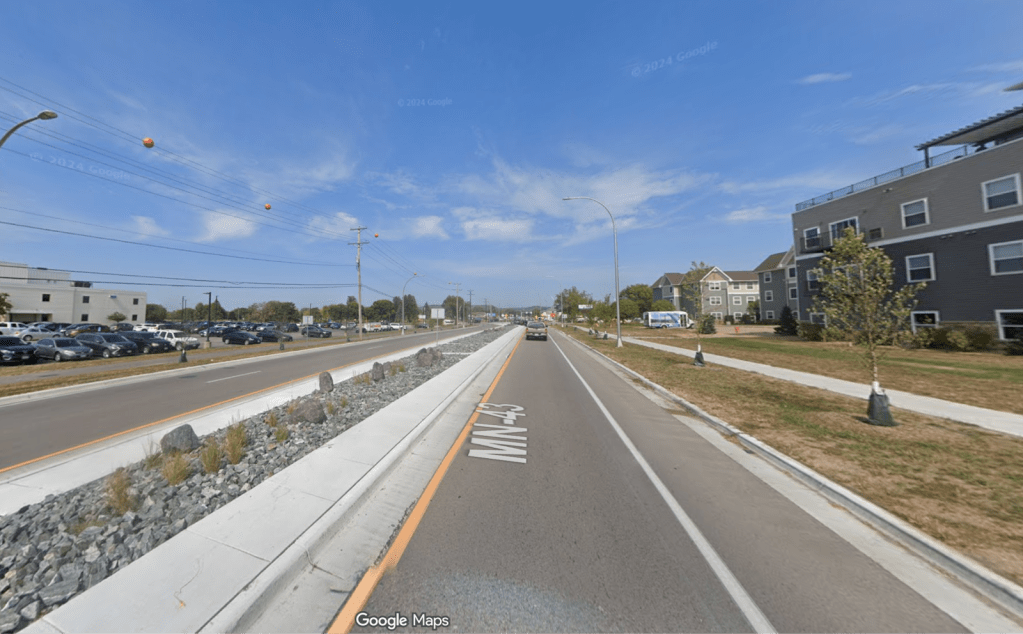
Photo: Google Maps
To truly save our communities from the auto-oriented infrastructure that’s been plaguing them for decades, we can’t expect transportation tools alone to create great places. But we keep falling into that trap — even with the best of intentions.
A lack of safety isn’t the only problem with places that are designed for cars. Much like how blind YIMBYism (“Density! Density! Density!”) can often lead to more development without delivering vitality, Complete Streets and its sibling policies like Vision Zero and Safe Routes to School give an incomplete answer to our deeper needs — and it’s time to take a broader lens.
What Makes for a Great Street?
Great places deliver great experiences. These experiences are created through the interactions of the physical elements, operations, and uses working together to create a whole that’s greater than the sum of its parts.
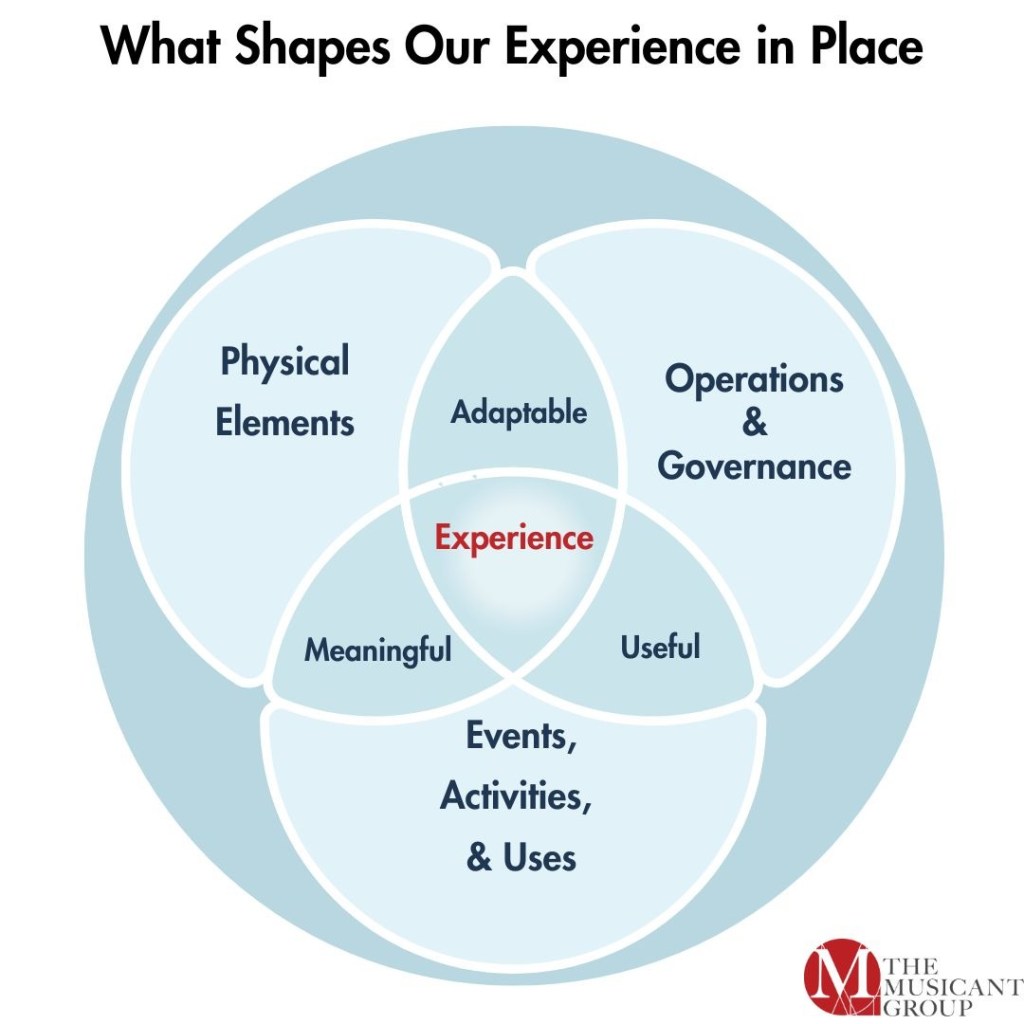
Having a bench to sit on is nice, but not if it’s covered in trash and grime.What’s even nicer is if it’s shaded and there’s a kiosk nearby where you can buy coffee. The mere presence of something is less important than how it relates to everything around it, including other elements of the built environment and activities taking place nearby.
In short, the physical environment is important, but it’s only one part of what goes into the experience of a great place.
Similarly, a street plays a big role in a person’s experience of the built environment, but only solving for the transportation portion of a street — i.e., the physical space dedicated to movement — won’t make a place good for people to be in.
What features line the street? What happens along it? Who’s taking care of that space, and how well are they doing it? Is it nice to look at? Is it comfortable to walk along at different times of the year (such as in summer versus winter weather)? What is there for people to do there, other than go from point A to point B?
A street can be capital-C “Complete” and still be both boring and lead nowhere worth going. And if that’s the case, then people are not going to want to use it: it’s literally “use-less.”
How to Create a Complete Place
Let’s analyze the limitations of Complete Streets and its sibling programs, and use that to figure out a better path forward. The essential problems are:
- The changes enacted by these programs happen all at once. One-time money forces those in charge to try and have psychic-like abilities to anticipate and incorporate future issues and needs into designs — an impossible task.
- The projects are confined to transportation because the agencies in charge of these efforts are siloed. Those leading Complete Streets efforts usually have little authority over zoning, operations, business recruitment, events, etc.
- There’s no mechanism for future improvements after these projects are “done.” As the use of the street and surrounding neighborhood potentially change, there’s no more money to make further investments to attune the area. Or any money that does come is similarly plagued by the first two problems — whether transportation-related or otherwise.
From Project to Place Management
What’s a better alternative?
Typical project-based approaches have people and resources move from isolated project to project and miss the connective tissue that brings a place to life.. A place-management approach, though, puts resources and authority over the whole of a place within a localized entity, encompassing capital projects, operations, and even regulations, programming, and more. Examples of such organization can already be found in the robust network Business Improvement Districts that serve commercial districts across the US and Canada.
Having project authority within localized place-based agencies and organizations who are both accountable to those most impacted, and have a holistic set of tools that go beyond transportation would allow Complete Street-like projects to connect to the rest of the ongoing efforts that shape our experience, thus greatly increasing a project’s chances of supporting broader goals and achieving desired social and commercial vitality.
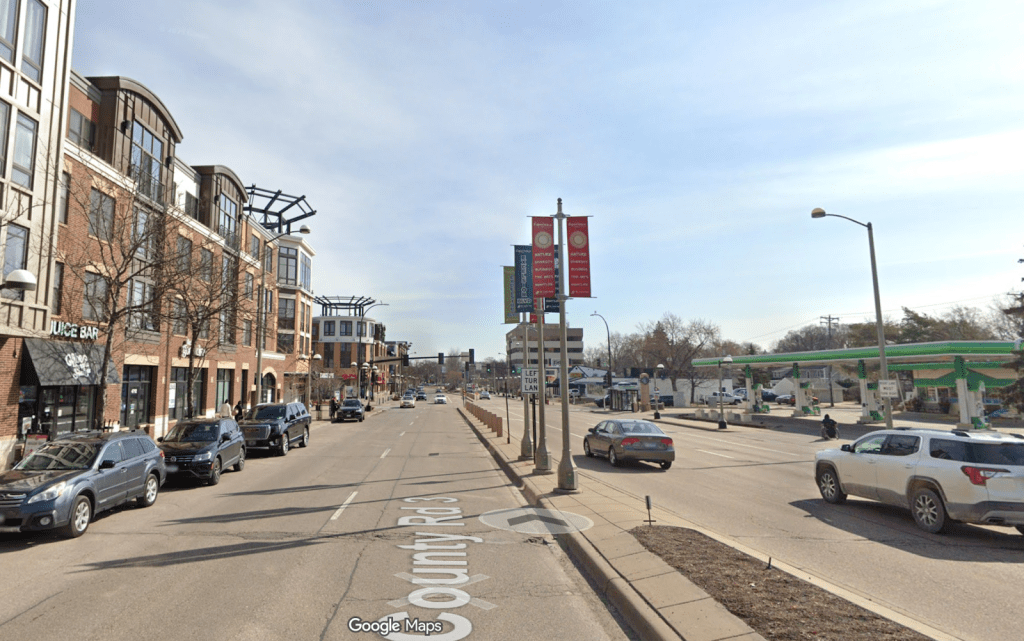
Photo: Google Maps
And in most cases, the municipality (let alone a county or state) is too big to do this well.
For instance, transportation engineers are always going to play an important role in shaping streets. But we must ensure that street improvement projects honor the fact that local entities — such as, say, a downtown merchant association and its patrons— should be the clients here, not the engineer or another absentee authority. Our current system as it stands prioritizes the goals of distant funders and engineers over local needs.
A localized place-management approach within and outside of public agencies would create much stronger conditions for thriving places, because there’d be an entity who has authority and long-term accountability to the place who is the actual client, not just a stakeholder who is “engaged” by distant staff and consultants. These organizations can hold knowledge, relationships, and credibility to integrate the work of specialists and projects of all sizes to make the whole greater than the sum of the parts.
Only an ongoing place-management approach is going to know how best to implement changes to zoning, operations, programming, and partnerships — and spend the energy to actually do it. that serve the bespoke needs of any place. A project-based approach will continue to produce large-scale changes in relative isolation to its surroundings, especially when paired with region-wide, standardized maintenance regimes that can’t provide nuance or build relationships.
We’ll only get Complete Places from Complete Streets if we move from Project to Place Management. Let’s not just focus on what we build, but how we organize ourselves and our work. Only then will we really be able to create streets and places where people truly want to be.


Read More:
Streetsblog has migrated to a new comment system. New commenters can register directly in the comments section of any article. Returning commenters: your previous comments and display name have been preserved, but you'll need to reclaim your account by clicking "Forgot your password?" on the sign-in form, entering your email, and following the verification link to set a new password — this is required because passwords could not be carried over during the migration. For questions, contact tips@streetsblog.org.