Study: AVs Will Super-Charge VMT
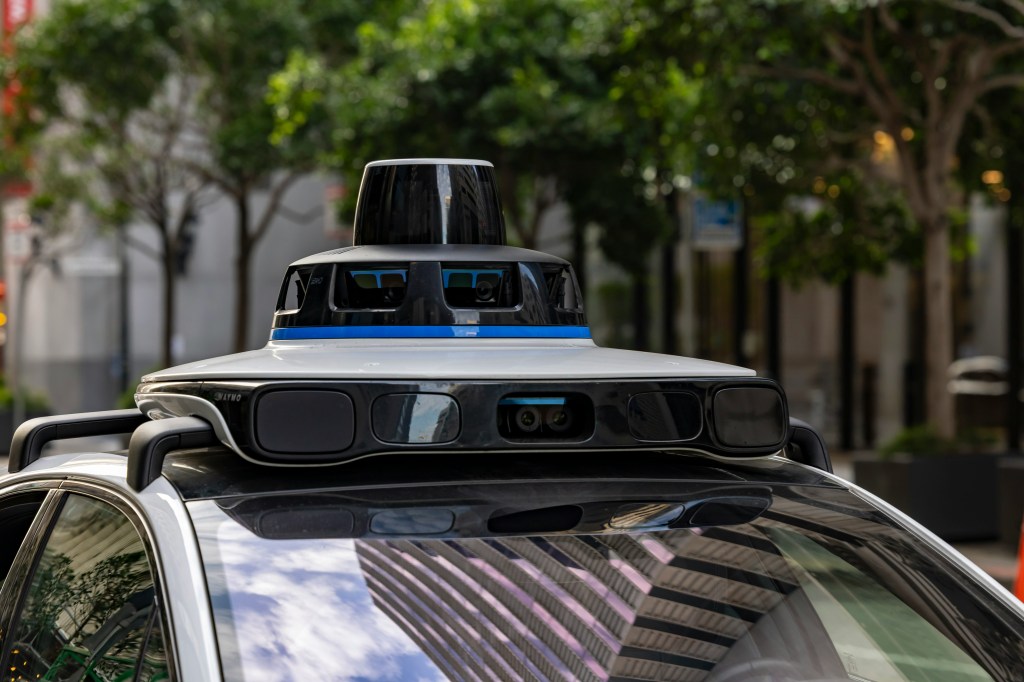
Widespread autonomous vehicle use would make U.S. streets more car-dominated than they already are — even if those AVs were shared, a finding that challenges the narrative that robotaxis will help wean America off car dependency.
Researchers at the University of Texas-Arlington found in a new meta-analysis of 26 earlier studies that vehicle miles traveled would increase if U.S. cities made a major shift away from human-driven automobiles, with the papers collectively predicting about a 6-percent bump in average VMT. Worse, they’d still increase more than 5 percent if people shifted away from personally owned cars towards shared autonomous taxis instead.
That might not seem like a huge increase, but even those modest-sounding increases would be “completely sufficient to break the road” by jamming up key intersections, study author Stephen Mattingly told Vox. And it contradicts Silicon Valley’s early narrative that AVs would reduce vehicle miles traveled, because they’ll be more efficient at plotting routes than human beings, especially if those cars are communicating with one another and anticipating each other’s moves.
That’s not to say that mass AV adoption wouldn’t have any benefits to society. Many of the studies cited in the paper emphasize that the technology is getting better and better at saving lives, as well as improving access for people seniors, children, and people who have disabilities that prevent them from driving and no reliable transit nearby.
Since the rest of the world, at least, is demanding that most autonomous have electric drivetrains not gas tanks, an AV revolution could also theoretically help decarbonize the transportation sector.
The study authors caution, though, that all those benefits could be offset if AVs increase car dependency — or more accurately, if they increase car addiction.
That’s because autonomous vehicles essentially combine all the benefits of driving a private, on-demand vehicle that goes directly to your destination via a computer-optimized route with the benefits of guilt-free relaxing on the bus with a good book or your smartphone — and a lot of Americans wouldn’t be able to resist that combination, especially if the ride was artificially cheap.
If AVs succeed in removing the last few frustrations of driving and are delivered cheaply enough that people who didn’t drive much before start ditching the train in favor of a robocar, Mattingly and his colleagues say it could induce new trips, and maybe even moves to suburban and rural areas where long commutes are currently punishing.
That could result not just in increased congestion, but also in bankrupt transit agencies, empty city coffers as fuel taxes and other driving-related revenues dip, and sprawling development patterns that leave us even more isolated from opportunity and each other than we are now.
And if those trips are taken in shared autonomous taxis, that would mean a lot of “deadhead” miles while empty AVs drive themselves to pick up new passengers — a phenomenon the study authors calls “eVMT,” and which they warn could as much as double the number of miles an average city population drives in a day.
“Future policies need to carefully consider their potential impact on eVMT to limit the risk of causing an inadvertent VMT catastrophe,” they wrote.
Limiting the risks of an AV-centered overhaul of our cities, of course, won’t take just one strategy.
Congestion pricing and dynamic tolling, for instance, could take a bite of out of any new, unnecessary trips that cheap and ubiquitous AVs might generate, as could telework incentives to encourage people to stay home rather than just treat their long robo-car commute as an extension of their workday.
For people who insist on personally owning an AV, governments could use trade-in programs to incentivize them to buy a connected one, potentially minimizing the amount of time that car spends on the road by optimizing routes based on current traffic patterns. Owners of vehicle fleets, meanwhile, could choose connected vehicles themselves — and policymakers could incentivize or even require them to do it, especially if those fleets are government-owned.
AV adoption may even hit a natural ceiling if autonomous cars get more expensive to use — which they probably would if governments stopped aggressively subsidizing fuel, parking, overbuilt road infrastructure, and the universe of other ways taxpayers support all kinds of driving. And that’s on top of the countless dollars we’ve collectively paid to support the development of AVs in the first place.
Still, the study authors were hesitant to say they have a comprehensive playbook just yet, and called on other researchers to take that ball and run with it. Because if they don’t America could end up embracing a mode that addresses many of our traffic violence troubles, but fails to uproot the deeper rot of car dependency that has hollowed out our society.

Read More:
Streetsblog has migrated to a new comment system. New commenters can register directly in the comments section of any article. Returning commenters: your previous comments and display name have been preserved, but you'll need to reclaim your account by clicking "Forgot your password?" on the sign-in form, entering your email, and following the verification link to set a new password — this is required because passwords could not be carried over during the migration. For questions, contact tips@streetsblog.org.