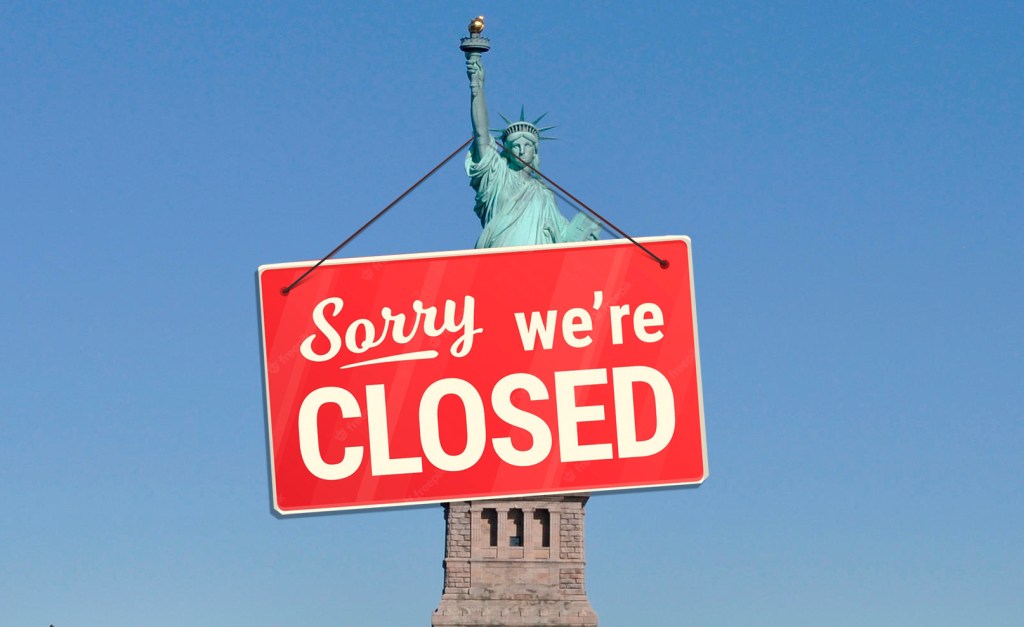
Shoveling a Snowy Sidewalk Is An Act of Resistance
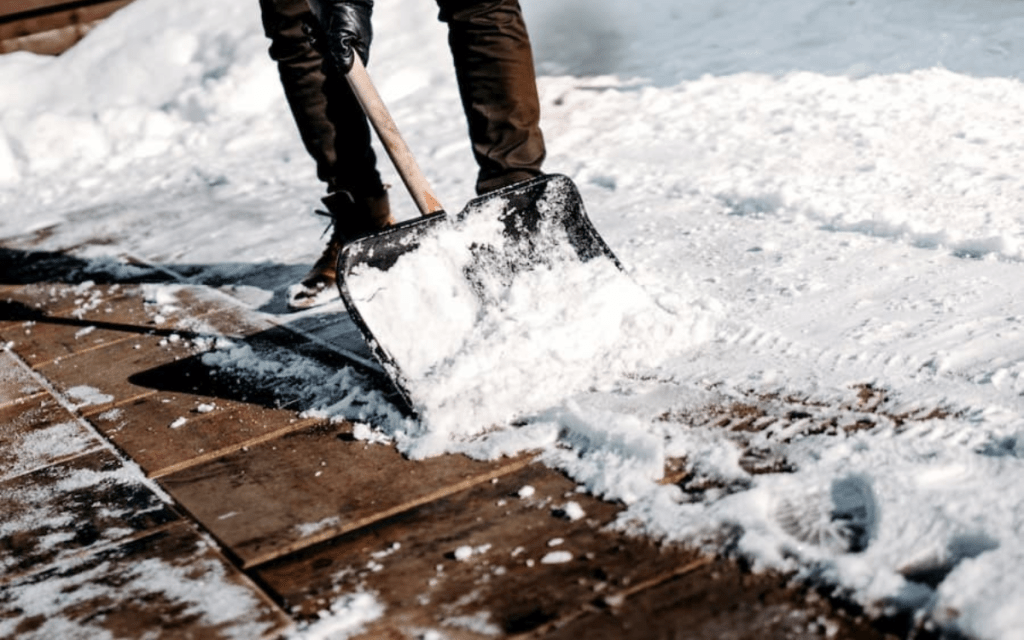
Every time a snow storm hits my city, I shovel the sidewalk in front of my home.
I don’t do this because I’m legally required to; the chances that the local government would fine me for failing to do it are near zero, even if one of my neighbors is forced to walk in the driving lane and gets killed. I don’t do this because of social pressure; most of my neighbors don’t shovel their walks at all, which is why I usually take a few extra minutes to plow at least a narrow strip in front of their homes, too, taking a few extra passes in front of the ones where I know seniors and people with disabilities live.
Mostly, I shovel my walk because I am a safe streets advocate, and I view shoveling snow as a small, but radical, act of community care that I have the time, ability, and privilege to do.
But lately, I do it as an act of resistance, too.
Progressives love to talk about the power of mutual aid in times of government failure or outright government attack on our civil liberties. We deliver food to people terrified to go to the grocery store amidst violent immigration crackdowns, and truckloads of stuffed animals to children whose homes were destroyed by natural disasters, and so much money to pay one another’s medical bills that GoFundMe has become a de facto primary insurer for counties Americans.
But do we shovel our sidewalks?
Right now, sidewalks in communities across America are so clogged with ice that they’re functionally impassable. For countless people who can’t drive — and especially those who can’t physically clamber over snowdrifts — that isn’t just an inconvenience; it’s the thing that stops them from attending school, earning a paycheck, reaching the doctor, or evacuating a home that’s lost power to reach a local warming center. For seniors and people with disabilities, especially, it can mean the difference between safety and danger, survival and death.
But we do view our icy sidewalks as a safety crisis?
Like food and healthcare and the most basic forms of safety and care that all people need, basic transportation access should be a collective good that we can trust our governments to use our tax dollars to provide — and there is no more basic form of transportation than a clear sidewalk on a snowy day. In the vast majority of America, though, don’t our governments don’t shovel our sidewalks, even though they are undoubtedly the best-equipped to handle the daunting logistical challenge of maintaining this basic, city-wide transportation network.
So: do we band together as neighbors and do it instead?
To be clear, I understand why so many people don’t. Income inequality and a threadbare social safety net has pushed countless Americans to the brink, forcing us to work hundreds of hours more per year than our European counterparts — and that’s before we’re asked to moonlight as gratis municipal workers in the freezing cold.
Then there is the question of time: if a worker is locked into a multi-hour car-commute to travel from the only job she can get to the only home she can afford (maybe with a stop at the only daycare that had a space for her kid on the way), of course she might not make it home before the latest snowfall freezes into ice. And as any good Snowbelt midwesterner like me will tell you, when you shovel matters as much as whether you shovel at all.
Moreover, roughly 100 people die every year plowing snow, and thousands more are injured. Many people can’t, and shouldn’t, tackle their wintry sidewalks alone.
But let’s be honest: a lot of people can plow a walk. They just don’t, even if they count themselves as dyed-in-the-wool progressive proponents of the solidarity economy.
I fear that as livable streets advocates, sometimes we get so overwhelmed by the sheer scale of structural change that our communities need that we forget the sheer scale of our collective power — and the importance of using it, even as we fight for broader change.
We rally for federal money to build sidewalks where there are none, but in the meantime, we don’t always learn how to maintain the broken sidewalks in front of our homes, especially if we’re lucky enough to own one.
We fight for local policies to keep paths passable for people in wheelchairs, but we don’t always call our actual neighbor who uses a wheelchair, to ask if he needs help getting to the bus stop when the curb cut is slick as a skating rink.
We clamor for our governments to care just as much about blocked walkways as they do about blocked traffic lanes, mount petitions for the city council to buy miniature street sweepers and sue when our curb cuts are left to crumble a little more with every freeze-thaw cycle. But while we wait for those bills to be passed, those sweepers to be bought, and those lawsuits to be won, the patch of pavement right outside of our apartment building is still a death trap, and we don’t always personally do anything about it — even if we can.
For many of us, though, those kinds of sustained acts of community care are within our reach. And they have never been more important than they are right now.
At this moment in U.S. history, the federal government isn’t just shrugging at snowy sidewalks like state and local governments have done for decades; it is actively clawing back funds for life-saving infrastructure and searching for pretexts to rip out existing bike lanes.
More and more, the challenge facing the livable streets movement is not how to win a world where people can walk and bike no matter the weather, much less how to get a multi-million-dollar automatic snow-melt system installed under the town pedestrian plaza. It is how to organize against an administration that is actively and openly attacking projects that would give U.S. residents even the option of non-automotive travel, never mind one they can access safely year-round.
When our government is not just apathetic but an aggressor against our communities, we need to do more than just fight for structural change somewhere down the line — though, to be clear, we need to engage in those fights, too. We also need to resist today by creating systems of community care that get people where they need to go right now, even in the most terrible storms.
Every storm can make us stronger, or it can bury us. And even when we feel most powerless, we still get to decide which.

Read More:
Streetsblog has migrated to a new comment system. New commenters can register directly in the comments section of any article. Returning commenters: your previous comments and display name have been preserved, but you'll need to reclaim your account by clicking "Forgot your password?" on the sign-in form, entering your email, and following the verification link to set a new password — this is required because passwords could not be carried over during the migration. For questions, contact tips@streetsblog.org.